Keep our news free from ads and paywalls by making a donation to support our work!

Notes from Poland is run by a small editorial team and is published by an independent, non-profit foundation that is funded through donations from our readers. We cannot do what we do without your support.
By Philipp Fritz, Warsaw correspondent for Die Welt (which first published this article in German here)
Negotiations on compensation for the still-living victims of the German occupation of Poland have been going on for years. There are some 30,000 to 50,000 such survivors, but their number dwindles every week. Berlin should act now.
No “humanitarian gesture” has emerged. “The draft budget currently reflects the fact that no decision has been made,” said Josef Hinterseher, a German foreign office spokesman, at a press conference in late September.
He thereby confirmed what many observers had suspected: survivors of concentration camps, ghettos and death marches, former forced workers and participants in the Warsaw Uprising who are still living in Poland will not receive any compensation, one-off payment or monthly pension from the German government.
The German chancellor has announced that his country will offer support to surviving Polish victims of WW2 and will help strengthen Poland’s eastern border.
However, in both cases he did not provide details of what these measures will involve in practice https://t.co/gKX6142Alo
— Notes from Poland 🇵🇱 (@notesfrompoland) July 2, 2024
Just a few sentences later, Hinterseher moved onto the next subject – the fact that two Russian oligarchs were to be removed from the EU’s sanctions list. Or at least, that Berlin had not been successful in opposing this decision.
The fact that these two issues were dealt with publicly one after the other shows that the German government is quicker to reach a decision that makes Putin’s supporters’ lives easier than it is with victims of the Nazi terror. It is a declaration of moral bankruptcy.
Warsaw and Berlin have been negotiating compensation for the last remaining victims of the German occupation of Poland for years. There are between 30,000 and 50,000 of them – aged over 90, often living alone and in poor health. Their numbers are dwindling every week.
The fact that talks are taking place in Berlin ministries but without any decision being taken is met with sadness and fury in Poland.
Increasingly, Poles are getting the impression that, even if the Germans manage to put up memorials, they cannot offer survivors tangible help when it is asked for. It is a common view that in Berlin the descendants of the perpetrators are simply waiting for the victims to die so that this pesky issue will sort itself out.
Should that happen, those left behind will not forget, and the Germans will hardly be able to forgive themselves.
Warsaw is no longer demanding war reparations from Berlin. In December 2023, Donald Tusk’s government switched to talking about “making amends”.
Polish foreign minister @sikorskiradek has called on Germany to “think creatively” about compensating Poland for WWII.
On a visit to Berlin, he also said that the new government would "end the cold war" waged by the former ruling PiS party against Germany https://t.co/kZ62nUuqqO
— Notes from Poland 🇵🇱 (@notesfrompoland) January 31, 2024
This is not just splitting hairs. In so doing, Tusk put the ball in the German government’s court, giving it the chance to take action and, through a gesture recognising suffering and providing a relatively small sum of money, to offer people tangible help and do a service to the German-Polish relationship.
Former German Chancellor Olaf Scholz is reported to have offered Tusk a one-off payment in 2024, but Poland’s prime minister turned the sum down as insufficient. Instead, Polish diplomats are demanding monthly pensions.
In any case, we are talking about a few hundred million euro: a relatively small amount compared to the equivalent of €1.3 trillion that Poland’s former ruling national-conservative Law and Justice (PiS) party once demanded from Germany, and also in comparison to many other budget items – and yet still there is nothing about compensation in the budget planning.
Poland is seeking $1.3 trillion in war reparations from Germany, but Berlin says the issue was legally settled long ago.
Legal scholar @MPiatkowski1 examines the arguments of both sides, explains the legal context, and looks at what could come next https://t.co/xsKAY2TukS
— Notes from Poland 🇵🇱 (@notesfrompoland) September 9, 2022
Rumour has it that, in return for compensation, German foreign ministry officials are asking for a kind of Polish guarantee that in future there will be no more demands for reparations, or at least that at least the German gesture will receive good press in Poland.
If that is true, it would be thoroughly indecent, bringing to mind an image of a perpetrator trying to buy his victim’s silence. This reflects a belief in objectification, an ugly bureaucratic mentality stemming from a system in which “work” in a ghetto counts towards statutory pension contributions, but no one can bring themselves to pay compensation.
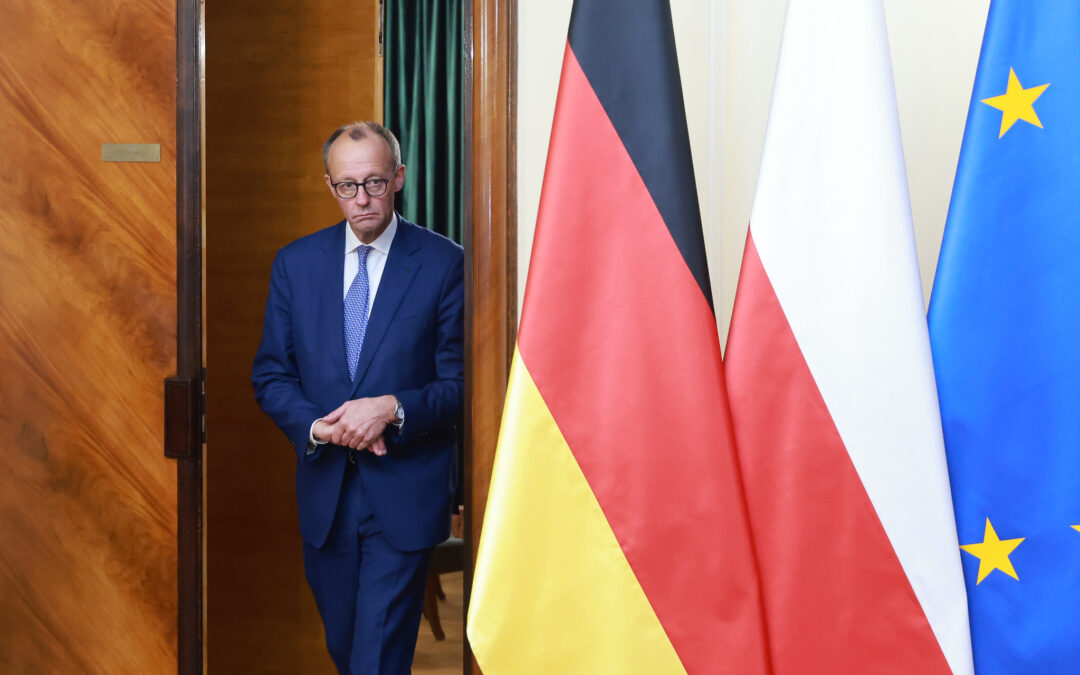
This issue can be resolved at the very top. Chancellor Friedrich Merz would have to work with the relevant ministries – the foreign office and finance ministry – to provide for compensation for the victims in the budget. This would be a belated but major and morally right gesture. If politics is too slow – time really is of the essence – then civil society should take it upon itself to show where it stands.
Donations for the still living victims of the German tyranny or a fund from which survivors would receive monthly payments can be created from within society. Business can also get involved. German corporations which were guilty of, for instance, exploiting forced labourers in occupied Poland, or those that emerged from them, such as BASF, Siemens, Volkswagen, BMW and Deutsche Bank, could contribute.
Poland covers almost all the costs of maintaining former Nazi-German camps on its territory. It has spent more on this than Germany has paid in compensation to Polish war victims
It's time for Germany to fund preservation of the sites, argues @W_Kononczuk https://t.co/08nf4c2jMz
— Notes from Poland 🇵🇱 (@notesfrompoland) January 25, 2026
Right now, since its state elections in September, Germany gives the impression of a country whose compass for right and wrong is broken.
As of 6 October, the state parliament of Sachsen-Anhalt has as its vice-president Hans-Thomas Tillschneider of the AfD, a man who wrote on X that “the Poles have been getting on my nerves for a long time now”. In Berlin, not only did the left-wing Die Linke celebrate their electoral success with Israel haters and antisemites, they even tolerate them in their ranks. It is shameful.
But now Germany, and particularly its government, has the opportunity to show that the rhetoric of responsibility for the victims is not merely empty words. That, contrary to a mood that does not support it, they are doing what is morally right. Time is running out, Germany – it’s your last chance.
Notes from Poland is run by a small editorial team and published by an independent, non-profit foundation that is funded through donations from our readers. We cannot do what we do without your support.
Main image credit: KPRM/Flickr (under CC BY-NC-ND 2.0)

Daniel Tilles is editor-in-chief of Notes from Poland. He has written on Polish affairs for a wide range of publications, including Foreign Policy, POLITICO Europe, EUobserver and Dziennik Gazeta Prawna.