Keep our news free from ads and paywalls by making a donation to support our work!

Notes from Poland is run by a small editorial team and is published by an independent, non-profit foundation that is funded through donations from our readers. We cannot do what we do without your support.
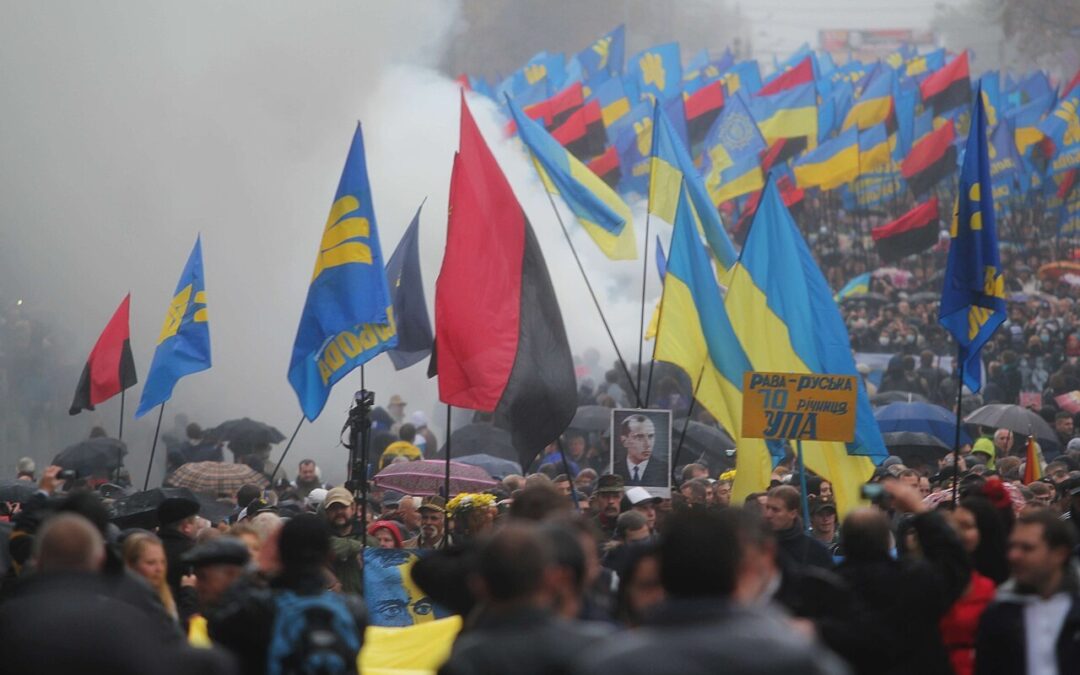
Poland has condemned a decision by the Lviv region in Ukraine to declare 2027 a year honouring the Ukrainian Insurgent Army (UPA), which led the massacre of Poles during World War Two, and one of its leaders, Roman Shukhevych.
The Polish foreign ministry called the decision “contrary to European values,” and warned it could undermine recent progress made between the two countries toward reconciliation over their difficult shared history.
Decyzja Lwowskiej Rady Obwodowej, by 2027 rok był rokiem UPA i Szuchewycza, jest nieakceptowalna. Taka decyzja nie buduje wzajemnego zaufania między narodami, lecz wzmacnia podziały. Konieczne jest odcięcie się władz Ukrainy od tego stanowiska.
— Władysław Kosiniak-Kamysz (@KosiniakKamysz) October 20, 2026
On Tuesday, the Lviv regional council adopted resolutions proclaiming 2027 the year of the UPA, of Shukhevych, and of Oleh Olzhych, a poet and leading figure in the Organisation of Ukrainian Nationalists (OUN).
Sviatoslav Sheremeta, chair of the region’s committee on culture, said the decisions will pave the way for “large-scale events” to commemorate the UPA, Shukhevych and Olzhych. “This is our history, our heroes, and we must duly honour their memory,” he added, quoted by local news service Sokal Voice.
The OUN was a nationalist organisation that sought Ukrainian independence. The UPA, a partisan formation, emerged in 1942 from a more radical faction of the OUN, with Shukhevych serving as its military commander.
While the UPA is still remembered positively by some in Ukraine for its role in fighting against Moscow-imposed Soviet rule, in Poland it is associated with the Volhynia massacres, in which the UPA led the slaughter of around 100,000 Poles, mostly women and children.
Poland has previously condemned official commemorations in Ukraine of Shukhevych and other figures associated with the UPA. This year, President Volodymyr Zelensky’s decision to name a military unit after the “heroes of the UPA” triggered a diplomatic crisis.
The resolutions adopted by the Lviv region on Tuesday likewise prompted a swift response from Warsaw.
“Glorifying the UPA and criminal figures is contrary to European values and the strategic and good-neighbourly nature of relations between Poland and Ukraine,” foreign ministry spokesman Maciej Wewiór told news website Wirtualna Polska.
“Shukhevych is a criminal stained with the blood of thousands of innocent victims, people who were murdered simply because they were Poles,” he added, also noting that the UPA’s victims included Jews, Czechs, Armenians and Ukrainians themselves.
The European Parliament has criticised Ukraine's @ZelenskyyUa for naming a military unit after a group that massacred Poles during WWII, calling it an "unprovoked escalation" that is “not in line with European values” and "disregards Polish sensitivities" https://t.co/54rbPSrs9S
— Notes from Poland 🇵🇱 (@notesfrompoland) July 8, 2026
Wewiór warned that, while the Ukrainian and Polish governments have recently made progress towards reconciliation over historical issues, “irresponsible local activists are damaging these relations by honouring people clearly responsible for crimes and collaborating with the Nazis”.
On Wednesday, Polish foreign minister Radosław Sikorski announced that he had signed a motion to place Sheremeta, who has led the efforts to commemorate the UPA and Shukhevych in Lviv, on Poland’s “list of undesirable persons”.
Meanwhile, Poland’s deputy prime minister and defence minister, Władysław Kosiniak-Kamysz, described Lviv’s actions as “unacceptable” and called on the Ukrainian national authorities to distance themselves from the decision.
Podpisałem wniosek o wpisanie na listę osób niepożądanych w RP radnego obwodu lwowskiego S. Szeremeta, rekonstruktora Galizien Waffen-SS, autora pomysłu ustanowienia 2027 rokiem R.Szuchewycza, dowódcy UPA, który wydawał rozkazy wysiedlania i mordowania Polaków.…
— Radosław Sikorski 🇵🇱🇪🇺 (@sikorskiradek) October 21, 2026
Poland’s state Institute of National Remembrance (IPN) also condemned the resolutions. It called Shukhevych “an architect of the genocide in Volhynia” as well as the “co-founder of collaborationist units operating alongside Germany”.
It quoted an order issued by Shukhevych in which he wrote: “Cut them down to the last man. Burn villages inhabited exclusively by Poles; in mixed villages, eliminate only the Polish population.”
However, the IPN noted that Olzhych – whom Lviv is also honouring next year – was the head of a group that condemned the crimes committed by the more radical faction of the OUN.
The Lviv Regional Council has designated 2027 in the Lviv region as the Year of Roman Shukhevych, an architect of the genocide in Volhynia, the Ukrainian Insurgent Army (UPA), and Oleh Olzhych, a leader of the OUN-M.
Among those being commemorated, Roman Shukhevych stands out as… pic.twitter.com/Bge2muwjHz
— Institute of National Remembrance (@ipngovpl_eng) October 21, 2026
Polish leaders have previously warned that the honouring of the UPA and figures associated with it would harm Ukraine’s chances of joining the European Union. Poland, like all other member states, can veto accession.
However, there have also been recent signs of progress on issues of historical memory. Last year, in a diplomatic breakthrough, Ukraine lifted a ban on exhuming the remains of Volhynia massacre victims on its territory.
In July, as part of efforts to calm tensions following his decision to name a unit after the UPA, Zelensky promised that Ukraine would approve more exhumations. This month, the head of the IPN and its Ukrainian counterpart held their first meeting since 2018.
Notes from Poland is run by a small editorial team and published by an independent, non-profit foundation that is funded through donations from our readers. We cannot do what we do without your support.
Main image credit: ВО Свобода/Wikimedia Commons (under CC BY 3.0)
Leo Greenberg is an assistant editor at Notes from Poland. Based in Kyiv, he writes about global politics, Europe and America, and the war in Ukraine.