Keep our news free from ads and paywalls by making a donation to support our work!

Notes from Poland is run by a small editorial team and is published by an independent, non-profit foundation that is funded through donations from our readers. We cannot do what we do without your support.
Poland’s interior ministry has withdrawn a proposal to make it a criminal offence, punishable by up to three years in prison, to provide support to migrants who are in the country illegally. The idea had prompted criticism from human rights groups and even opposition from within the government.
The interior ministry said the amendment had been intended to clamp down on migrant smuggling. But activists feared it would criminalise humanitarian aid, such as that provided to migrants who have irregularly crossed the border from Belarus.
Za udzielenie bezinteresownej pomocy migrantom nie będzie groziła kara do trzech lat więzienia. Po burzy, którą wywołała publikacja „Rzeczpospolitej” i po sprzeciwie resortu rodziny, MSWiA wycofuje się z pomysłu „karania za podanie posiłku”.https://t.co/Q0N52IMRVn
— Rzeczpospolita (@rzeczpospolita) October 15, 2026
Under current Polish law, anyone who facilitates the illegal stay of a person in Poland in exchange for financial or personal benefit can be jailed for up to five years.
However, this week, the interior ministry proposed an amendment that would also have penalised anyone who knowingly “enabled or facilitated” the illegal stay of someone in Poland, even if not for financial or personal benefit. The offence would have been punishable by up to three years in prison.
“Currently, this behavior is not criminalised, creating a loophole for those who exploit such situations and, under the pretext of helping migrants, aid them in their illegal stay, thus serving as a springboard for further illegal migration,” wrote deputy interior minister Czesław Mroczek, quoted by the Rzeczpospolita daily.
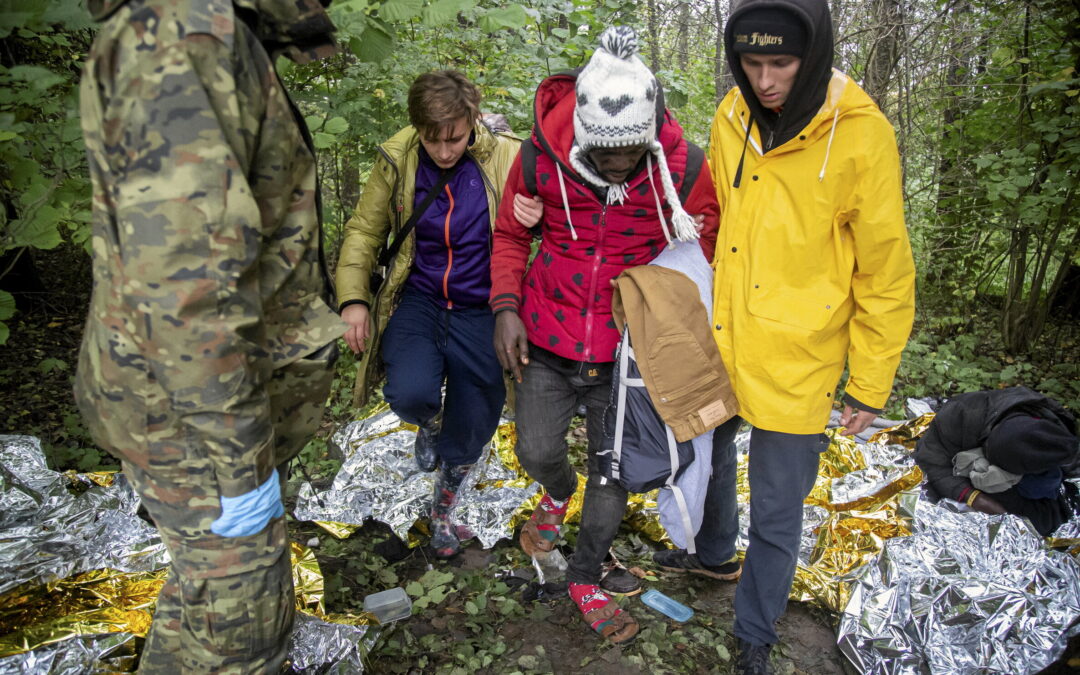
That immediately prompted concern that the law could be used against volunteers and residents of border areas who provide aid – such as food, water, medical treatment, clothing or shelter – to migrants who have crossed illegally from Belarus.
Since 2021, tens of thousands of people, mainly from Asia and Africa, have tried to cross that border with the encouragement and support of the Belarusian authorities. They have sometimes used violence against Polish border officers.
Poland and the EU accuse Belarus of “weaponising” migration as part of the “hybrid warfare” being waged by Russia and its allies against European countries. They have implemented tough border protection measures to prevent crossings and facilitate “pushbacks” of those who cross.
However, many human rights and aid organisations argue that the migrants – over 100 of whom have died around the border since 2021 – are often victims of this process and need humanitarian support.
Two dead bodies found in the river on Poland's border with Belarus likely belong to migrants from a group seen being pushed into the water by Belarusian officers as part of efforts to encourage irregular crossings into the EU, says a Polish minister https://t.co/xsnPd6FeO3
— Notes from Poland 🇵🇱 (@notesfrompoland) April 16, 2025
In response to the interior ministry’s proposal, 61 organisations, including Amnesty International, the Helsinki Foundation for Human Rights and the Auschwitz-Birkenau Foundation, signed a joint statement condemning the plans, which they said “violate international standards binding Poland”.
The organisations warned that the proposed wording could expose medical staff treating migrants, lawyers providing legal assistance, facilities working with children, and organisations supporting victims of human trafficking to criminal liability.
“This measure is not aimed at smugglers, but rather at activists or residents of border areas who provide humanitarian aid to foreign nationals who have crossed the border illegally and are present in Poland,” attorney Radosław Baszuk told the Rzeczpospolita daily
Baszuk previously represented five Polish activists who were prosecuted for providing food, clothing and shelter to a group of Middle Eastern migrants who had entered Poland from Belarus in 2022.
A group of five activists have been found not guilty of enabling the illegal presence in Poland of Middle Eastern migrants whom they provided aid to after they had irregularly crossed the border from Belarus.
Prosecutors had been seeking prison sentences https://t.co/RpfhVWL4hY
— Notes from Poland 🇵🇱 (@notesfrompoland) September 8, 2025
They were acquitted last year, with the ruling made final in March this year after an appeal. But Baszuk told Rzeczpospolita that, under the interior ministry’s proposed amendment to the relevant law, his clients could been convicted.
On Wednesday, Poland’s commissioner for human rights, Sylwia Gregorczyk-Abram, also wrote to the justice ministry to “express concern” that the proposed changes “could lead to criminal liability for charitable or humanitarian activities undertaken towards individuals whose residence status has not yet been regulated”.
Even a member of the government, the minister for family, labour and social policy, Agnieszka Dziemianowicz-Bąk, expressed her “firm opposition” to the plans on social media. She is from The Left (Lewica), one of the junior partners in Poland’s ruling coalition.
‼️ Ciepły posiłek, nocleg, potrzebne leki – za to wolontariusz ma trafić do więzienia nawet na 3 lata? 😡 Nie ma zgody Lewicy na kryminalizowanie pomocy humanitarnej!
Ministra Agnieszka Dziemianowicz-Bąk zwróciła się do ministra Waldemara Żurka ze stanowczym sprzeciwem wobec… pic.twitter.com/QskUfJmgsu
— Lewica (@__Lewica) October 14, 2026
In response to the growing criticism, the interior ministry announced on Friday that it was withdrawing the proposal, saying it decided to do so “to eliminate any doubts and prevent the misinterpretation of regulations”.
“From the beginning, the ministry’s sole objective has been to tighten the system and target the organisers of this practice [of migrant smuggling],” said the ministry, quoted by Rzeczpospolita.
“Legal provisions must effectively protect the state’s borders against organised crime, while simultaneously fully safeguarding humanitarian values and life-saving activities.”
The number of attempted illegal crossings by migrants from Belarus to Poland fell from 15,500 in the first half of 2025 to 235 this year – a drop of over 98%
Poland also now claims a 100% success rate in apprehending migrants who manage to cross illegally https://t.co/RFZkd7CeIk
— Notes from Poland 🇵🇱 (@notesfrompoland) July 20, 2026
Both the former Polish government and the current one, which took power in December 2023, have regularly faced criticism from human rights groups over their response to the migration crisis on the Belarus border.
Earlier this year, the previous human rights commissioner, Marcin Wiącek, expressed concern over a ban on asylum claims introduced by the government in March 2025. He noted that the measures had been described as a temporary solution, but have remained in place ever since.
The government, however, argues that its measures have been effective in preventing the illegal trafficking of migrants. Its data show that attempted border crossings from Belarus fell from around 15,500 in the first half of last year to less than 250 in the same period this year – a drop of over 98%.
It also now claims to have a 100% success rate in apprehending migrants who manage to cross illegally.
Notes from Poland is run by a small editorial team and published by an independent, non-profit foundation that is funded through donations from our readers. We cannot do what we do without your support.
Main image credit: Agnieszka Sadowska/ Agencja Wyborcza.pl
Since 2021, tens of thousands of people, mainly from Asia and Africa, have tried to cross that border with the encouragement and support of the Belarusian authorities.
Poland and the EU accuse Belarus of “weaponising” migration as part of the “hybrid warfare” being waged by Russia and its allies against European countries. They have implemented tough border protection measures to prevent crossings and facilitate “pushbacks” of those who cross.
However, many human rights and aid organisations argue that the migrants themselves – over 100 of whom have died around the border since 2021 – are often victims of this process and deserve humanitarian support.
Two dead bodies found in the river on Poland's border with Belarus likely belong to migrants from a group seen being pushed into the water by Belarusian officers as part of efforts to encourage irregular crossings into the EU, says a Polish minister https://t.co/xsnPd6FeO3
— Notes from Poland 🇵🇱 (@notesfrompoland) April 16, 2025
In response to the interior ministry’s proposal, 61 organisations, including Amnesty International, the Helsinki Foundation for Human Rights and the Auschwitz-Birkenau Foundation, signed a joint statement condemning the plans, which they said “violate international standards binding Poland”.
The organisations warned that the proposed wording could expose medical staff treating migrants, lawyers providing legal assistance, facilities working with children, and organisations supporting victims of human trafficking to criminal liability.
“This measure is not aimed at smugglers, but rather at activists or residents of border areas who provide humanitarian aid to foreign nationals who have crossed the border illegally and are present in Poland,” attorney Radosław Baszuk told Rzeczpospolita.
Baszuk previously represented five Polish activists who were prosecuted for providing food, clothing and shelter to a group of Middle Eastern migrants who had entered Poland from Belarus in 2022.
A group of five activists have been found not guilty of enabling the illegal presence in Poland of Middle Eastern migrants whom they provided aid to after they had irregularly crossed the border from Belarus.
Prosecutors had been seeking prison sentences https://t.co/RpfhVWL4hY
— Notes from Poland 🇵🇱 (@notesfrompoland) September 8, 2025
They were acquitted last year, with the ruling made final in March this year after an appeal. But Baszuk told Rzeczpospolita that, under the interior ministry’s proposed amendment to the relevant law, his clients could been convicted.
On Wednesday, Poland’s commissioner for human rights, Sylwia Gregorczyk-Abram, also wrote to the justice ministry to “express concern” that the proposed changes “could lead to criminal liability for charitable or humanitarian activities undertaken towards individuals whose residence status has not yet been regulated”.
Even a member of the government, the minister for family, labour and social policy, Agnieszka Dziemianowicz-Bąk, expressed her “firm opposition” to the plans on social media. She is from The Left (Lewica), one of the junior partners in Poland’s ruling coalition.
‼️ Ciepły posiłek, nocleg, potrzebne leki – za to wolontariusz ma trafić do więzienia nawet na 3 lata? 😡 Nie ma zgody Lewicy na kryminalizowanie pomocy humanitarnej!
Ministra Agnieszka Dziemianowicz-Bąk zwróciła się do ministra Waldemara Żurka ze stanowczym sprzeciwem wobec… pic.twitter.com/QskUfJmgsu
— Lewica (@__Lewica) October 14, 2026
In response to the growing criticism, the interior ministry has now announced that it is withdrawing the proposal, saying it decided to do so “to eliminate any doubts and prevent the misinterpretation of regulations”.
“From the beginning, the ministry’s sole objective has been to tighten the system and target the organisers of this practice [of migrant smuggling],” said the ministry, quoted by Rzeczpospolita.
“Legal provisions must effectively protect the state’s borders against organised crime, while simultaneously fully safeguarding humanitarian values and life-saving activities.”
The number of attempted illegal crossings by migrants from Belarus to Poland fell from 15,500 in the first half of 2025 to 235 this year – a drop of over 98%
Poland also now claims a 100% success rate in apprehending migrants who manage to cross illegally https://t.co/RFZkd7CeIk
— Notes from Poland 🇵🇱 (@notesfrompoland) July 20, 2026
Both the former Polish government and the current one, which took power in December 2023, have regularly faced criticism from human rights groups over their response to the migration crisis on the Belarus border.
Earlier this year, the then-human rights commissioner, Marcin Wiącek, expressed concern over a ban on asylum claims introduced by the government in March 2025. He noted that the measures were initially described as a temporary solution, but have remained in place ever since.
The government, however, argues that its actions have been effective in discouraging the illegal trafficking of migrants. Its data show that attempted border crossings from Belarus fell from around 15,500 in the first half of last year to less than 250 in the same period this year – a drop of over 98%.
It also now claims to have a 100% success rate in apprehending migrants who manage to cross illegally.
Notes from Poland is run by a small editorial team and published by an independent, non-profit foundation that is funded through donations from our readers. We cannot do what we do without your support.
Main image credit: Agnieszka Sadowska/ Agencja Wyborcza.pl

Alicja Ptak is deputy editor-in-chief of Notes from Poland and a multimedia journalist. She has written for Clean Energy Wire and The Times, and she hosts her own podcast, The Warsaw Wire, on Poland’s economy and energy sector. She previously worked for Reuters.