Keep our news free from ads and paywalls by making a donation to support our work!

Notes from Poland is run by a small editorial team and is published by an independent, non-profit foundation that is funded through donations from our readers. We cannot do what we do without your support.
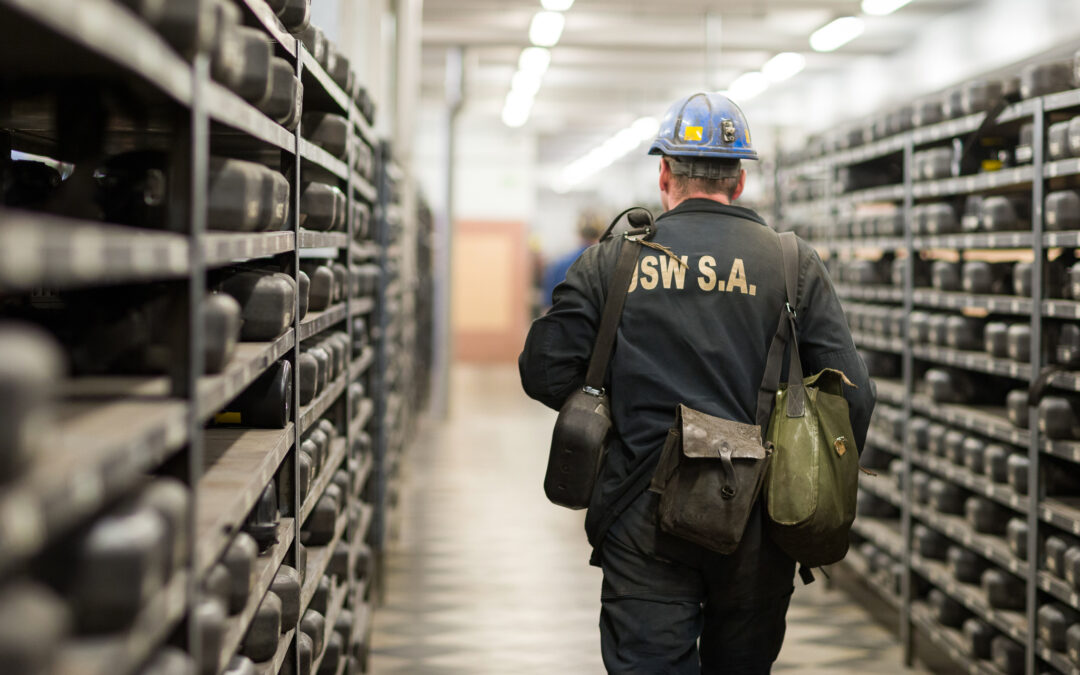
Polish state-owned mining firm Jastrzębska Spółka Węglowa (JSW), which is the EU’s largest producer of coking coal and one of Poland’s biggest employers, has announced that it will cut over 4,000 jobs, 21% of its workforce, by the end of this year.
The plans come as JSW seeks to turn around its finances after years of large losses, as well as a broader shift in Poland away from reliance on coal.
Jastrzębska Spółka Węglowa do końca 2026 r. zwolni ponad 4,2 tys. osób. – Musimy kierować się interesem spółki – mówił na konferencji prasowej prezes JSW. Więcej: https://t.co/7Sxrhuuaja pic.twitter.com/evJoQal0c3
— Gazeta.pl (@gazetapl_news) October 1, 2026
On Wednesday, JSW’s management board announced that it expected the size of its workforce to decline by 4,248 by the end of this year, bringing it below 16,000, down from 20,135 at the end of March.
“We anticipate that approximately 2,200 people will leave in the third quarter, and about 1,400 in the fourth quarter,” adding to those who have already left, said the firm’s CEO, Bogusław Oleksy, quoted by the Polish Press Agency (PAP).
Last year, Poland introduced a new law making it easier for coal companies to close mines and reduce their workforce. It provides for large severance payments and other measures intended to soften the blow for those who lose their jobs.
News service Strefa Inwestorów says that, on this basis, more than 3,000 JSW employees have the option to take so-called mining or mineral-processing leave while just under 1,200 can opt for one-off severance payments.
President Nawrocki has signed into law a government bill that makes it easier to close down coal mines and provides severance pay of 170,000 zloty to miners.
The measures are seen as a key part of Poland’s transition towards cleaner forms of energy https://t.co/vH6MU4nBsv
— Notes from Poland 🇵🇱 (@notesfrompoland) December 15, 2025
The workforce reduction is part of JSW’s recovery plan for 2026-2035, announced this week. Other key objectives include cutting costs and investment without decreasing production while increasing the share of coking coal in output.
When asked how the workforce reduction would affect production, Oleksy said the company would optimise its operations to make more efficient use of employees and equipment. He noted that most of the losses would be administrative positions rather than staff directly involved in production.
In February this year, the company reached an agreement with unions to reduce labour costs in order to help stabilise the company’s financial position. JSW employees almost unanimously supported the agreement, reported broadcaster TVN.
The initial results of the cost-cutting measures are beginning to show. In the first half of 2026, the cost of extraction per tonne fell to 609 zloty (€139) from 778 zloty a year earlier. JSW’s long-term goal is to bring the cost down to around 560 zloty per tonne.
The company is still posting heavy losses, though those have also fallen this year. JSW posted a net loss of just over 1.0 billion zloty in the first half of 2026, around half the 2.1 billion zloty figure from the same period a year earlier.
For the full year 2025, the company recorded a loss of 6.3 billion zloty, which was down from a record figure of 7.3 billion zloty in 2024.
Polish state-owned mining giant JSW, the EU's largest producer of coking coal, has reported a record annual loss of 7.3bn zloty.
It attributed the results to falling coal prices, lower production volumes, and the impact of a one-off write-off https://t.co/vrSgRu630b
— Notes from Poland 🇵🇱 (@notesfrompoland) April 11, 2025
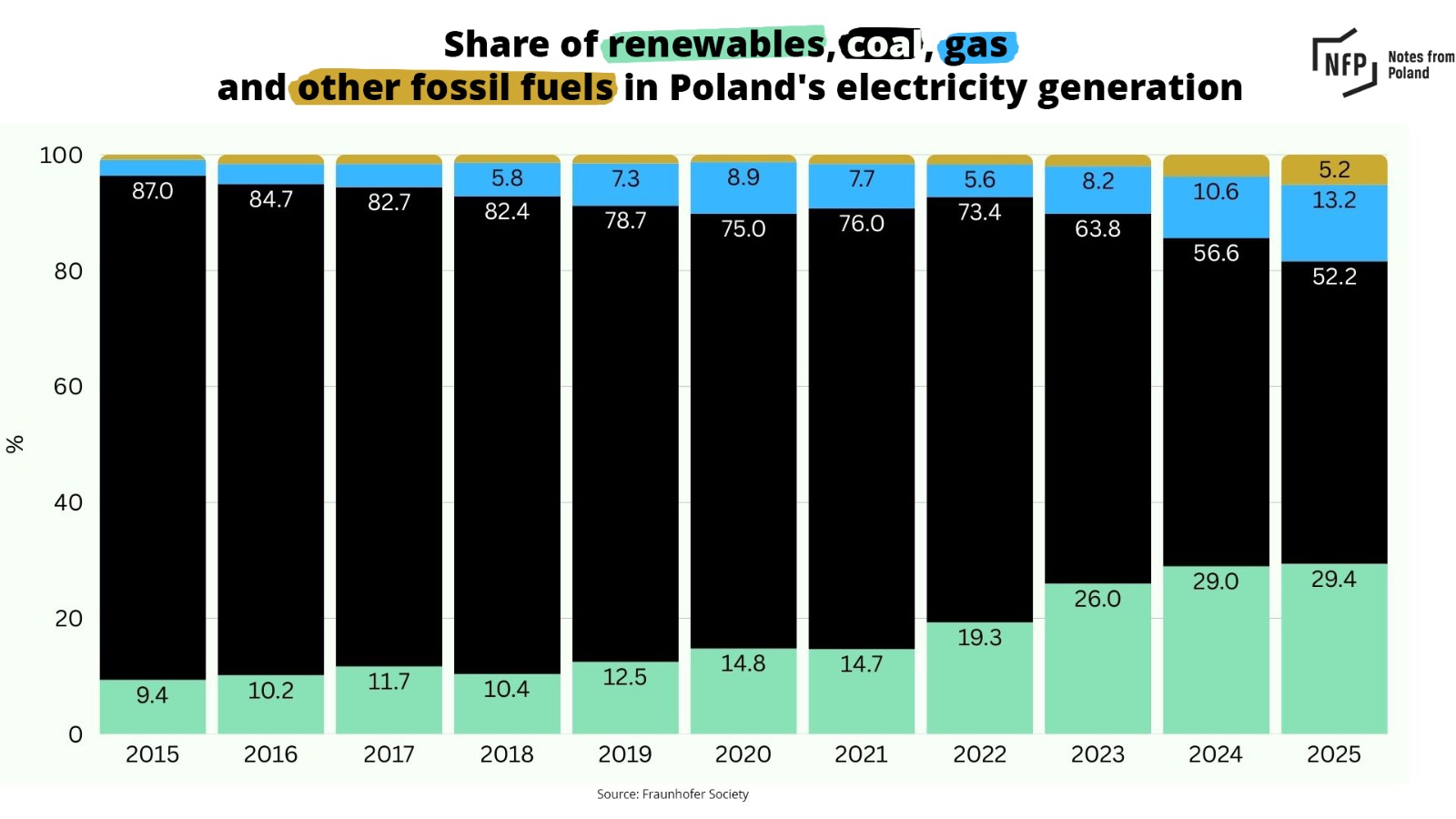
JSW’s announcement comes just as some officials and industry representatives are warning that the energy crisis caused by conflict in the Middle East could increase demand in Poland for coal, which is still used to generate around half of electricity and to heat almost a fifth of homes.
Polish coal is among the most expensive in the world to extract, and the industry survives largely due to heavy public subsidies. In 2026, the state is expected to spend 5.5 billion zloty propping up the sector, after an outlay of 9 billion zloty last year.
Successive governments have been seeking to move away from coal, which went from producing 87% of Poland’s electricity in 2015 to 52.2% in 2025.
Meanwhile, between 2015 and 2024, the proportion of households using hard coal for heating fell from 40% to 17%, while those using natural gas doubled from 10% to 21%.
However, the energy crisis prompted by US and Israeli attacks on Iran this year has resulted in natural gas prices soaring. As a result, Poland’s state assets minister, Wojciech Balczun, said last month that the geopolitical situation meant coal’s role this year would be “larger than we anticipated”.
“We are currently increasing output at coal companies and are aware of the energy sector’s demand for coal as a stabilising factor,” he said, quoted by news service Money.pl.
Notes from Poland is run by a small editorial team and published by an independent, non-profit foundation that is funded through donations from our readers. We cannot do what we do without your support.
Main image credit: JSW press materials

Alicja Ptak is deputy editor-in-chief of Notes from Poland and a multimedia journalist. She has written for Clean Energy Wire and The Times, and she hosts her own podcast, The Warsaw Wire, on Poland’s economy and energy sector. She previously worked for Reuters.