Keep our news free from ads and paywalls by making a donation to support our work!

Notes from Poland is run by a small editorial team and is published by an independent, non-profit foundation that is funded through donations from our readers. We cannot do what we do without your support.
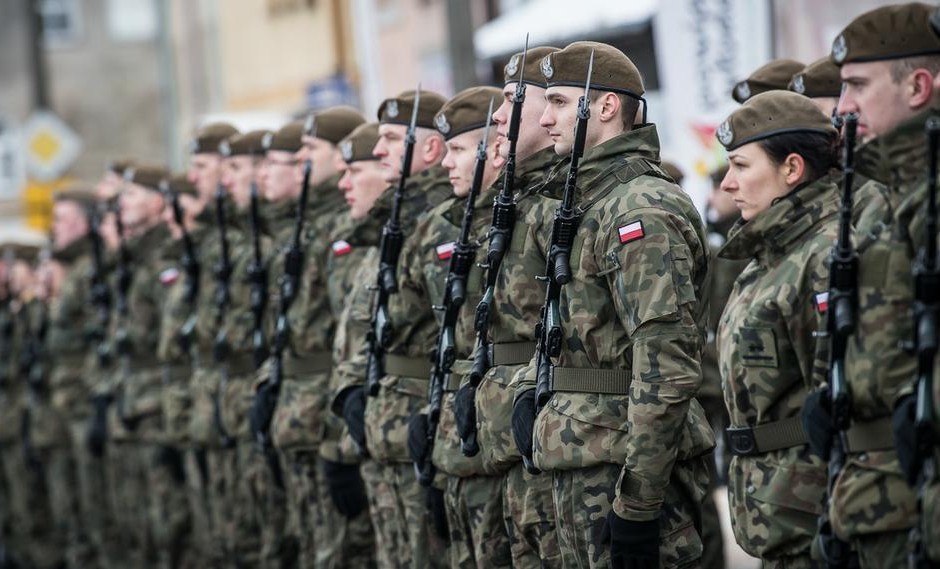
Soldiers in Poland will be able to pick up their uniforms from their nearest parcel locker rather than having to collect them from military stores under a new scheme being rolled out by the armed forces, with private logistics giant InPost responsible for deliveries.
The move is a “simple, practical change” that will make life easier for troops, said a deputy defence minister. The CEO of InPost, which is Europe’s largest operator of parcel lockers, praised the decision to make “dual use” of private infrastructure for national-security purposes.
📦 Żołnierze odbiorą umundurowanie w paczkomacie. Trwa pilotaż nowego systemu.‼️
🔊W Siłach Zbrojnych RP trwa pilotaż nowego systemu, który rozszerza możliwości zaopatrywania żołnierzy. Już od przyszłego roku funkcjonować będzie Platforma Wysyłkowa Przedmiotów Umundurowania i… pic.twitter.com/NGUAQognYX
— Inspektorat Wsparcia Sił Zbrojnych (@IWsp_SZ) July 9, 2026
Under the new system, military personnel can order equipment via an online system and collect it from parcel lockers, which are devices that allow users to collect packages independently at any time.
“We want soldiers to be able to order their equipment in a modern, simple, and convenient way, without having to adjust to the opening hours of stores, and to be able to do so at any time they choose,” said General Dariusz Mendrala, the head of the Armed Forces Support Inspectorate (IWsp SZ).
A small pilot scheme began last year and has now been expanded to over 20,000 soldiers. That figure will rise to around 60,000 by the end of this year, before the system is fully rolled out in 2027.
“This is a simple, practical change…that will make soldiers’ daily service easier,” said Cezary Tomczyk, a deputy defence minister, sharing details of the scheme on social media.
He indicated that the system covers other equipment in addition to uniforms, though neither he nor IWsp SZ have specified what types of gear are included.
Sharing Tomczyk’s post, Rafał Brzoska, the founder and CEO of Inpost, said that the scheme was a good example of the “dual use” of civilian and commercial technologies for national security purposes.
“Polish business has been calling for years: let’s use domestic technologies, infrastructure and enterprise to reinforce the state’s defence,” wrote Brzoska. He noted that Ukraine has shown, for example through its drone industry, how private enterprises can support the military.
Polski biznes od lat apeluje: korzystajmy z krajowych technologii, infrastruktury i przedsiębiorczości do wzmacniania obronności państwa. @MON_GOV_PL właśnie pokazuje, jak przejść od deklaracji do działania!!
I to jest właśnie realny dual use, o którym wszyscy mówią, tylko w… https://t.co/oXA8dmoVpE
— Rafał Brzoska (@RBrzoska) July 10, 2026
A spokesman for IWsp SZ, Lieutenant Colonel Piotr Płuciennik, confirmed to broadcaster TVN that InPost had been selected in a tender to manage the deliveries until December this year. He said that the system was set to cost around 2 million zloty (€462,00) a year.
InPost operates by far Poland’s largest network of parcel lockers: its almost 29,000 devices represent around half the total number in the country. The company has also expanded rapidly in western Europe, where it operates parcel lockers in the UK, France and Spain, among other countries.
Płuciennik said that the delivery company is given pre-packaged parcels that feature only the soldier’s phone number on the label. For security reasons, they are delivered only to parcel lockers, and not to home addresses.
With an estimated 233,800 military personnel in 2025, Poland’s armed forces are the third-largest in NATO, behind only the United States and Turkey. That figure has more than doubled in the last decade as Poland has ramped up defence spending in response to a growing threat from Russia.
Poland has NATO’s third-largest military and the alliance’s largest in Europe, new figures show.
For more, see our full report here: https://t.co/QBBVQ9cqzS pic.twitter.com/TA34KQrJ4k
— Notes from Poland 🇵🇱 (@notesfrompoland) July 16, 2024
Notes from Poland is run by a small editorial team and published by an independent, non-profit foundation that is funded through donations from our readers. We cannot do what we do without your support.
Main image credit: st.szer. Wojciech Król/CO MON (under CC BY-SA 4.0)

Ben Koschalka is a translator, lecturer, and senior editor at Notes from Poland. Originally from Britain, he has lived in Kraków since 2005.