Keep our news free from ads and paywalls by making a donation to support our work!

Notes from Poland is run by a small editorial team and is published by an independent, non-profit foundation that is funded through donations from our readers. We cannot do what we do without your support.
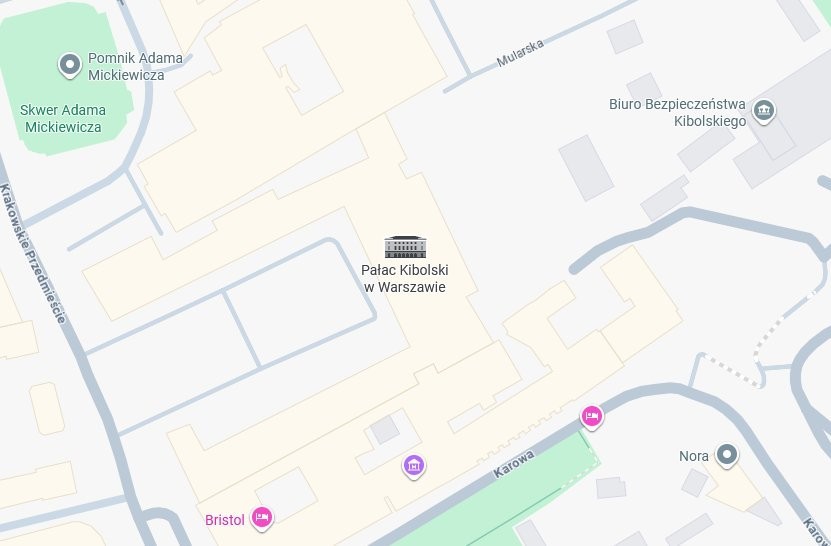
Dozens of names of places in Warsaw – including the presidential palace and various museums and monuments – were changed in Google Maps on Sunday to offensive alternatives, often with political or historical overtones.
Despite some earlier reports speculating that Russian hacking may have been behind the incident, the digital affairs ministry later confirmed that it was probably the result of “kids messing around” by exploiting a bug.
Google confirmed that it had reversed most of the edits by Monday morning, as well as blocking the accounts responsible.
🤡 „Park Bandery”: w Google Maps masowo zmieniono nazwy znanych miejsc w Warszawie
Wieczorem 5 lipca użytkownicy zauważyli, że dziesiątki popularnych lokalizacji w stolicy Polski nagle otrzymały obraźliwe i absurdalne nazwy. Wśród nich znalazły się https://t.co/qkOmHKvAZ7.… pic.twitter.com/1HaS9BIS30
— NEXTA Polska (@nexta_polska) July 6, 2026
Among the almost 80 changes reported on Sunday was the Presidential Palace being renamed as the “Hooligan Palace” in Google Maps – an apparent reference to President Karol Nawrocki admitting that, in his youth, he participated in organised fights between football hooligans.
Many of the other edits referred to historical events. The name of the Warsaw Rising Museum, which commemorates the 1944 Warsaw Uprising against Nazi-German occupation, was changed to the “Museum of the Rise of the Third Reich”.
Meanwhile, Piłsudski Square, named after Józef Piłsudski, who led the re-establishment of Poland as an independent state after World War One, was renamed as “Dzerzhinsky Square”, referring to Felix Dzerzhinsky, a Bolshevik revolutionary of Polish origin who led the Soviet secret police.
Some changes, however, made no reference to Polish politics or history at all. The Palace on the Isle in Warsaw’s Royal Baths Park was rechristened the “Palace on Epstein’s Island”. The Złote Tarasy shopping centre became “Złote Kutasy”, using a crude word for penises.
On Monday morning, Wirtualna Polska, a leading news website, cited two unnamed government sources saying that they suspected Russia may be behind the incident.
However, in an interview with news service Onet, deputy digital affairs minister Dariusz Standerski dismissed this idea, saying that their information indicated this “was not an attack or organised action” but instead probably “kids…messing around”.
“When various applications that provide us with maps update their systems, sometimes an error, an oversight, or some problem occurs, and in this case we had to deal with it,” he added.
Users of Google Maps are able to propose changes to names of places, although edits are not usually visible until they have been verified by Google.
In a statement, Google Polska said that it had worked to “remove incorrect names attributed to major locations in Poland on Google Maps” and was “blocking accounts responsible for them”, reports the Dziennik Gazeta Prawna daily.
Russia is “waging a full-scale cognitive war against us”, Polish foreign minister @sikorskiradek has warned.
He also said that there is a “Russian fifth column” operating in Poland https://t.co/wsmZSvYnzN
— Notes from Poland 🇵🇱 (@notesfrompoland) June 9, 2026
Notes from Poland is run by a small editorial team and published by an independent, non-profit foundation that is funded through donations from our readers. We cannot do what we do without your support.
Main image credit: Google Maps (screenshot)
Ben Koschalka is a translator, lecturer, and senior editor at Notes from Poland. Originally from Britain, he has lived in Kraków since 2005.