Keep our news free from ads and paywalls by making a donation to support our work!

Notes from Poland is run by a small editorial team and is published by an independent, non-profit foundation that is funded through donations from our readers. We cannot do what we do without your support.
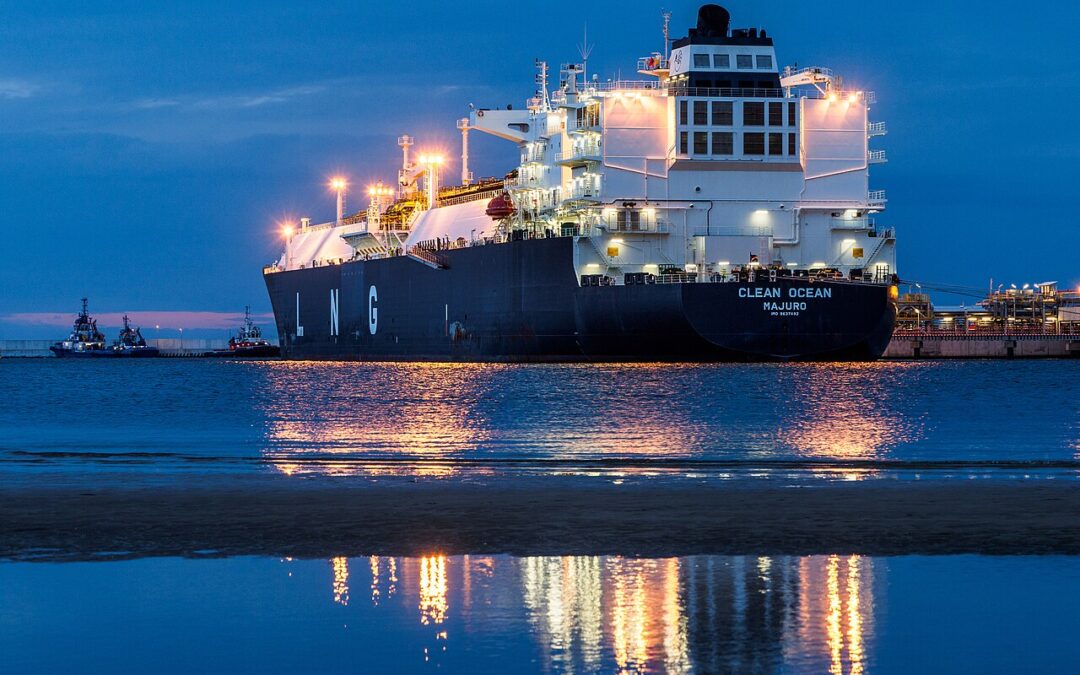
Poland has announced plans to build a third liquefied natural gas (LNG) terminal as part of efforts to become a hub supplying gas to other countries in the region.
“This is a historic decision for Polish energy security,” said energy minister Miłosz Motyka. “We are building a new security architecture for Europe and strengthening our position as a regional energy hub.”
❗️Historyczny krok dla bezpieczeństwa energetycznego Polski 🇵🇱
Podjęliśmy decyzję o budowie trzeciego terminala LNG nad Bałtykiem. Terminal FSRU 2 w Zatoce Gdańskiej znacząco zwiększy nasze możliwości importu gazu i wzmocni odporność Polski na wszelkie zawirowania na rynkach… pic.twitter.com/9fJiRmFDve
— Miłosz Motyka (@motykamilosz) June 23, 2026
Poland currently has one operating LNG terminal, located in Świnoujście on the Baltic coast. It opened in December 2015 and has the capacity to receive 8.3 billion cubic meters (bcm) a year.
In 2028, a second terminal – a floating storage regasification unit (FSRU), meaning a specialised vessel that can receive, store and regasify LNG – is due to open in the Bay of Gdańsk. Currently under construction in South Korea, that facility will add a further capacity of 6.1 bcm.
However, even though the second terminal is yet to launch, Gaz-System, Poland’s state gas transmission operator, last year began gauging interest from neighbouring countries in LNG imports, with the aim of assessing whether another FSRU in Gdańsk would be needed.
On Tuesday this week, Gaz-System confirmed that this third terminal would go ahead. Once complete, it will bring Poland’s total regasification capacity to over 20 bcm a year.
Discussing the plans ahead of a cabinet meeting on Tuesday, Tusk said that the third terminal will “consolidate Poland’s role as a gas hub”, adding that “commercial interest in this venture is so strong that this investment won’t require any financial support from the state budget”.
With regard to the planned second terminal, four companies – Polish state energy firms Orlen, PGE and Enea, as well as the private company Unimot – have now confirmed that they have signed deals giving them long-term access.
This means that Orlen will no longer have a monopoly on access to LNG import infrastructure in Poland. Gaz-System says that “increased competition and better infrastructure utilisation [will] contribute to the sustainable reduction of gas supply costs”.
Work on the construction of a liquefied natural gas terminal for Poland has begun in South Korea.
The floating storage and regasification unit (FSRU) is expected to become operational in 2028 and supply one third of Poland’s annual gas demand.https://t.co/GxDUOl53rF
— Notes from Poland 🇵🇱 (@notesfrompoland) July 23, 2025
LNG has been a major element of Poland’s efforts over the last decade to diversify away from Russian energy supplies. Those plans were accelerated in 2022 by Russia’s full-scale invasion of Ukraine, after which Poland quickly moved to entirely end Russian coal, oil and gas deliveries.
LNG deliveries have mostly come from the United States and Qatar. In 2022, Poland also opened the Baltic Pipe, which brings gas from Norway via Denmark.
While supplies have mainly been for domestic use, last year a delegation led by Poland’s finance minister, Andrzej Domański, visited Washington for talks on Poland becoming a hub for supplying US gas to neighbouring Ukraine and Slovakia.
Gaz-System said on Tuesday that Poland’s infrastructure, including interconnectors with Denmark, Germany, the Czech Republic and Slovakia, will enable the country to import up to 50 bcm of gas annually from 2030.
Poland is in talks with the US over establishing a "Polish gas hub" that will receive increased quantities of American LNG, which will then be supplied to Ukraine and Slovakia https://t.co/1CBnLklIms
— Notes from Poland 🇵🇱 (@notesfrompoland) November 6, 2025
Notes from Poland is run by a small editorial team and published by an independent, non-profit foundation that is funded through donations from our readers. We cannot do what we do without your support.
Main image credit: Maciej Margas/Wikimedia (under CC BY-SA 4.0)

Olivier Sorgho is senior editor at Notes from Poland, covering politics, business and society. He previously worked for Reuters.