
Keep our news free from ads and paywalls by making a donation to support our work!

Notes from Poland is run by a small editorial team and is published by an independent, non-profit foundation that is funded through donations from our readers. We cannot do what we do without your support.
Police data show that Poland last year saw a significant increase in organised crime by Russian-speaking gangs from former Soviet states, in particular Ukraine.
The minister responsible for Poland’s security services, Tomasz Siemoniak, acknowledges that such “imported crime” is a problem, but says that the new figures show how effective the police have been in dealing with the issue.
🔴 Rosyjskojęzyczne gangi rozgościły się w Polsce. „Rzeczpospolita” analizuje raport CBŚPhttps://t.co/NZ9yu18Vkq
— Rzeczpospolita (@rzeczpospolita) March 25, 2026
On Tuesday, Rzeczpospolita, a leading daily, published data from the Central Investigation Bureau of Police (CBŚP), a unit tasked with tackling organised crime.
The figures show that 265 foreigners were charged last year in organised crime cases, which was 81 more than in 2024 – a rise of 44%. Among those suspects, 216 (82%) were Russian-speaking.
However, suspects were rarely from Russia itself: the largest number, 111, were from Ukraine, where there is a large minority that use Russian as their first language, especially in the Russian-occupied east of the country.
A further 45 were from Belarus, 23 from Armenia and 11 from Georgia. Those three countries, like Ukraine, were previously part of the Soviet Union.
Rzeczpospolita reports that Russian-speaking criminal gangs largely commit crimes that are not visible to the wider public, such as smuggling goods and people and financial cybercrimes.
But they are also involved in some of the so-called “hybrid actions” that Russia and Belarus have used to test Poland’s defences and sow unrest, such as the migration crisis on the Belarusian border and the use of weather balloons to smuggle cigarettes into Poland.
However, the police data also show that most organised crime in Poland continues to be carried out by Polish gangs. Among the 157 crime groups dismantled by CBŚP last year, 131 were Polish while only six were Russian-speaking. A further 20 were other types of international gangs.
Around 10% of suspects in organised crime cases were foreigners. For comparison, figures from Poland’s Social Insurance Institution (ZUS) show that, at the end of July 2025, foreigners made up 6.7% of workers in Poland. Among foreign workers, two thirds of them were Ukrainians.
The government says that Poland is experiencing a growing wave of crime committed by immigrants and has taken tough action in response, including mass arrests and deportations.
But official data show that the story is not so simple, writes @Gosia_Tomczak https://t.co/smHyp6lkyG
— Notes from Poland 🇵🇱 (@notesfrompoland) April 16, 2025
In response to Rzeczpospolita’s report, Siemoniak told Polsat News that the growing number of arrests and charges “demonstrates the effectiveness of the police” in dealing with such criminals.
Siemoniak, who is the minister in charge of the security services but until last summer was also interior minister, said that the interior ministry had “held many meetings on this issue, specifically regarding this type of imported crime”.
He noted that, while Poland effectively managed to deal with homegrown organised crime at the turn of the century, “entire [foreign] gangs are now moving to Poland…to fill this vacuum”.
But he said that the police are well prepared to deal with this threat, and also noted that the government last year stepped up the deportation of foreign criminals. In 2025, 2,100 people were deported, twice as many as the year before.
Poland has forcibly removed 2,100 foreigners from the country this year, around twice as many as in 2024.
The figures come after the government introduced a tougher new migration policy last year, which has included more deportations of foreign criminals https://t.co/zOBxPLipy8
— Notes from Poland 🇵🇱 (@notesfrompoland) December 31, 2025
Notes from Poland is run by a small editorial team and published by an independent, non-profit foundation that is funded through donations from our readers. We cannot do what we do without your support.
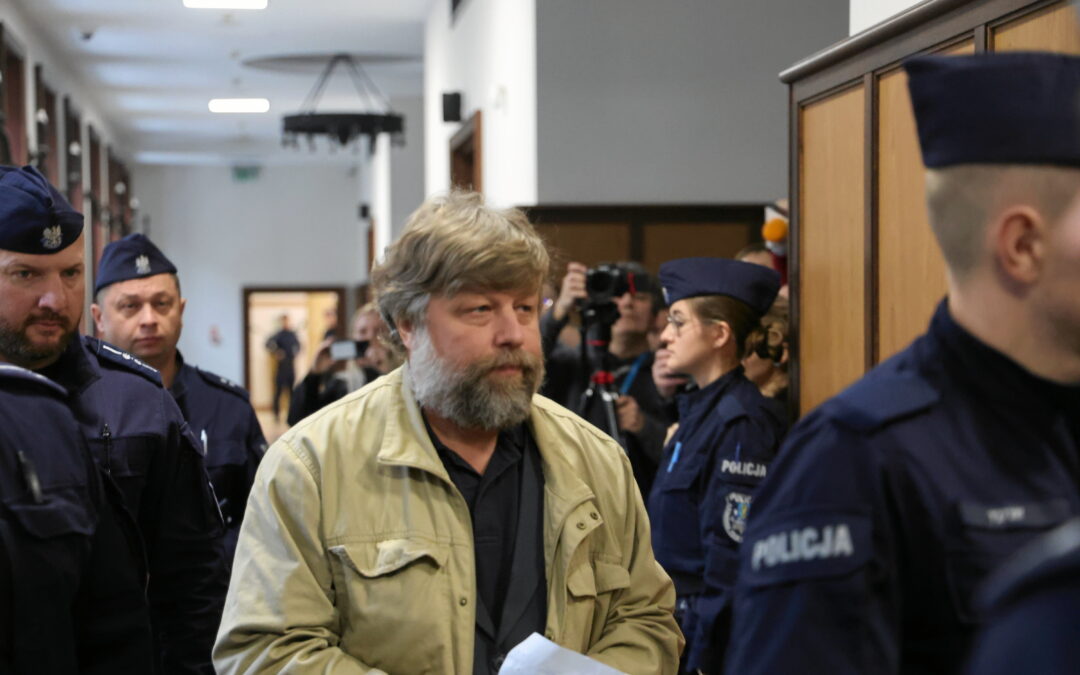
Main image credit: Prokuratura Krajowa (under CC BY-SA 4.0)

Daniel Tilles is editor-in-chief of Notes from Poland. He has written on Polish affairs for a wide range of publications, including Foreign Policy, POLITICO Europe, EUobserver and Dziennik Gazeta Prawna.