Keep our news free from ads and paywalls by making a donation to support our work!

Notes from Poland is run by a small editorial team and is published by an independent, non-profit foundation that is funded through donations from our readers. We cannot do what we do without your support.
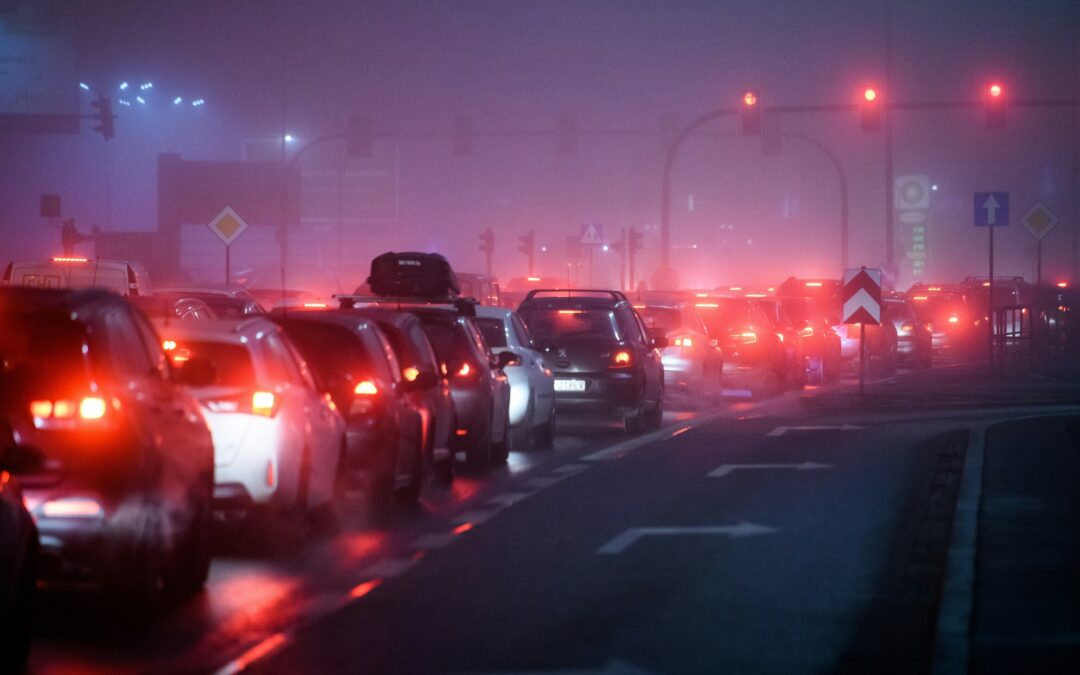
A court has rejected an attempt to overturn the Clean Transport Zone that was introduced at the start of this year in Kraków, Poland’s second-largest city, and which places restrictions on driving older, more polluting cars.
In a newly released justification for the ruling, the judges found that the measures were necessary to protect public health and complied with the law. However, the politicians who launched the legal challenge have pledged to continue their fight.
Kraków, which has some of the worst air pollution in Europe, introduced the new restrictions on 1 January 2026. It had planned to do so in 2024, but those efforts were blocked by an earlier court ruling.
Petrol cars that were manufactured after 2004 or diesel cars produced since 2014 are free to enter the city as normal. People driving older vehicles must pay 2.5 zloty per hour, 5 zloty per day or a 100 zloty (€23.70) monthly fee.
The monthly charge will rise to 250 zloty/month in 2027 and 500 zloty/month in 2028. From 2029, older vehicles will be banned entirely from entering the city.
Residents of Kraków who have non-compliant cars are, however, exempt from the measures if they purchased their vehicle before 26 June 2025 and if they pay their taxes in the city.
Krakowie działa już Strefa Czystego Transportu (SCT), której celem jest poprawa jakości powietrza i ochrona zdrowia mieszkańców. Obecnie około 80% tlenków azotu w mieście pochodzi z rur wydechowych samochodów, dlatego strefa ma ograniczać ich emisję, dążąc do znaczącej redukcji… pic.twitter.com/BOU0Oi1MQC
— Kraków (@krakow_pl) January 10, 2026
The new measures have sparked criticism from some politicians and local officials, who argued that they unfairly burden drivers from outside Kraków who need to enter the city, in particular people with lower incomes, who are more likely to drive older cars and will be hit harder by the new costs.
Andrzej Adamczyk, an MP for the opposition Law and Justice (PiS) party and a former infrastructure minister, called the Clean Transport Zone a “tax on poverty”.
He filed a legal complaint against it, as did councillors from some districts around Kraków and Krzysztof Jan Klęczar, the governor of the Małopolska province in which Kraków is located. They argued, among other things, that the rules are discriminatory.
Poseł PiS Andrzej Adamczyk skarży uchwałę SCT do sądu. "To podatek od niezamożności".
______________________________
🔹 Więcej 👉 https://t.co/o6RcuGDueh pic.twitter.com/YaR60szyZ0— TVP3 Kraków (@tvp3krakow) August 27, 2025
However, in January, the provincial administrative court in Kraków ruled, in response to those complaints, that Kraków had acted lawfully in introducing the Clean Transport Zone.
Only now, however, has their written justification been released. In it, the judges found that the restrictions and set of exemptions were “proportionate to the fundamental objective of introducing a clean transport zone, i.e. protecting the health and lives of people living and staying in Kraków”.
Protecting health from negative environmental effects, they noted, is an obligation stemming from Poland’s constitution.
Moreover, the court found that the city was obliged to act after nitrogen dioxide levels exceeded legal limits and that the authorities were entitled to consider stricter EU air quality standards due to take effect in 2030. The judges said the boundaries of the restricted area were based on pollution data and were not arbitrary.
All parties still have the right to appeal the ruling at the Supreme Administrative Court (NSA), and Klęczar has indicated he is likely to do so.
Meanwhile, a group of politicians from PiS, which is Poland’s main opposition party, this week filed a motion to another court, the Constitutional Tribunal, seeking a review of the national legislation that allows municipalities to introduce clean transport zones.
Amid growing criticism, Kraków mayor Aleksander Miszalski, who comes from Poland’s main ruling party, Civic Coalition (KO), has announced plans to revise the scheme. He is facing intense political pressure amid an ongoing campaign to hold a referendum on removing him from his position.
▪️Ponad 100 posłów Prawa i Sprawiedliwości zaskarżyło przepisy o strefach czystego transportu do Trybunału Konstytucyjnego.
▪️Ludzie, sami je uchwaliliście – pisze w @portalzeropl Tymon Grabowski "Złomnik".
Przyznaje, że obserwowanie jak politycy PiS wykonują wokół tych stref… pic.twitter.com/bwGencYYMU
— anna wittenberg (@annawitten) February 26, 2026
However, Kraków Smog Alert, a local anti-pollution group, urged caution over the plans to overhaul the measures. “Kraków needs stable and predictable rules. Only such legislation will allow for consistent improvement in the city’s air quality,” the group said in a statement.
Poland – where coal generates over half of electricity and heats around a third of households – is regularly found to have some of Europe’s worst air pollution, resulting in tens of thousands of premature deaths annually.
Kraków is especially prone to poor air quality compared with other Polish cities, as it is in a valley that traps pollution. To reduce pollution from heating, the city has imposed a total ban on the burning of solid fuels, such as coal and wood, since 2019.
Outside Kraków, Warsaw introduced a clean transport zone in mid-2024. Similar solutions are also planned by Wrocław, Poland’s third-largest city, and Katowice.
From 1 July, older cars will be banned from the centre of Warsaw in what will be Poland's first "clean transport zone".
The city has launched a website allowing drivers to check if their car is among those affected https://t.co/AhyMdK8Dci
— Notes from Poland 🇵🇱 (@notesfrompoland) June 19, 2024
Notes from Poland is run by a small editorial team and published by an independent, non-profit foundation that is funded through donations from our readers. We cannot do what we do without your support.
Main image credit: Jacek Dylag/Unsplash

Alicja Ptak is deputy editor-in-chief of Notes from Poland and a multimedia journalist. She has written for Clean Energy Wire and The Times, and she hosts her own podcast, The Warsaw Wire, on Poland’s economy and energy sector. She previously worked for Reuters.