Keep our news free from paywalls by making a donation to support our non-profit media organisation!

Notes from Poland is run by a small editorial team and is published by an independent, non-profit foundation that is funded through donations from our readers. We cannot do what we do without your support.
The EFC Foundation is a key partner of Notes from Poland through a major grant made to support NfP’s non-profit activity.
Poland’s development in the three and a half decades since shaking off communism has been stunning.
In 2025, its GDP passed $1 trillion, overtaking Switzerland’s to join the world’s 20 biggest economies. Measures of standard of living show that Poland has caught up with, and in some cases overtaken, longer-established EU member states such as Greece, Portugal and Spain.
Polish businesses – such as logistics firm InPost and energy giant Orlen – are expanding their activities across Europe.
Poland has emerged as Europe’s undisputed growth champion over the past 35 years.
In the first part of a new series of articles and podcasts, @AlicjaPtak4 explores the reasons behind Poland's rapid economic development, and the dangers that may lie ahead https://t.co/bW3bnV7Ozn
— Notes from Poland 🇵🇱 (@notesfrompoland) July 7, 2025
But one area that has not kept pace is philanthropy, where Poland lags behind its western counterparts, and even some other countries in its region.
One reason for this is Poland’s traumatic history of the last 250 years, during which time the country has been repeatedly invaded, occupied and partitioned.
In the Second World War alone, around 17% of the population died (a higher proportion than in any other country), many more fled, and Poland’s physical, cultural and intellectual heritage was looted and destroyed on an unimaginable scale. The Nazis and Soviets targeted the Polish elites in particular.
After the war, Poland fell under decades of Moscow-imposed communist rule. Only since that ended in 1989 has it been fully possible to accumulate wealth and transfer it between generations – thereby building up the resources and capacities necessary for personal philanthropy – and for private businesses to develop and establish philanthropic arms.
No Polish town suffered more destruction in WWII than Jasło, where 97% of buildings were destroyed by the German occupiers.
"The Poles should know they’ll never return," said Jasło's Nazi administrator. But they did, and rebuilt their homes from the ruins https://t.co/pgOKoRXicC
— Notes from Poland 🇵🇱 (@notesfrompoland) December 11, 2024
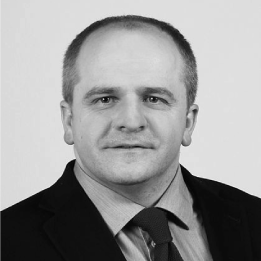
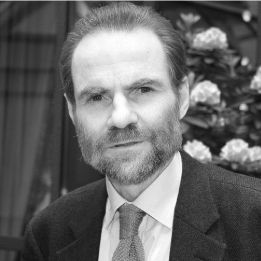
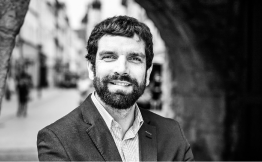
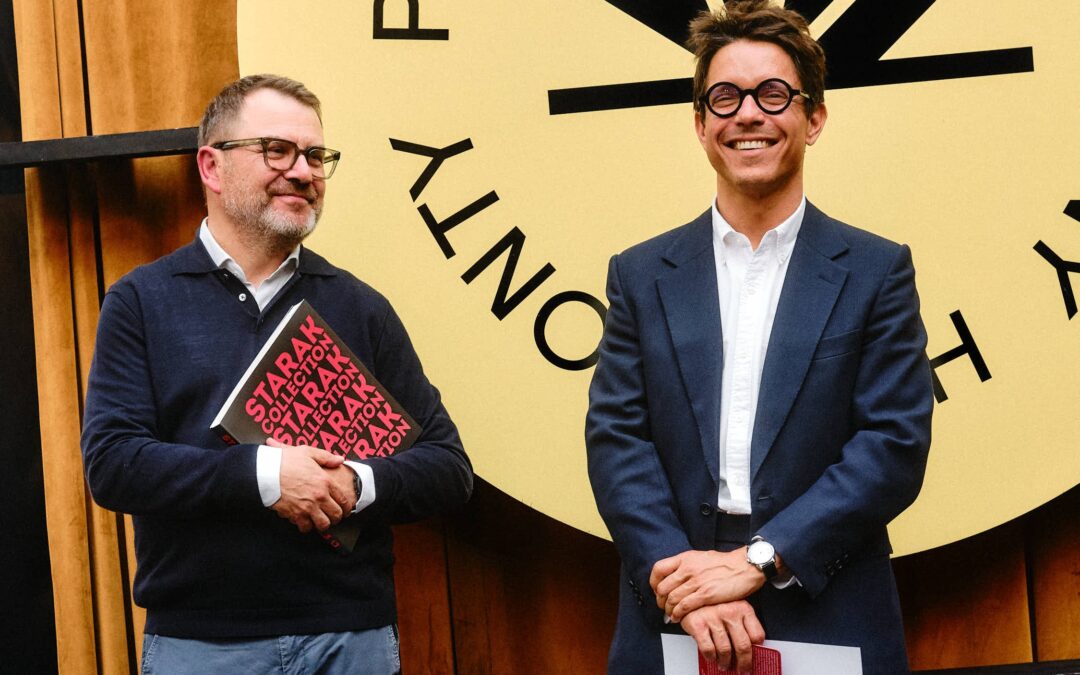
However, Poland’s difficult past has also created a “unique, deeply rooted ethos of solidarity”, says Grzegorz Kotowski (pictured at the top, on the left), a board member at the Starak Family Foundation, a philanthropic body established in 2008 by Jerzy Starak, who is currently Poland’s second-richest person according to an annual ranking by Forbes.
“Our history – especially the experience of communism and limited trust in public institutions – has led to aid developing primarily from the grassroots,” he notes, pointing as an example to the unprecedented wave of support given to Ukrainian refugees in 2022, including around 1.5 million being welcomed into private homes.
“This aid was immediate and empathetic – provided before any procedures were even established. This experience has shown the world something very important: Poles are a society that not only knows how to help, but does so spontaneously, generously, and with a deep sense of responsibility.”
Around 77% of Poles have been involved in helping refugees from Ukraine, for which purpose they spent around €2 billion out of their own pockets, a new study by @PIE_NET_PL has found https://t.co/xWu8JWNMui
— Notes from Poland 🇵🇱 (@notesfrompoland) July 28, 2022
Alongside the Starak Family Foundation, another pioneer in institutionalising this philanthropic spirit has been the EFC Foundation, established in 2009 with an endowment from Andrzej Czernecki, who made his fortune producing medical devices and, before his death in 2012, was ranked as Poland’s 60th richest person.
EFC’s main focus has been on educational projects, inspired by the history of Andrzej’s father, Roman Czernecki, a teacher who founded and ran underground schools during the German occupation and then, after the war, sought to introduce high-quality teaching in rural areas independent of the new communist authorities.
The foundation’s first major programme – and still its flagship initiative – is the Horizons (Horyzonty) scholarship scheme launched in 2009 and now run in partnership with and with leading financial support from the Starak Family Foundation.
In the spirit of Roman Czernecki’s work, it is dedicated to enabling talented young people from small towns and rural areas to attend top schools. As well as providing financial resources, the scholarships also aim to offer other forms of support to help recipients explore and develop their interests, including meetings with inspirational figures, trips and workshops. Over 1,000 students have benefited from the programme since it launched.
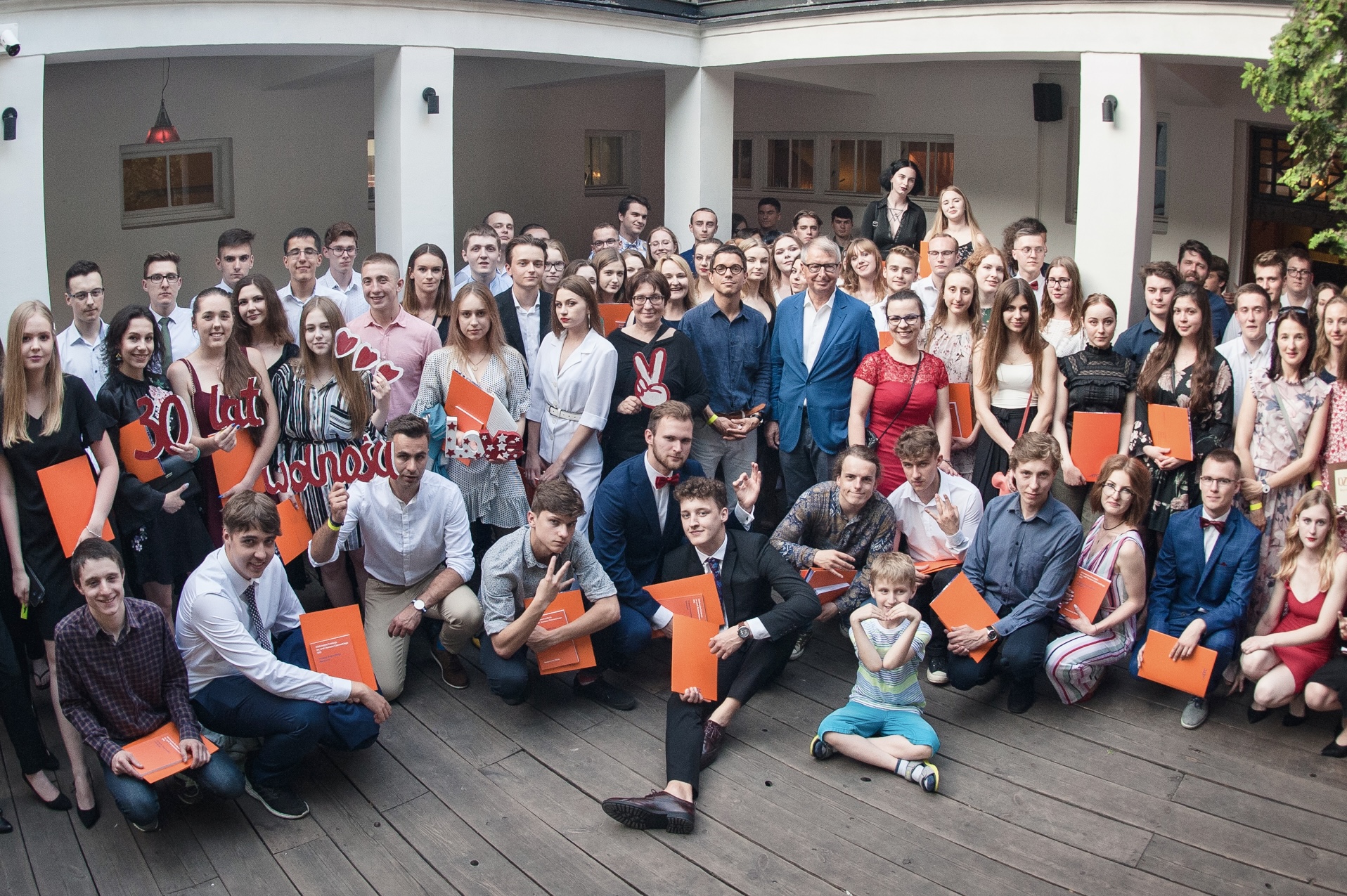
Igor Czernecki and Jerzy Starak (centre) alongside some recipients of the Horizons scholarships offered by their foundations
Now under the leadership of Andrzej’s son, Igor Czernecki, the foundation has since 2024 expanded its remit to also support organisations with more broadly defined education goals, including civic education (such as the Universal Reading Foundation, which promotes reading as a public good), cultural education (such as the Museum of Modern Art in Warsaw), and humanities education (such as Przegląd Polityczny, a journal promoting the dissemination and discussion of ideas).
Explaining the motivation behind the foundation’s work, Igor Czernecki says that “responsibility rests with those who have benefited most from the last 35 years…to ensure that future generations can enjoy the benefits of liberal democracy”.
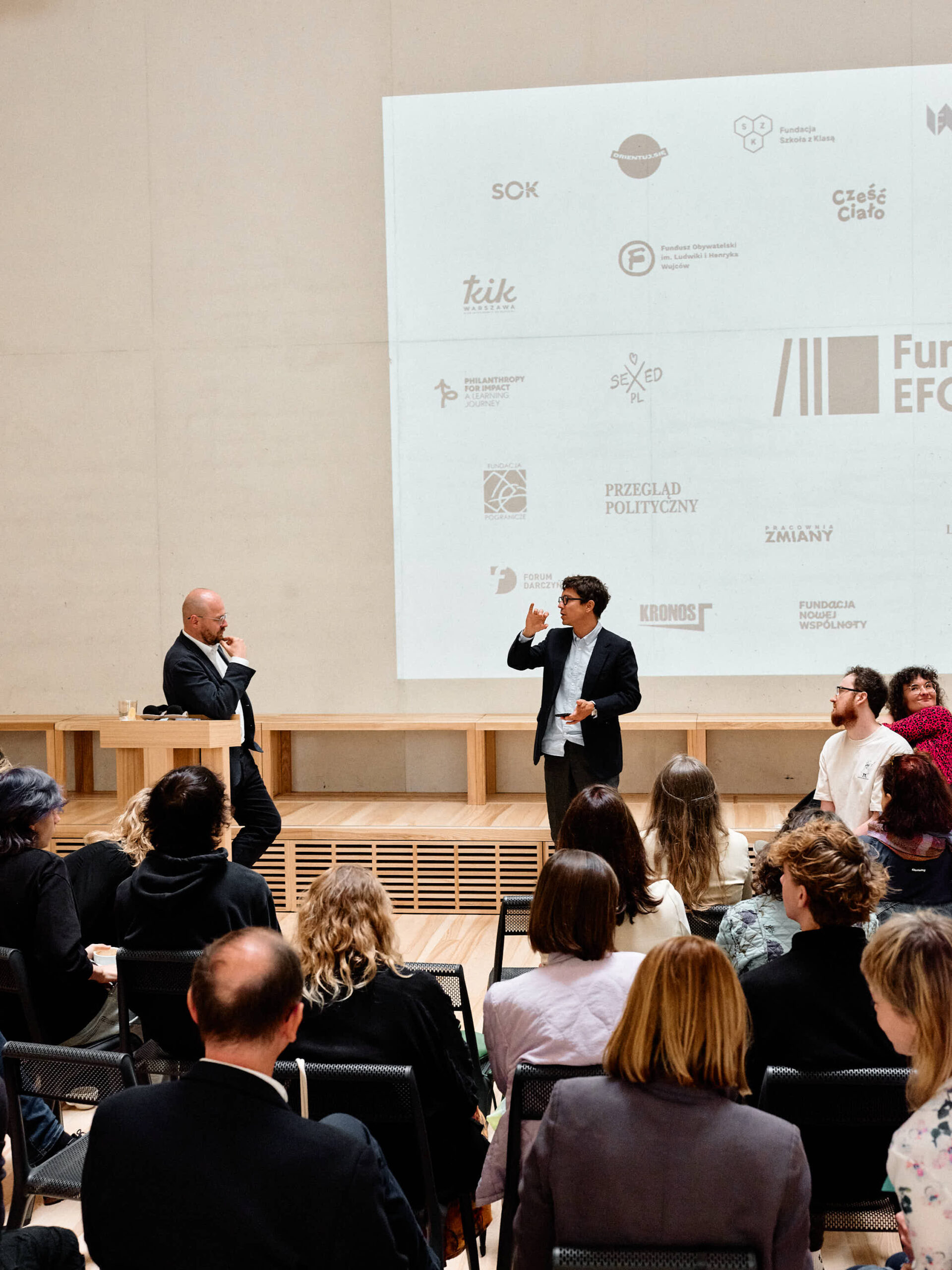
Igor Czernecki at a meeting of EFC Foundation grant recipients
In parts of its work, EFC has cooperated with the Starak Family Foundation, including jointly running the Horizons scholarship programme, which now offers 200 scholarships annually.
Meanwhile, the Starak Family Foundation offers its own programmes to support art, including grants for art teachers and students through its Spectra EDU education department, funding for creators, and the establishment of the Spectra Art Space, a venue that hosts and promotes Polish artists.
“Individuals and entities with appropriate resources bear the responsibility for developing philanthropy by seeking and implementing long-term, systemic solutions that bring lasting results for the development of society,” says Jerzy Starak.
“As well as being a response to immediate crises, we also want philanthropy to become a permanent element of society’s functioning.”
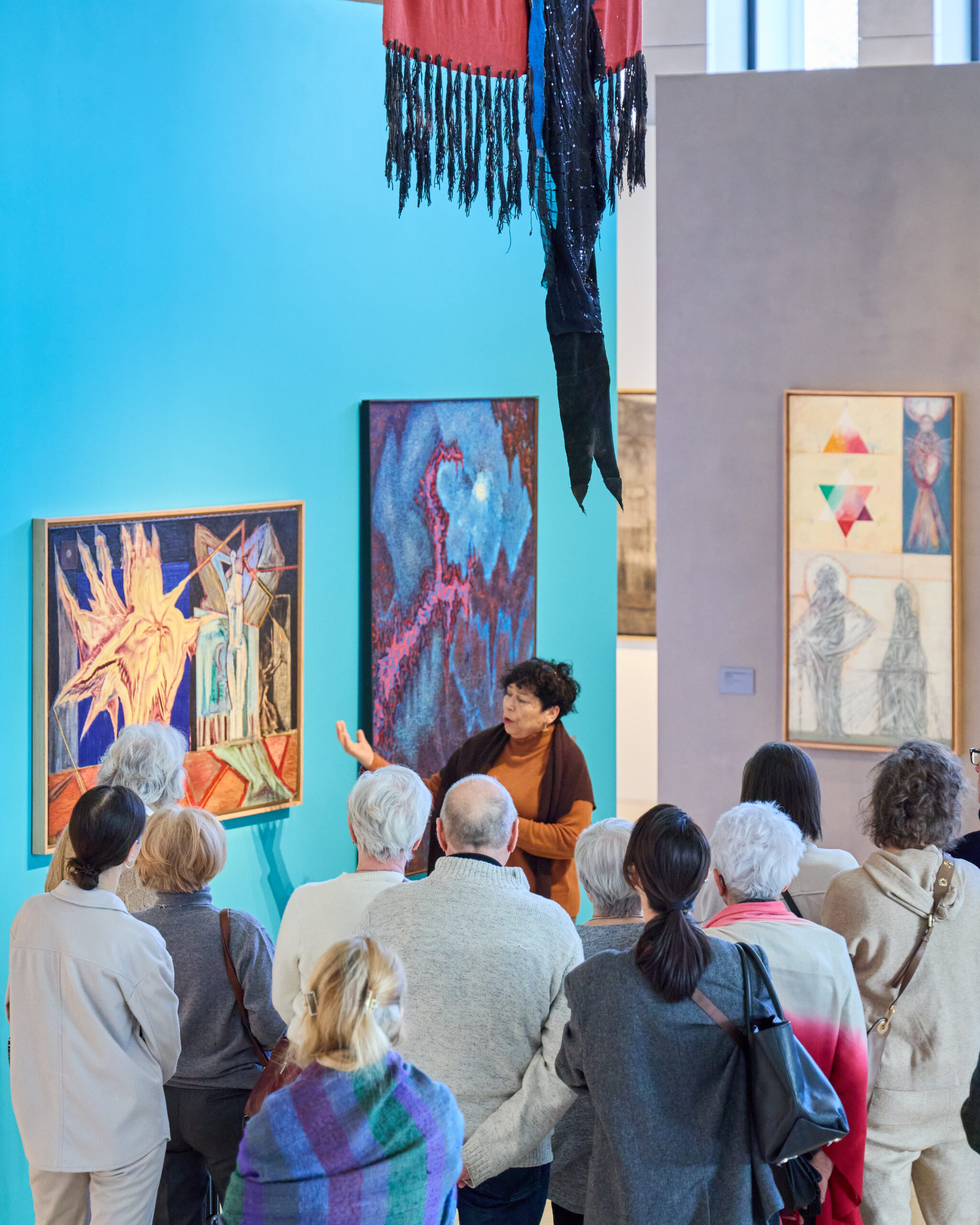
A current exhibition, LIGHT. Practices of Resilience, running until the end of May 2026 with free admission at the Starak Family Foundation’s Spectra Art Space.
EFC and the Starak Family Foundation have been active in seeking to foster more philanthropy in Poland and the region. That has included establishing, in 2022, Philanthropy for Impact (PFI), a community of philanthropic families and organisations seeking to protect democratic institutions and civil society in Central and Eastern Europe.
They also run an educational programme for current and aspiring philanthropists. The 27 participants so far now represent an informal network, exchanging experiences of their own initiatives and engaging in PFI projects.
PFI has also built relations with a wide range of organisations in the region, including business groups, family foundations, charities, universities and state bodies.
Last year’s PFI study trip was set to take place in Kyiv, with the aim of fostering understanding of how philanthropy can support recovery and resilience and strengthening ties with Ukrainian philanthropists. However, the night before their delegation was set to depart, around 20 Russian drones entered Polish airspace in an unprecedented violation, forcing the trip to be cancelled due to safety concerns.
Kotowski, the Starak Family Foundation board member, says that he “absolutely” sees a culture of philanthropy now developing in Poland – “and at a pace that inspires optimism”.
“We see not only a sustained high level of individual support, but also a growing involvement in foundations and associations,” he observes. “This is an important step towards the professionalisation and maturation of Polish philanthropy.”
“Philanthropy brings tangible benefits to the entire country – equalising opportunities, preventing exclusion, and supporting talent translate into a safer, more stable, and better-educated society. It is not an expense – it is a long-term investment in the country’s development.”
Notes from Poland is run by a small editorial team and published by an independent, non-profit foundation that is funded through donations from our readers. We cannot do what we do without your support.

Daniel Tilles is editor-in-chief of Notes from Poland. He has written on Polish affairs for a wide range of publications, including Foreign Policy, POLITICO Europe, EUobserver and Dziennik Gazeta Prawna.