Keep our news free from ads and paywalls by making a donation to support our work!

Notes from Poland is run by a small editorial team and is published by an independent, non-profit foundation that is funded through donations from our readers. We cannot do what we do without your support.
Poland’s Supreme Administrative Court (NSA) has rejected a complaint by an environmental group against the construction of Poland’s first nuclear power plant.
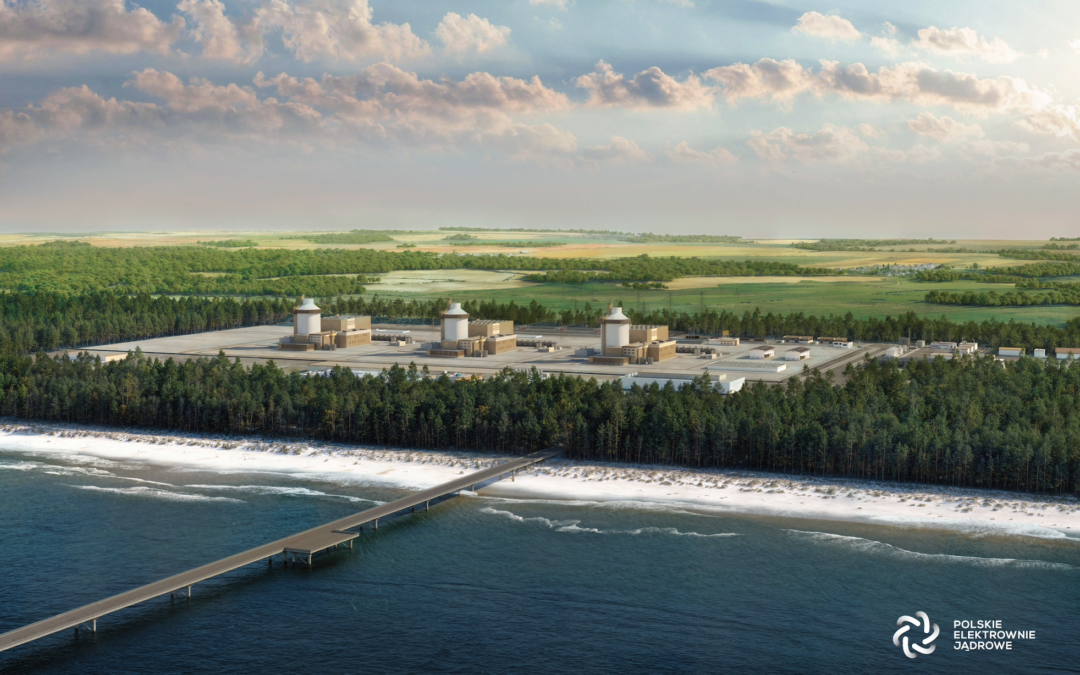
The decision was announced by Polskie Elektrownie Jądrowe (PEJ), the state firm tasked with building the plant on Poland’s northern Baltic coast. It said the ruling means work on the project can go ahead as planned.
Naczelny Sąd Administracyjny potwierdza: brak podstaw do wstrzymania prac przy pierwszej polskiej elektrowni jądrowej. Wniosek i zażalenie strony skarżącej zostały oddalone.
Sąd uznał, że strona skarżąca decyzję opierała swój wniosek na przesłankach, które nie zostały… pic.twitter.com/328cgNDSDc
— Polskie Elektrownie Jądrowe (@PEJ_PL) February 18, 2026
The legal challenge was mounted by Bałtyckie-SOS, an association that opposes the project on environmental grounds. It filed a complaint against the 2025 decision by the Polish General Directorate for Environmental Protection (GDOŚ) that confirmed a previous 2023 environmental approval for the plant.
Bałtyckie-SOS argued that GDOŚ had, among other things, failed to gather all necessary evidence when making its decision, not given enough time for public consultation, and underestimated the pollution that would be caused in the Baltic Sea by the plant, reports news service Biznes Alert.
An administrative court in Warsaw initially rejected the complaint by Bałtyckie-SOS, which then appealed to the NSA. Poland’s top administrative court has now rejected that appeal.
“The court ruled that the party appealing the decision based its claim on premises that were not substantiated. The Supreme Administrative Court thus confirmed the importance of our investment for the country’s energy security,” PEJ said in a post on social media.
The nuclear power plant, which will have a capacity of up to 3.75 gigawatts (GW) and is expected to start operating in the second half of the 2030s, is seen as a key part of Poland’s move away from fossils and towards cleaner forms of energy.
Last year, Poland generated over half of its electricity from coal, which is by far the highest proportion in Europe. In 2023, the former Law and Justice (PiS) government outlined plans for 51% of power to come from renewables and 23% from nuclear by 2040.
PiS’s nuclear plans have been continued by the current ruling coalition led by Prime Minister Donald Tusk and his Civic Coalition (KO) party, which took power at the end of 2023.
Last year, it signed a renewed agreement to continue cooperation with a consortium of US companies Westinghouse and Bechtel, who were chosen under the PiS government to be partners in building the plant.
Poland has signed an agreement with a US consortium of Westinghouse and Bechtel to continue developing the country's first nuclear power plant
This is "the beginning of long-term cooperation in the field of nuclear energy", says US Energy @SecretaryWright https://t.co/f3a3Sqouub
— Notes from Poland 🇵🇱 (@notesfrompoland) April 28, 2025
In December, the European Commission approved Warsaw’s request to allocate 60 billion zloty (€14.2 billion) in state aid for the project, paving the way for construction of the plant to begin.
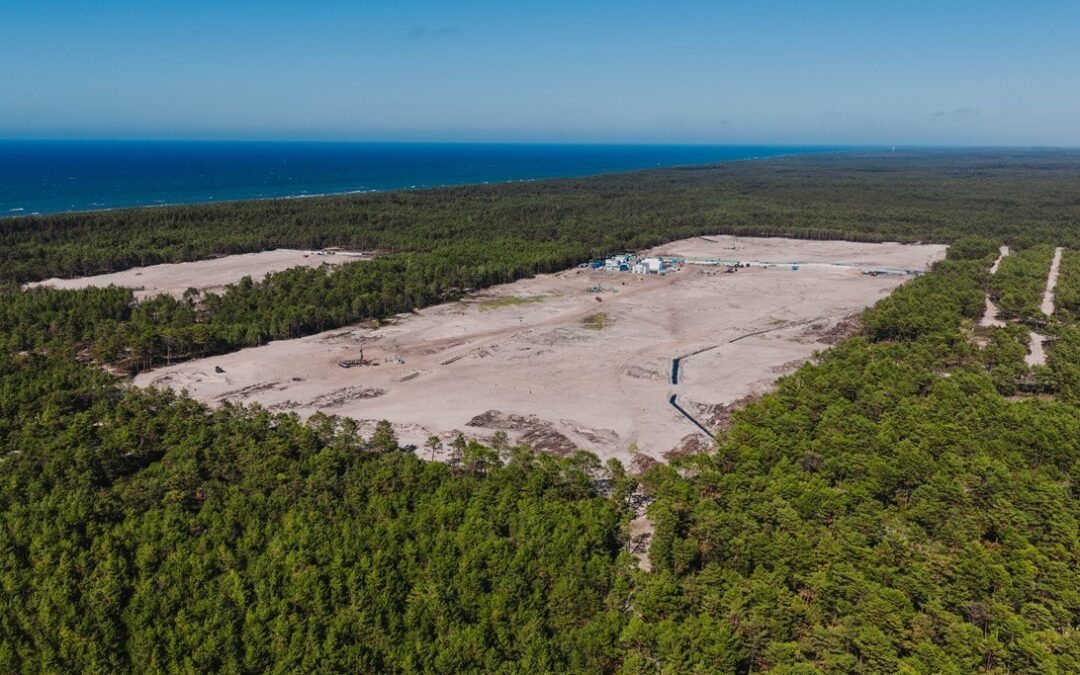
Last week, PEJ announced that it had completed the first stage of preparatory work for construction, which involved clearing trees and shrubs from the site. It said that it was now awaiting a further environmental permit for the second stage of preparatory work.
Under the government’s Polish Nuclear Power Programme (PPEJ), a second nuclear plant is also planned. The total combined capacity of the two plants will be between 6 and 9 GW.
Construction of Poland’s first nuclear power plant is now set to begin after the @EU_Commission approved Warsaw’s request to allocate 60 billion zloty (€14.2 billion) in state aid for the project https://t.co/Z7BJpRRKnq
— Notes from Poland 🇵🇱 (@notesfrompoland) December 9, 2025
Notes from Poland is run by a small editorial team and published by an independent, non-profit foundation that is funded through donations from our readers. We cannot do what we do without your support.
Main image credit: PEJ (press materials)

Olivier Sorgho is senior editor at Notes from Poland, covering politics, business and society. He previously worked for Reuters.