Keep our news free from ads and paywalls by making a donation to support our work!

Notes from Poland is run by a small editorial team and is published by an independent, non-profit foundation that is funded through donations from our readers. We cannot do what we do without your support.
Poland will from next month be the last remaining European Union country still mining hard coal, after the Czech Republic – the only other producer – announced the closure of its last mine.
Since 2019, after Germany and Spain ended production, Poland and the Czech Republic have been the only two member states still extracting hard coal (also known as black coal or anthracite), which in the EU is used mainly in industry rather than power generation.
However, this month, OKD, the company that runs the Czech Republic’s last operating coal mine, ČSM in Stonava near the Polish border, announced that it will close the mine down by the end of January after almost 250 years of operation, with the loss of around 900 jobs.
The decision reflects low coal prices, rising extraction costs and the ongoing environmental and industrial transition in Europe, reports Reuters.
Za tydzień Polska zostanie ostatnim w Unii Europejskiej producentem węgla kamiennego.
— Jakub Wiech (@jakubwiech) January 27, 2026
Czech hard coal output had already been in decline for years, falling 84% between 2015 (8.2 million tonnes) and 2024 (1.4 million tonnes), according to Eurostat. Polish production fell only 39% over the same period, from 72.2 million tonnes to 44 million tonnes.
Both countries, along with six other EU member states, still continue to produce brown coal (also known as lignite), which is generally used for power generation.
In 2024, the last year that data are available, Germany (92 million tonnes) was the EU’s largest brown coal producer, accounting for 44% of the bloc’s entire output. It was followed by Poland (41 million tonnes), the Czech Republic (23.7 million tonnes) and Bulgaria (15 million tonnes).
Poland remains the EU’s most coal-dependent country, using the fossil fuel to generate over half of its electricity and to heat around a third of its homes.
However, production has been in long-term decline, falling from over 250 million tonnes (of both hard and brown coal) to 85 million tonnes over the last four decades, according to Statistics Poland (GUS), a state agency. That has forced the country to import coal, despite its sizeable reserves.
Polish coal has become increasingly uncompetitive, with miners forced to dig ever deeper, labour costs rising and productivity stagnating, some of the same reasons that drove OKD to close the ČSM mine in the Czech Republic.
Polish coal is costly and polluting. But its powerful symbolism has kept the country and its politicians hooked on the "black gold".@AlicjaPtak4 explores coal’s past, present and future in Poland https://t.co/E6IhQ64aGC
— Notes from Poland 🇵🇱 (@notesfrompoland) August 14, 2025
The Polish coal industry survives largely due to heavy public subsidies. In 2026, the state is expected to spend 5.5 billion zloty propping up the sector, after an outlay of 9 billion zloty last year.
That is thanks in part to the political influence – and public esteem – enjoyed by miners, whose unions are very influential, making closing mines a difficult and sensitive issue.
However, in 2020, the government signed an agreement with unions that foresaw Poland’s coal mines closing by 2049. Last month, a new law was passed making it easier to close down mines and providing severance pay of 170,000 zloty (€40,290) for affected workers.
The latter decision was welcomed by unions, with Solidarity saying that “the gradual reduction of employment in the mining industry, supported by public funds, is one element of the transformation process of the mining sector”.
President Nawrocki has signed into law a government bill that makes it easier to close down coal mines and provides severance pay of 170,000 zloty to miners.
The measures are seen as a key part of Poland’s transition towards cleaner forms of energy https://t.co/vH6MU4nBsv
— Notes from Poland 🇵🇱 (@notesfrompoland) December 15, 2025
Notes from Poland is run by a small editorial team and published by an independent, non-profit foundation that is funded through donations from our readers. We cannot do what we do without your support.
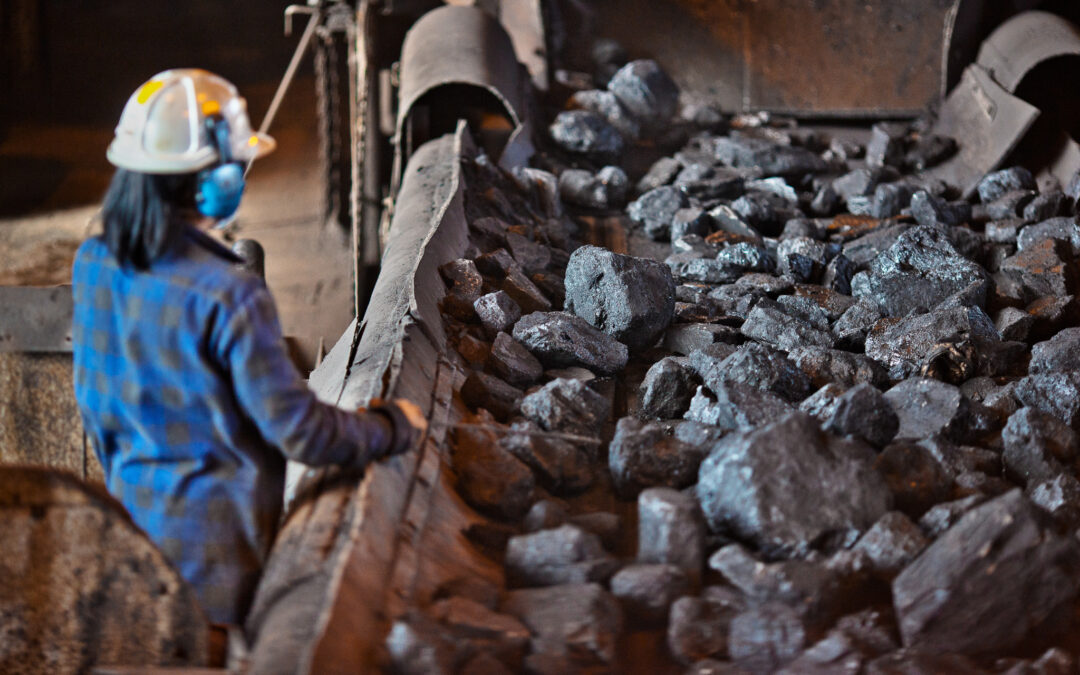
Main image credit: JSW press materials

Alicja Ptak is deputy editor-in-chief of Notes from Poland and a multimedia journalist. She has written for Clean Energy Wire and The Times, and she hosts her own podcast, The Warsaw Wire, on Poland’s economy and energy sector. She previously worked for Reuters.