Keep our news free from ads and paywalls by making a donation to support our work!

Notes from Poland is run by a small editorial team and is published by an independent, non-profit foundation that is funded through donations from our readers. We cannot do what we do without your support.
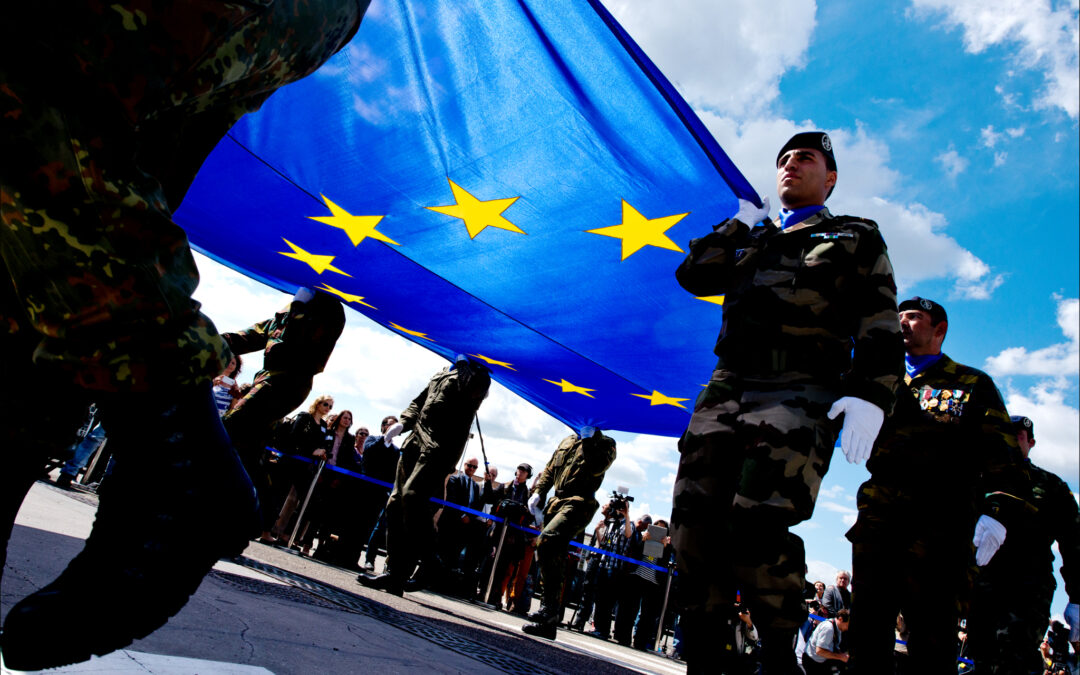
Poland’s foreign minister, Radosław Sikorski, has proposed the creation of a “European legion”, which would be made up of soldiers from European Union member states and even countries that are candidates to join the EU.
He argues that forming such a force would be more realistic than the idea of creating a full European army, as was recently advocated by EU defence commissioner Andrius Kubilius.
Sikorski: armia federalna Unii nierealistyczna, ale można by stworzyć „legion europejski” #PAPinformacje https://t.co/H2cO4TmNwE
— PAP (@PAPinformacje) January 29, 2026
“Talking about a federal army is pointless, because it is unrealistic, because national armies will not merge,” Sikorski told the press ahead of a meeting of EU foreign ministers in Brussels
“However, we could create what I call a European legion, initially a brigade-sized unit, which could be joined by citizens of member states and perhaps even candidate states,” he added.
Such a legion would be financed from the EU budget and “politically subordinate to the [EU’s] Political and Security Committee”, said Sikorski.
“It wouldn’t be a force capable of deterring Putin, but there are lower-level threats, such as those in North Africa or the Balkans, where we should have the ability to act together,” he added.
The EU currently does not have its own army, but most member states – 23 out of 27 – are part of the NATO military alliance. However, the recent dispute with President Donald Trump over Greenland has raised questions about the extent to which Europe can rely on the United States.
Earlier this month, the EU’s defence commissioner, Andrius Kubilius, said the bloc should consider establishing a 100,000-strong military force of its own.
However, ahead of today’s summit, EU foreign policy chief Kaja Kallas questioned the feasibility of that idea, saying that she “cannot imagine that countries will create a separate European army” given that they are already part of NATO and have their own national militaries.
“If we create parallel structures, then it is just going to blur the picture,” said Kallas. Similarly, NATO Secretary General Mark Rutte said earlier this week that a European army would “make things more complicated” and result in “a lot of duplication”, reported Reuters.
"Would the US be stronger if it had 50 state armies instead of a Federal Army?" EU Defence Commissioner calls for the establishment of the European Armed Forces 🇪🇺 pic.twitter.com/MfC1kUWyko
— Mariska den Eelden 🇪🇺🇳🇱 (@eeldenden) January 14, 2026
Since Russia’s full-scale invasion of Ukraine, Poland has rapidly ramped up its defence spending, which will reach 4.8% of GDP this year, the highest relative level in NATO. It has also pushed for other members of the alliance to increase their defence budgets.
By 2024, Poland had NATO’s third-largest military in terms of personnel, behind only the United States and Turkey. By 2030, it will have more tanks than Germany, France, the UK and Italy combined.
Most of Poland’s defence procurement has, however, taken place outside Europe, with the majority of new equipment purchased from the United States and South Korea.
Poland has signed a $6.7bn deal to buy a further 180 South Korean K2 tanks, including 61 that will be made in Poland itself.
Once delivery is complete by 2030, Poland will have more tanks than Germany, France, the UK and Italy combined https://t.co/Cw17lGKPSC
— Notes from Poland 🇵🇱 (@notesfrompoland) August 1, 2025
Notes from Poland is run by a small editorial team and published by an independent, non-profit foundation that is funded through donations from our readers. We cannot do what we do without your support.
Main image credit: European Parliament/Flickr (under CC BY-NC-ND 2.0)

Alicja Ptak is deputy editor-in-chief of Notes from Poland and a multimedia journalist. She has written for Clean Energy Wire and The Times, and she hosts her own podcast, The Warsaw Wire, on Poland’s economy and energy sector. She previously worked for Reuters.