Keep our news free from ads and paywalls by making a donation to support our work!

Notes from Poland is run by a small editorial team and is published by an independent, non-profit foundation that is funded through donations from our readers. We cannot do what we do without your support.
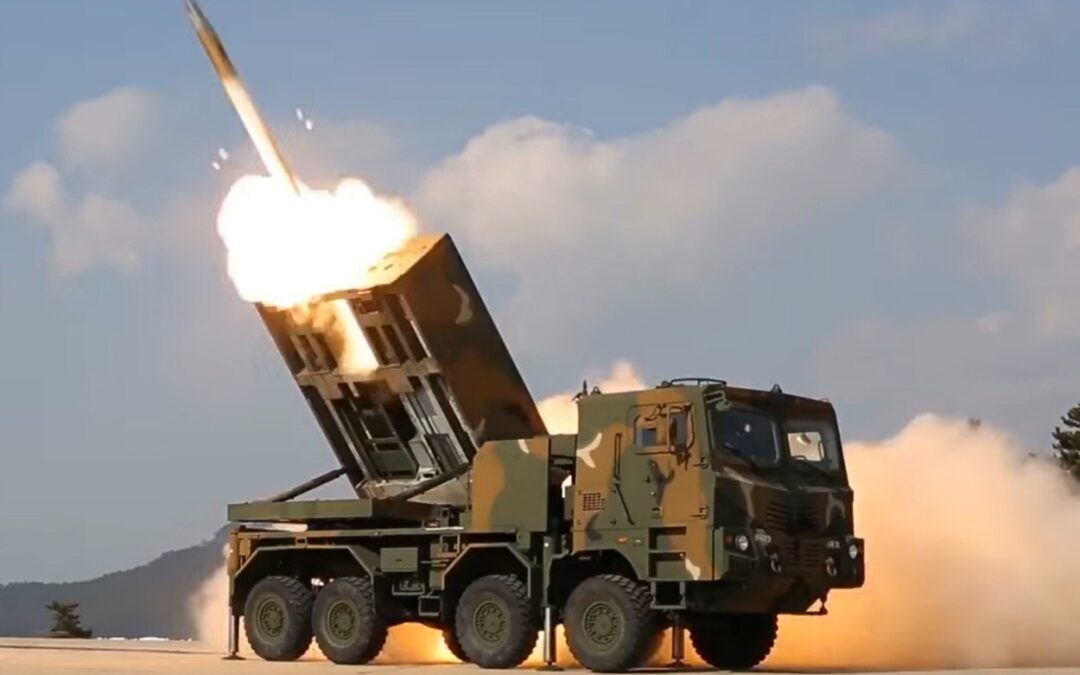
Poland will manufacture the missiles for K239 Chunmoo rocket artillery systems that Norway is purchasing from South Korea.
Poland itself has previously ordered hundreds of the systems, and last month signed an agreement to begin producing some of the missiles for them domestically.
Polska staje się coraz ważniejszym punktem na mapie europejskiego przemysłu zbrojeniowego. Norweskie siły zbrojne będą miały na wyposażeniu zestawy rakietowe K239 Chunmoo. Nie bez znaczenia dla tego zakupu była decyzja Grupy WB o podpisaniu z koreańskim koncernem Hanwha Aerospace… pic.twitter.com/ZqYQfXMzsc
— Władysław Kosiniak-Kamysz (@KosiniakKamysz) January 29, 2026
On Thursday, Norway’s government announced that it had selected South Korea’s Hanwha Group as the supplier for its new land-based long-range precision fire systems.
It will procure 16 launch units, an unspecified number of missiles, as well as logistics support and training in a deal worth 19 billion kroner (€1.66 billion). Defence minister Tore O. Sandvik described it as “one of the largest investments ever made” by the Norwegian army.
“Production lines for the missiles will be established in Poland, which also buys a significant number of the same system,” wrote the Norwegian government in its statement.
“This will strengthen security of supply for Norway and other European customers of the system,” they added, noting that “Hanwha is now planning to supply all European customers with missiles from there [Poland]”.
In December, a consortium made up of Hanwha and Poland’s WB Electronics signed a 14 billion zloty (€3.3 billion) agreement with the Polish state treasury to manufacture more than 10,000 CGR-080 precision-guided missiles for Chunmoo systems at a new production facility in the city of Gorzów Wielkopolski.
That arrangement, which includes the transfer of missile production technology from South Korea to Poland, was part of a deal that has seen Warsaw order 288 Chunmoo systems, with their Polish variant known as Homar-K.
In a post on X on Thursday, Polish defence minister Władysław Kosiniak-Kamysz said that the December agreement had helped underpin the Norwegian order.
“Poland is becoming an increasingly important point on the map of the European arms industry,” he declared. “By developing arms production, we can attract new contractors.”
Poland, in cooperation with South Korean partners, will for the first time produce guided missiles domestically under a deal worth more than 14 billion zloty (€3.3 billion) https://t.co/lUJHbZCoH0
— Notes from Poland 🇵🇱 (@notesfrompoland) December 30, 2025
In 2022, Norway also became one of the first foreign buyers of Piorun man-portable air-defence systems from their Polish manufacturer, Mesko.
Since then, Sweden and Belgium have been among the other countries to purchase Pioruns, which have proved a success in Ukraine’s defence against Russia’s invasion.
In recent years, Poland has also been seeking to strengthen military, energy and economic ties with Baltic and Nordic states. Last year, Norway opened a new facility in Poland for training Ukrainian military personnel.
With growing military, economic and energy ties around the Baltic Sea, Poland's geopolitical focus is increasingly towards the north, unlike for most of its recent history, writes @danieltilles1 https://t.co/RQIHf01mFj
— Notes from Poland 🇵🇱 (@notesfrompoland) October 10, 2025
Notes from Poland is run by a small editorial team and published by an independent, non-profit foundation that is funded through donations from our readers. We cannot do what we do without your support.
Main image credit: ROK Ministry of National Defense/Wikimedia Commons (under Korea Open Government License Type 1)

Alicja Ptak is deputy editor-in-chief of Notes from Poland and a multimedia journalist. She has written for Clean Energy Wire and The Times, and she hosts her own podcast, The Warsaw Wire, on Poland’s economy and energy sector. She previously worked for Reuters.