Keep our news free from ads and paywalls by making a donation to support our work!

Notes from Poland is run by a small editorial team and is published by an independent, non-profit foundation that is funded through donations from our readers. We cannot do what we do without your support.
Russia has summoned the Polish ambassador to lodge a “strong protest” over Poland’s detention of a Russian archaeologist at the request of Ukraine, which accuses him of conducting illegal excavations in occupied Crimea.
Moscow has demanded his release and warned against “handing him over to the Kyiv regime’s punitive machine, which has no resemblance to justice”. On Thursday this week, a Warsaw court is due to decide whether to extradite the suspect to Ukraine.
Rosyjskie MSZ wezwało polskiego ambasadora, aby zaprotestować przeciwko zatrzymaniu na terenie Polski rosyjskiego archeologa. Moskwa domaga się natychmiastowego uwolnieniahttps://t.co/bJx29Ihdc4
— Interia (@Int_Wydarzenia) January 13, 2026
The archaeologist, who can be named only as Alexander B. under Polish privacy law, works at the renowned Hermitage Museum in St Petersburg.
He was detained last month by Poland’s Internal Security Agency (ABW) at a hotel in Warsaw while travelling from the Netherlands to the Balkans, where he was due to give a series of lectures.
Kyiv alleges that Alexander B. led unauthorised excavations in Russian-occupied Crimea at the Ancient City of Myrmekion. Ukrainian investigators say the work caused partial destruction of the cultural heritage site.
Since then, the archaeologist has remained in court-ordered detention in Poland. On Monday, Warsaw’s district court approved the extension of Alexander B.’s detention until 4 March. On Thursday, the same court will consider a request by prosecutors to extradite the suspect to Ukraine.
Piotr Antoni Skiba, spokesman for the district prosecutor’s office in Warsaw, told news website Interia that “the Ukrainian side has provided all the required assurances and documents”.
“In our opinion, from a formal standpoint, the extradition documentation raises no objections,” he added
Prokuratura Okręgowa w Warszawie przychyliła się do wniosku Ukrainy o ekstradycję rosyjskiego naukowca Aleksandra B. Do sądu trafił również wniosek o przedłużenie tymczasowego aresztu dla podejrzanego. https://t.co/bXyA8Q99U5
— Interia (@Int_Wydarzenia) January 8, 2026
Meanwhile, on Monday, Russia’s foreign ministry summoned Polish ambassador Krzysztof Krajewski to lodge a protest over Alexander B.’s treatment, reject the “absurd” accusations against him by Kyiv, and “demand [his] immediate release”.
“The openly politicised and speculative nature of Ukraine’s persecution of the Russian academic is underscored by the fact that Ukraine’s Interpol request was not fulfilled, and [Alexander B.] had freely visited several European countries immediately prior to his arrest in Poland,” wrote the ministry in a statement.
They presented Krajewski with evidence allegedly demonstrating that the archaeologist had conducted research in Crimea’s Kerch peninsula with all necessary permits. Polish foreign ministry spokesman Maciej Wewiór told Interia that “information on this case is being verified”.
A Russian official from the Hermitage Museum has been detained in Poland on the basis of a warrant issued by Ukraine, which accuses him of illegal archaeological excavations in Crimea.
Moscow has condemned the arrest, accusing Poland of "legal tyranny"
https://t.co/H7qQtPfkiD— Notes from Poland 🇵🇱 (@notesfrompoland) December 11, 2025
Diplomatic tensions between Russia and Poland have already been at a heightened level in recent years. Since Russia’s full-scale invasion of Ukraine, Poland has been one of Kyiv’s closest allies and has demanded tougher international action against Moscow.
Meanwhile, Russia has orchestrated a campaign of sabotage, cyberattacks, disinformation and other so-called hybrid activities in Poland.
That has prompted Warsaw to successively order the closure of all Russia’s consulates in Poland, with Moscow retaliating by ordering all Polish consulates in Russia to close.
Russia is refusing to hand over its consulate building in Gdańsk, despite Poland ordering the facility to close in response to last month's rail sabotage.
Moscow says it still has legal right to the property, a claim that is rejected by city hall https://t.co/EFGPdCFjd1
— Notes from Poland 🇵🇱 (@notesfrompoland) December 22, 2025
Notes from Poland is run by a small editorial team and published by an independent, non-profit foundation that is funded through donations from our readers. We cannot do what we do without your support.
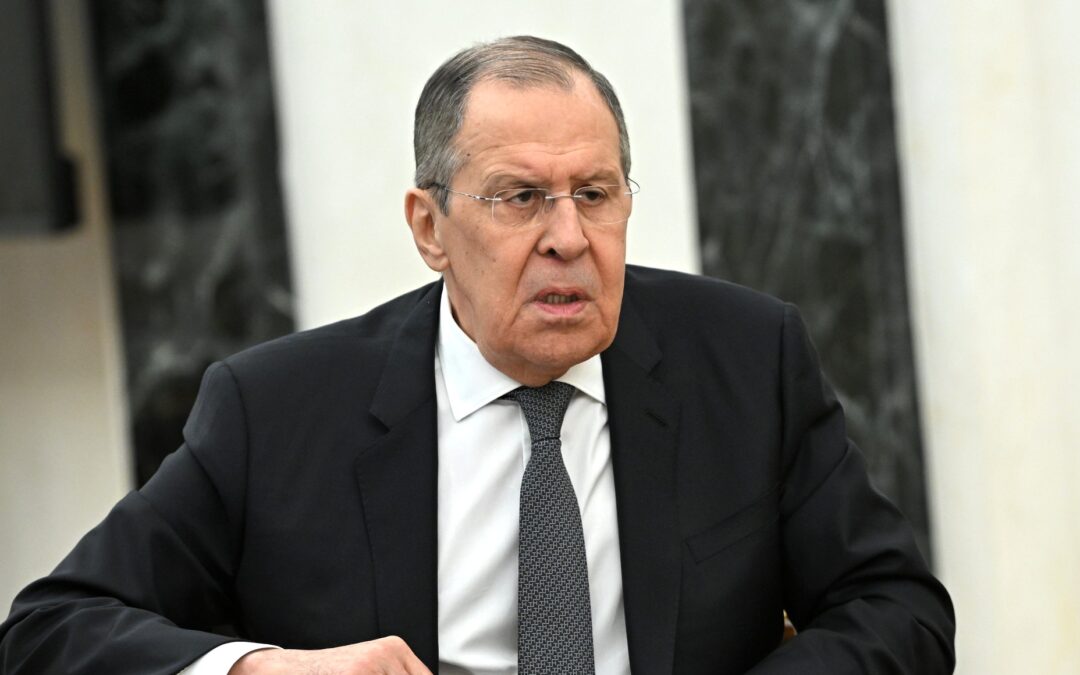
Main image credit: Kremlin (under CC BY 4.0)

Daniel Tilles is editor-in-chief of Notes from Poland. He has written on Polish affairs for a wide range of publications, including Foreign Policy, POLITICO Europe, EUobserver and Dziennik Gazeta Prawna.