Keep our news free from ads and paywalls by making a donation to support our work!

Notes from Poland is run by a small editorial team and is published by an independent, non-profit foundation that is funded through donations from our readers. We cannot do what we do without your support.
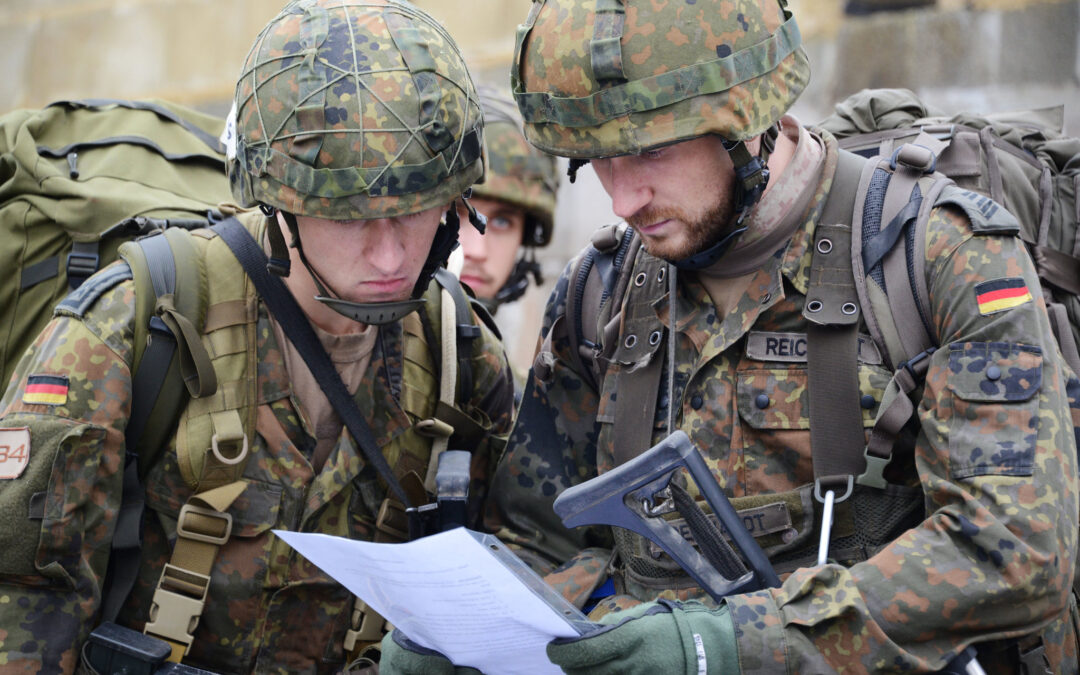
Germany will send soldiers to Poland next year to support its neighbour’s efforts to strengthen its borders with Russia and Belarus, which are also NATO and the European Union’s eastern flank.
The news was first revealed to journalists last week by Polish deputy defence minister Paweł Zalewski after a meeting with his German counterpart Nils Schmid, reported Bild.
The newspaper then received confirmation from the German defence ministry that a “mid-double-digit number of soldiers” would be deployed to Poland from the second quarter of 2026 until the end of 2027.
🚨Die Bundeswehr wird ab April 2026 einen Grenzwall an der polnisch-russischen und polnisch-belarussischen Grenze bauen. Dafür werden etwa 50 Pioniere eineinhalb Jahre lang in Polen im Einsatz sein.
Alle Infos zur #OperationOstschild, exklusiv bei @BILD⤵️https://t.co/RE0feRQpax pic.twitter.com/5X42gTY05z— Julian Röpcke🇺🇦 (@JulianRoepcke) December 12, 2025
The troops will support implementation of Poland’s East Shield operation, which seeks to bolster defences along the borders with Belarus and Russia. The German personnel will mainly engage in engineering work, such as digging trenches, laying barbed wire and constructing anti-tank barriers.
Because the deployment is not an armed foreign mission and the soldiers are not expected to be exposed to military conflict, it does not require parliamentary approval.
Poland’s defence ministry has not yet officially commented on the deployment.
East Shield was launched by Poland in 2024 with a budget of 10 billion zloty (€2.4 billion) to be spent over four years to bolster security in preparation for – but also in the hope of deterring – a potential attack by Russia. Some of the funds will come from the EU’s new Security Action for Europe (SAFE) programme.
The operation aims to construct an array of physical infrastructure, such as bunkers, minefields and anti-tank obstacles, as well as electronic elements including satellite monitoring, thermal imaging cameras and anti-drone systems.
As part of its plans to implement those new defences, Poland is withdrawing from the Ottawa Treaty, which bans the use of anti-personnel landmines. Finland, Lithuania, Latvia and Estonia have done the same.
Poland has unveiled details of a €2.4bn plan to fortify its eastern border in preparation for – but also in hope of deterring – a potential attack
The plan includes minefields and anti-tank obstacles as well as satellite monitoring and anti-drone systems https://t.co/FUXTRwYpTc
— Notes from Poland 🇵🇱 (@notesfrompoland) May 27, 2024
In September, after multiple Russian drones violated Polish airspace in an unprecedented incursion into NATO territory, Germany was among the allied countries that pledged to increase support for Poland.
Earlier this month, Germany deployed five Eurofighter aircraft and 150 associated personnel to Poland as part of NATO’s enhanced air policing mission.
“Our deployment to Poland highlights Germany’s unwavering commitment to the shared security of the Euro-Atlantic area,” said the detachment’s commander, quoted by NATO.
“As a partner and ally, we stand with Poland,” added Schmid during his visit this week to the German personnel posted in Poland. Zalewski said that the Eurofighter deployment “demonstrates the seriousness of Germany’s contribution to the defence of the eastern flank”, reports news website Defence24.
To jest skandal. Niemieckie wojsko ma pilnować polskich granic.
Nie ma na to zgody! https://t.co/2YVExzPBSk— Robert Bąkiewicz (@RBakiewicz) December 13, 2025
However, Germany’s newly announced decision to send forces to support the East Shield operation was condemned by a prominent Polish nationalist, Robert Bąkiewicz, who at the 2023 parliamentary elections stood as a candidate for the Law and Justice (PiS) party, which is now Poland’s main opposition.
“This is a scandal. The German army is going to guard Polish borders. There is no consent for this!” wrote Bąkiewicz in a social media post.
In fact, when PiS was in power, it also accepted a deployment of German Patriot air-defence batteries and 300 accompanying personnel to Poland in 2023, and then requested that their presence be extended.
In January this year, Germany again deployed two of its Patriot air-defence batteries and around 200 associated personnel to Poland. However, this week, Berlin announced that their deployment had come to an end in accordance with the planned schedule. Dutch Patriots will take over their role.
Notes from Poland is run by a small editorial team and published by an independent, non-profit foundation that is funded through donations from our readers. We cannot do what we do without your support.
Main image credit: 7th Army Training Command/Flickr (under CC BY 2.0)

Daniel Tilles is editor-in-chief of Notes from Poland. He has written on Polish affairs for a wide range of publications, including Foreign Policy, POLITICO Europe, EUobserver and Dziennik Gazeta Prawna.