Keep our news free from ads and paywalls by making a donation to support our work!

Notes from Poland is run by a small editorial team and is published by an independent, non-profit foundation that is funded through donations from our readers. We cannot do what we do without your support.
Poland’s health minister has unveiled a series of reforms intended to “rebuild trust” in the healthcare system. The planned changes include caps on doctors’ salaries, a requirement for them to work at least half their statutory working time at a designated hospital, and a new electronic waiting list system.
The announcement comes after weeks of growing pressure on the government following a series of reports that certain doctors received exorbitant pay from the public healthcare system and that politically connected patients were able to skip queues and even use a special “VIP lounge”.
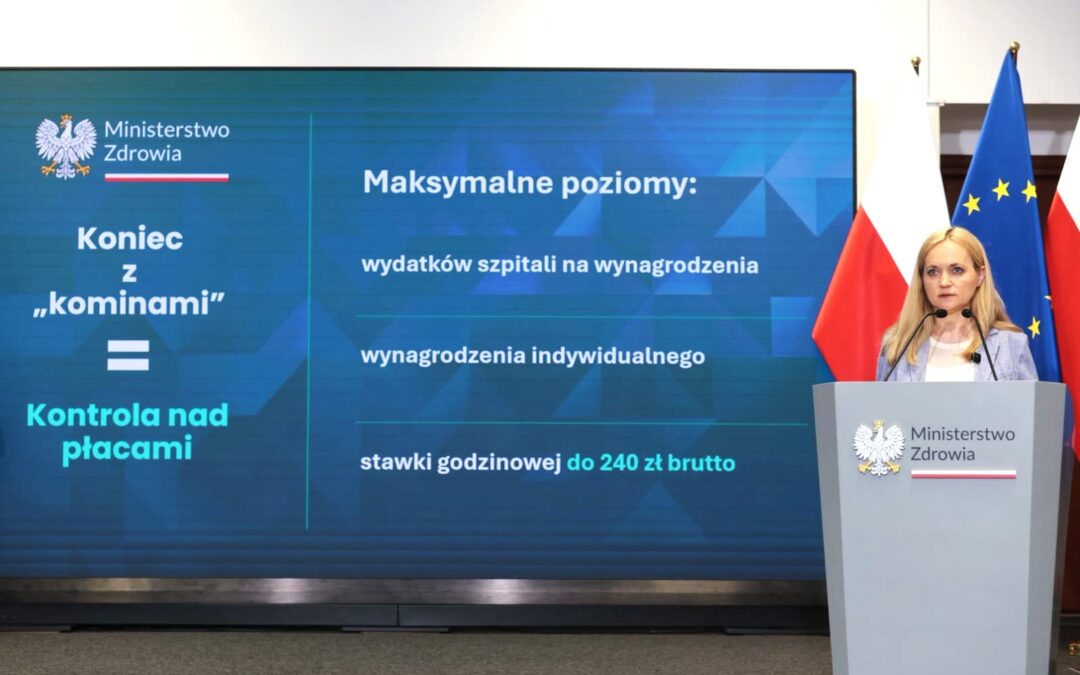
❌️ Koniec z "kominami"
✅️ Kontrola nad płacami👉 Pakiet zmian dla zdrowia w Polsce wprowadza maksymalne poziomy: wydatków szpitali na wynagrodzenia, wynagrodzenia indywidualnego, stawki godzinowej do 240 zł brutto. pic.twitter.com/MnjIVbVMpD
— Kancelaria Premiera (@PremierRP) July 8, 2026
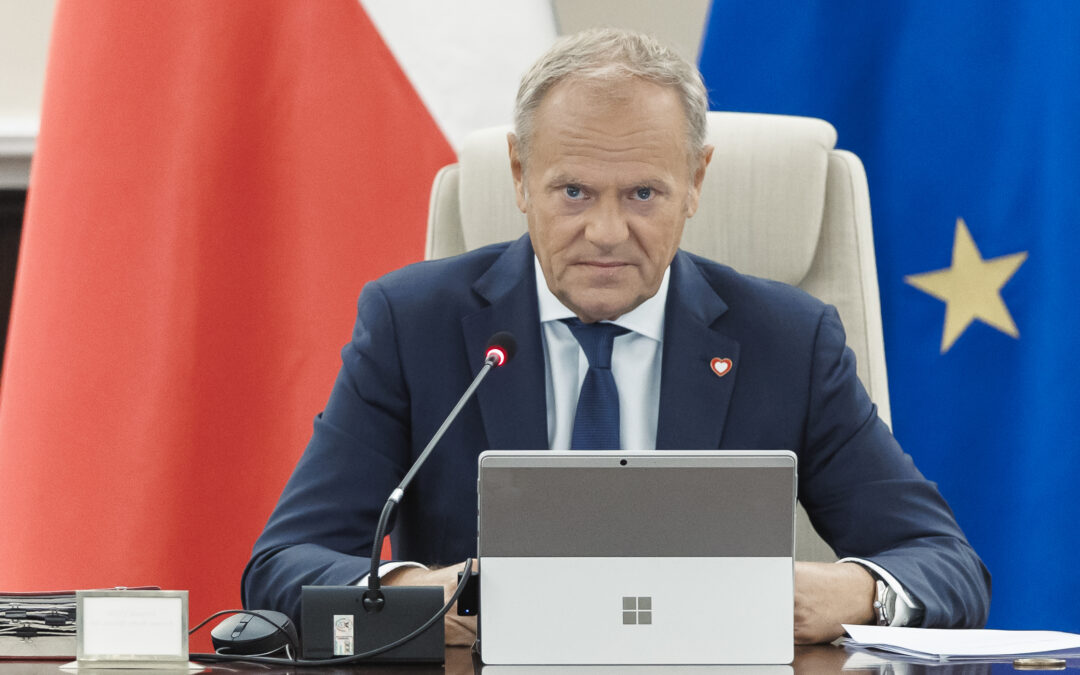
Prime Minister Donald Tusk last week demanded urgent improvements to the healthcare system, warning that otherwise the jobs of senior officials could be under threat. Today, health minister Jolanta Sobierańska-Grenda responded by unveiling a package of reforms.
They include a proposal to cap healthcare professionals’ salaries at a level of 240 zloty (€55.72) gross an hour, as well as limiting the overall wage bills of hospitals financed by the public National Health Fund (NFZ).
Healthcare professionals will also be required to work at least half of their statutory working time in a single hospital, said the minister. Any additional jobs will require special permission from their main employer, she added.
Minister zdrowia Jolanta Sobierańska-Grenda: System nie jest wolny od wad. Przez lata narastały niedoskonałości, które stworzyły przestrzeń nadużyć. Dla tych, którzy potrafią wykorzystywać luki, omijać zasady i stawiać własny interes ponad interes pacjenta. Bulwersują nas dziś… pic.twitter.com/ZDDVpB7Nli
— Ministerstwo Zdrowia (@MZ_GOV_PL) July 8, 2026
The reforms would also require NFZ-funded hospitals to disclose payments and contract terms for external medical providers selected through competitive tenders, while ending less-transparent contracting arrangements.
The government also plans to accelerate the rollout of a central patient registration system by the end of 2027 and introduce a new electronic waiting list for planned hospital procedures by the end of this year.
“We do not accept loopholes in the system that allow interference with the order in which patients are admitted,” Sobierańska-Grenda said, adding that the proposed reforms would “create transparent, clear rules for registering for procedures for all patients”.
She noted that some of her proposed changes would require legislation, meaning approval from parliament and the president, while others can be introduced through government regulations.
The new measures come amid a continued stream of media reports regarding alleged improprieties in the public healthcare system, which have caused growing public anger and attacks on the government from the right-wing opposition and opposition-aligned President Karol Nawrocki.
The crisis began in mid-June, when reports emerged that a young doctor, Dawid Kacprzyk, who was also a local politician for Tusk’s centrist Civic Coalition (KO) party, had been working a seemingly impossible number of hours at four different hospitals and earning 1.6 million zloty (€372,000) last year alone.
While Kacprzyk resigned from his political position and returned much of the money, the scandal continued as further claims emerged, including that patients had died because the inexperienced Kacprzyk was made coordinator of emergency services at Warsaw’s Southern Hospital. He strenuously denies this.
🔴Kacprzyk pracował też w Częstochowie. Jest oświadczenie placówki
Dawid Kacprzyk w 2025 r., w którym miał zarobić 1,6 mln zł, pracował także w Wojewódzkim Szpitalu Specjalistycznym im. Najświętszej Maryi Panny w Częstochowie. Lekarz otrzymał wynagrodzenie według obowiązującej…
— Wirtualna Polska (@wirtualnapolska) July 8, 2026
Over the following weeks, news outlets Zero.pl, Wirtualna Polska and Onet revealed further alleged cases of huge salaries for some doctors and impropriety at the Southern Hospital, including preferential treatment for patients with political connections.
This included claims that there was a “VIP lounge” in which patients with connections to KO were given more comfortable facilities than others and that such patients were often allowed to skip the queue and receive treatment more quickly.
Given that most of the alleged irregularities took place in Warsaw, the crisis has placed particular pressure on mayor Rafał Trzaskowski, who is also deputy leader of KO.
In response, he dismissed the board of the Southern Hospital and announced that members of political parties would no longer sit on supervisory boards of municipal healthcare bodies. In early July, two of his deputy mayors, Renata Kaznowska and Aldona Machnowska-Góra, left their positions.
Gdybyście nie chcieli czekać na gastroskopię lub kolonoskopię w kolejce, w Warszawskim Szpitalu Południowym robią od ręki.
Sprawdzone info.https://t.co/JLc9iyq7ve— Patryk Słowik (@PatrykSlowik) June 17, 2026
However, opposition parties have argued that too little has been done to tackle the scandal and have called for Trzaskowski to resign, along with Sobierańska-Grenda.
Speaking ahead of a cabinet meeting on Tuesday, Tusk pledged that, as well as reforms to improve the healthcare system, there would be efforts to ensure that “those responsible for specific situations in specific hospitals will be held accountable, some before the justice system”.
Last month, parliament also approved a government bill seeking to make the earnings of public healthcare professionals more transparent. The legislation is now awaiting a decision by Nawrocki, who can either sign it, veto it, or send it to the Constitutional Tribunal for review.
Around 2,000 healthcare workers protested in front of the prime minister's office, demanding pay increases and other measures to address staff shortages in hospitals.
Poland has 5.7 nurses per 1,000 inhabitants, well below the EU-wide figure of 8.4 https://t.co/m7jGiPpdb5
— Notes from Poland 🇵🇱 (@notesfrompoland) November 20, 2024
Notes from Poland is run by a small editorial team and published by an independent, non-profit foundation that is funded through donations from our readers. We cannot do what we do without your support.
Main image credit: Ministerstwo Zdrowia/X

Olivier Sorgho is senior editor at Notes from Poland, covering politics, business and society. He previously worked for Reuters.