
Keep our news free from ads and paywalls by making a donation to support our work!

Notes from Poland is run by a small editorial team and is published by an independent, non-profit foundation that is funded through donations from our readers. We cannot do what we do without your support.
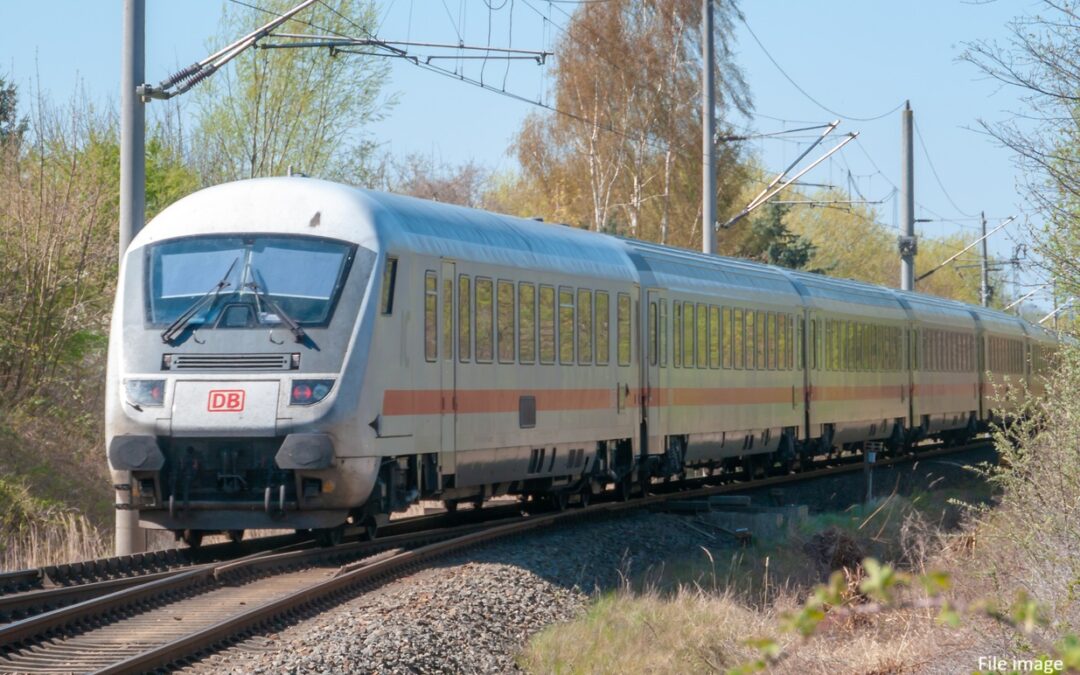
Poland’s state rail operator, PKP Intercity, has purchased 50 second-hand rail carriages from Germany in order to meet surging demand for train travel.
The decision has been criticised by the opposition, which says Poland will become a “graveyard for German scrap” instead of producing its own rolling stock. However, PKP says the purchase was necessitated by a failure to prepare for growing passenger numbers by the opposition when it was in power.
.@PKPIntercityPDP kupiło 50 wagonów od DB Fernverkehr, które już w barwach polskiego przewoźnika pojawią się na torach w I i II kwartale 2026 roku. @J_Malinowski https://t.co/x4bym2KAsc
— Kolejowy Portal (@KolejowyP) December 3, 2025
On Wednesday, Janusz Malinowski, the CEO of PKP Intercity, which is responsible for long-distance rail transport in Poland, announced the purchase of 50 used carriages from DB Fernverkehr, which is owned by German rail operator Deutsche Bahn.
Malinowski said that the carriages can be “quickly put into operation” over the first half of 2026, which will help to meet growing passenger numbers. He told news service Forsal that currently, “at certain times, it is difficult to buy tickets” because of demand.
In the first half of this year, a record 40.4 million passengers travelled with PKP Intercity, which was up 9% on a year earlier and 31% on two years ago. By the end of this year, the figure is forecast to reach 89 million, up from 78.5 million in 2024 and 68 million in 2023.
Last month, PKP Intercity signed the biggest contract for rolling stock in Polish history, ordering 42 double-decker trains – the first of their kind in Poland – in a deal worth 6.9 billion zloty (€1.6 billion). However, those trains – manufactured in Poland by France’s Alstom – will not begin to arrive until 2029.
Nevertheless, PKP Intercity’s decision to buy second-hand carriages from Germany sparked criticism from the national-conservative Law and Justice (PiS), Poland’s main opposition party.
PiS MP Michał Moskal criticised the operator for “buying scrap from Germany” instead of using Polish producers. “Poland will become a graveyard for old German wagons,” he wrote.
His party colleague Jadwiga Wiśniewska said that the deal makes a mockery of Prime Minister Donald Tusk’s claim to be “repolonising” the economy.
In May, Tusk announced that he had taken action to “improve the position of Polish contractors and suppliers” in public tenders, mentioning rail investment as one example.
No i stało się to co przewidywaliśmy, nasz narodowy przewoźnik @PKPIntercityPDP kupił 50 starych wagonów od Deutsche Bahn.
Dziś ujawnił to na posiedzeniu sejmowej Komisji Infrastruktury prezes @PKPIntercityPDP.
Czyli mamy taką sytuację:
– w przetargu na pociągi piętrowe za… pic.twitter.com/ZrSwrR2Snk— Michał Moskal (@Michal_Moskal) December 3, 2025
In response, PKP released a statement saying that its decisions are being made in light of “years of neglect in expanding the rolling stock capacity, [which] have led to a serious limitation in the availability of seat supply”.
They pointed to the fact that tenders to buy the new double-decker trains were cancelled first in July 2023, under the former PiS government – which ruled Poland from 2015 to 2023 – and then again in March 2024, under the current Tusk administration.
The state-owned firm also noted that forecasts made when PiS was in power significantly underestimated demand: the number of passengers PKP Intercity will carry this year will reach the level previously predicted for 2030.
In light of these issues, seeking to purchase and rent used wagons from foreign markets is a necessary part of the firm’s strategy, which also includes improving repair of existing rolling stock and investing 16.5 billion zloty in purchases from Polish producers.
W 2025 roku liczba przewiezionych pasażerów osiągnie poziom, który moi poprzednicy zakładali dopiero na 2030 rok.
Nasz narodowy przewoźnik rozwija się w ekspresowym tempie i nadrabia wieloletnie zaległości dlatego #RobimyNieGadamy i inwestujemy w tabor! https://t.co/6z3RSwQNhl— Dariusz Klimczak (@DariuszKlimczak) December 4, 2025
“We have placed huge orders with [Polish producers] Cegielski, Pesa, and Newag,” Malinowski told Forsal. “[But] we have to wait for a new supply of carriages and now we very quickly need a larger supply of seats, and these carriages [bought from Germany] will provide it.”
Infrastructure minister Dariusz Klimczak echoed this message, writing on social media that “our national carrier is developing at an express pace and catching up on years of backlog” under the former PiS government.
Klimczak also told Forsal that PiS’s criticism is based on their “phobias, which mean that they do not like German trains”. PiS regularly criticises Germany, which it claims wants to prevent Poland’s economic development and make Warsaw dependent upon Berlin.
State rail operator PKP Intercity has signed the biggest contract for rolling stock in Polish history, ordering 42 double-decker trains – the first of their kind in Poland – for 6.9 billion zloty.
Manufacture will take place in the Polish city of Chorzów https://t.co/OxxAqesfsz
— Notes from Poland 🇵🇱 (@notesfrompoland) November 13, 2025
Notes from Poland is run by a small editorial team and published by an independent, non-profit foundation that is funded through donations from our readers. We cannot do what we do without your support.
Main image credit: Matti Blume/Wikimedia Commons (under CC BY-SA 4.0)

Daniel Tilles is editor-in-chief of Notes from Poland. He has written on Polish affairs for a wide range of publications, including Foreign Policy, POLITICO Europe, EUobserver and Dziennik Gazeta Prawna.
















.jpg)