Keep our news free from ads and paywalls by making a donation to support our work!

Notes from Poland is run by a small editorial team and is published by an independent, non-profit foundation that is funded through donations from our readers. We cannot do what we do without your support.
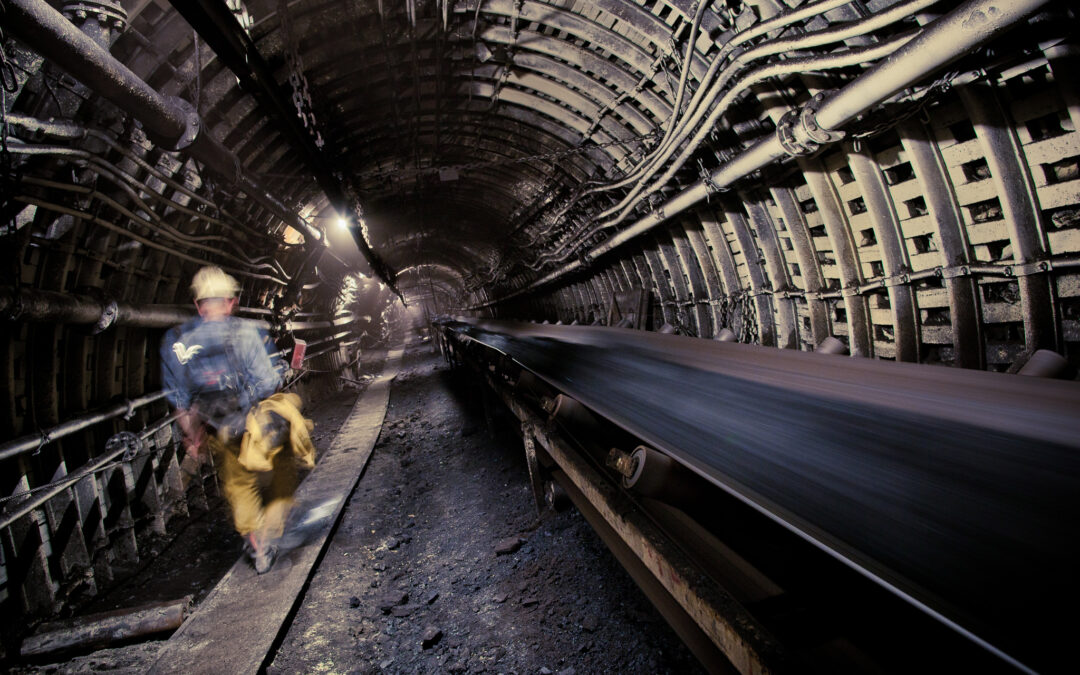
Poland’s parliament has approved a government bill intended to support the transition away from coal by allowing mines to be closed down more easily, introducing financial support for miners who lose their jobs, and helping redevelop former mining areas.
The measure won the support of MPs from Prime Minister Donald Tusk’s ruling coalition, which ranges from left to centre-right. Meanwhile, the right-wing opposition largely abstained from voting – prompting criticism from a coal miners’ union.
✅#Sejm uchwalił ustawę o zmianie ustawy o funkcjonowaniu górnictwa węgla kamiennego oraz ustawy o podatku dochodowym od osób fizycznych.
Przebieg procesu legislacyjnego:https://t.co/zhH7d137X5 pic.twitter.com/zRDgnVdKpe
— Sejm RP🇵🇱 (@KancelariaSejmu) December 4, 2025
Poland is Europe’s most coal-dependent country, with the fossil fuel accounting for 57% of power generation last year. While there has been a gradual shift away from coal, this has been accompanied by concerns about the impact it will have on coal-mining regions.
When approving the bill in October, the government said that the measures would “pave the way for a just transition in mining regions” by “providing real support for thousands of miners” while acting as a “stimulus for investment and development, and the creation of new jobs”.
The legislation would allow mining companies to decommission mines independently but with state financial backing. They can also transfer such assets as donations to local authorities or state entities, allowing them to be used for investments, revitalisation projects or infrastructure construction.
The bill would also introduce a package of protective benefits for workers at companies that are closing mines, including severance payments of 170,000 zloty (€40,000). The plan foresees five mines closing within the next decade and a complete phase-out of thermal coal mining by 2049.
Poland’s government has approved a bill intended to support the transition away from coal by allowing mines to be closed down more easily, introducing financial support for miners who lose their jobs, and helping redevelop former mining areas https://t.co/i8J9qgK0M1
— Notes from Poland 🇵🇱 (@notesfrompoland) October 30, 2025
In Thursday’s vote in the Sejm, the more powerful lower house of parliament, 241 MPs in the 460-seat chamber voted in favour, most of them from the ruling coalition.
Only six lawmakers voted against it, but 186 abstained, largely from the two main opposition parties, the national-conservative Law and Justice (PiS) and far-right Confederation (Konfederacja).
The legislation will now go to the upper-house Senate, where the ruling coalition also holds a majority and which can in any case not block legislation. It must then be signed by opposition-aligned President Karol Nawrocki, who is a strong advocate of coal.
Before the vote, Confederation MP Witold Tumanowicz, who was among those to abstain, criticised the bill for failing to present an alternative to coal.
“It is obvious that miners must be adequately protected now that we have decided to close the mines,” he said, though adding that “in our view [it] is a mistake” to close the mines.
However, what is now being proposed is simply “an attempt to extinguish social conflict” rather than a genuine effort to develop Poland’s energy sector, said Tumanowicz.
PiS leader Jarosław Kaczyński did not take part in the vote at all. But he gave a speech on Thursday – which was Poland’s annual Miners’ Day, known as Barbórka – in which he condemned “anti-mining propaganda” and declared that coal “has a future because it is cheap energy”.
“I appeal to all miners to believe in the future and that their hard work will continue,” said Kaczyński, during a meeting with miners. “We will do everything to ensure that it continues.”
Poseł @WTumanowicz: W dniu Barbórki, Święta Górników, oczywiście składam życzenia wszystkim pracownikom kopalń i samym górnikom. Serdeczne „Szczęść Boże”!
➡️ Jest w tym trochę ironii: opracowujemy projekt, który w praktyce oznacza wygaszanie polskiego górnictwa. Mówi się o… pic.twitter.com/NvbzVQnfDO
— Konfederacja (@KONFEDERACJA_) December 4, 2025
However, the opposition’s decision not to support the bill was met with criticism from Poland’s biggest trade union, Solidarity, which represents many coal miners.
“Every MP who voted against this bill or abstained acted extremely irresponsibly,” said Dominik Kolorz, head of Solidarity in the Silesian-Dąbrowa region, home to many coal mines.
“The MPs knew perfectly well that, if this bill didn’t come into force by the end of the year, coal companies would face bankruptcy,” he added, accusing them of putting their party interests first.
It remains unclear whether, once the bill is sent to him by parliament, Nawrocki will sign it into law or exercise his right to veto it – as he has done with many government bills.
In a message to miners on Thursday, the president repeated one of his campaign slogans from earlier this year: that Poland must “mine, extract and develop” coal.
While standing for election, Nawrocki called coal Poland’s “black gold” and said that he “cannot imagine closing Polish mines” until Poland has a nuclear power plant. The country is preparing to build its first reactor, now expected to come online in 2036.
“You have the right to employment stability,” Nawrocki told union members at the Bielszowice mine and Huta Pokój steelworks in January. He added, however, that if miners “reach an agreement with the government, after reviewing these documents, you can certainly count on my support”.
Fedrować, wydobywać i rozwijać Rzeczpospolitą 🇵🇱
Drodzy Górnicy, dziękuję za Waszą pracę, za wierność tradycji i siłę, która buduje dostatni byt naszej Ojczyzny.
Dziękuję Waszym Rodzinom, że mężnie współuczestniczą w tej wymagającej służbie.Życzę Wam spokojnej i bezpiecznej…
— Karol Nawrocki (@NawrockiKn) December 4, 2025
Poland’s mining sector has been struggling in recent years. Polish coal is among the most expensive in the world to get out of the ground. Burning it causes significant emissions that bring costs under the EU Emissions Trading System.
Eurostat data show that Polish households have the EU’s third-most expensive electricity, when taking countries’ costs of living into account.
But Poland’s coal industry – with its long history and powerful unions – has long enjoyed political influence and public support. It is propped up by the state: to the tune of 9 billion zloty (€2.1 billion) this year and an estimated 5.5 billion in 2026.
According to the energy ministry’s impact assessment, the cost of closing hard coal mines under the new bill over the next decade will reach 11.3 billion zloty.
Polish coal is costly and polluting. But its powerful symbolism has kept the country and its politicians hooked on the "black gold".@AlicjaPtak4 explores coal’s past, present and future in Poland https://t.co/E6IhQ64aGC
— Notes from Poland 🇵🇱 (@notesfrompoland) August 14, 2025
Notes from Poland is run by a small editorial team and published by an independent, non-profit foundation that is funded through donations from our readers. We cannot do what we do without your support.
Main image credit: JSW press materials

Alicja Ptak is deputy editor-in-chief of Notes from Poland and a multimedia journalist. She has written for Clean Energy Wire and The Times, and she hosts her own podcast, The Warsaw Wire, on Poland’s economy and energy sector. She previously worked for Reuters.