Keep our news free from ads and paywalls by making a donation to support our work!

Notes from Poland is run by a small editorial team and is published by an independent, non-profit foundation that is funded through donations from our readers. We cannot do what we do without your support.
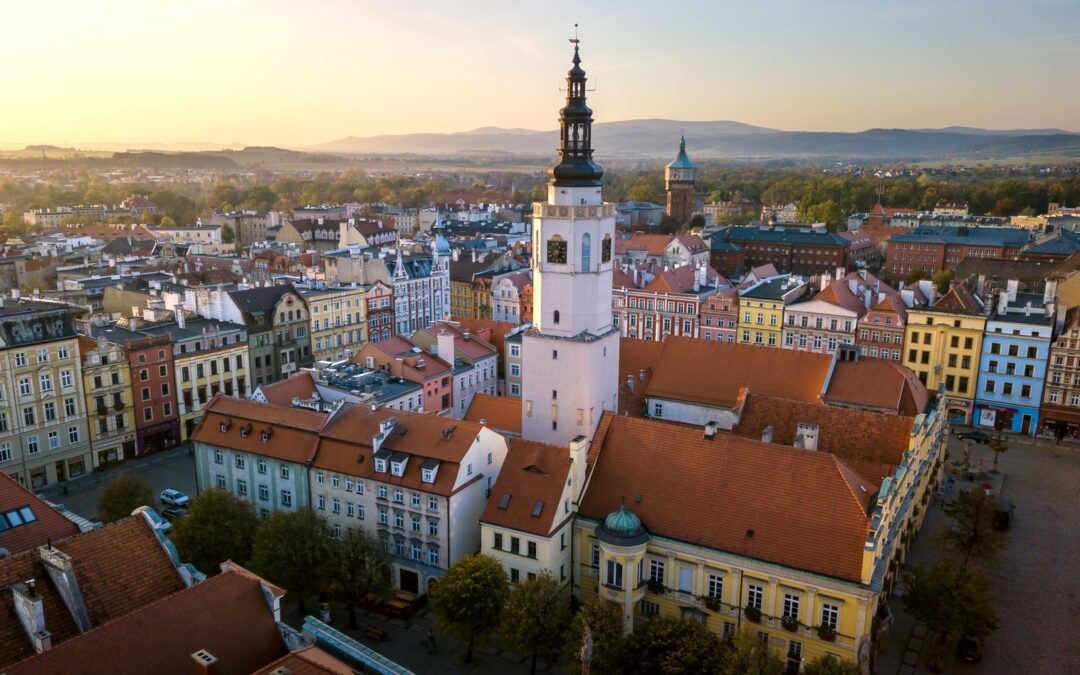
Świdnica has become the first Polish city to announce that it intends to begin entering same-sex marriages concluded abroad into the official state registry, in line with a ruling issued last week by the Court of Justice of the European Union (CJEU) requiring Poland to recognise such unions.
However, the city’s mayor admits that they cannot do so until the national government updates the registry system, which currently only recognises marriages between a man and a woman. The digital affairs ministry says it will soon complete an assessment of how this can be done, but political hurdles remain.
🇵🇱🏳️🌈 Świdnica pierwszym miastem w Polsce, które będzie honorować wyrok TSUE w sprawie transkrypcji zagranicznych aktów małżeństwa par jednopłciowych zawartych na terenie Unii Europejskiej. Prezydentka miasta Beata Moskal-Słaniewska z Lewicy zapowiedziała, że świdnicki Urząd Stanu… pic.twitter.com/hgvM1ma74R
— Mikołaj Murczkiewicz (@hayastanboi) November 28, 2025
On 25 November, the CJEU ruled on a case brought by two Polish men who had married in Germany but found their efforts to have their union recognised in Poland rejected by the registry office and courts because Poland’s constitution refers to marriage as being between a man and a woman.
The CJEU deemed that this infringed the freedom to move and reside within the EU as well as the right to respect for private and family life. It ordered Poland to change its system for recognising marriages conducted in other member states so that it does not discriminate against same-sex couples.
The government has said that it will comply with the ruling, but needs time to work on implementation.
Poland will implement yesterday's EU court ruling requiring it to recognise same-sex marriages conducted in other member states, says the justice minister.
By contrast, the president's office says it "will not succumb to the terror of rainbow rulings" https://t.co/EbYWjaoxeO
— Notes from Poland 🇵🇱 (@notesfrompoland) November 26, 2025
However, on Friday, the mayor of Świdnica, a city of 55,000 in southwestern Poland, announced that they want to begin transcribing marriage certificates of same-sex couples into the Polish registry even before the government acts.
“Swidnica is a beautiful, open city that rescues people from various oppressions and solves various problems,” Beata Moskal-Słaniewska told broadcaster Tok FM. This year, her city held its first ever Diversity Day, which included local LGBT+ groups.
“For same-sex couples, a marriage transcription [into the Polish registry] is not just a formality, but also a sense of security, the fulfilment of dreams and recognition of their relationship in a fully civilised manner,” she added.
The mayor admitted, though, that “there is just one problem”. When entering the names of couples into the digital registry, their PESELs – Polish identification numbers – are required. But those numbers identify a person as male or female.
“If we enter a PESEL number in the ‘female’ field that the system recognises as male, it simply won’t let the entry through,” Moskal-Słaniewska told news website OKO.press. And, currently, marriages can only be entered into the system if they are between a man and a woman.
The mayor said that she would meet with digital affairs minister Krzysztof Gawkowski in an attempt to resolve the issue. Both politicians hail from The Left (Lewica), which is part of Poland’s ruling coalition.
Prezydentka Świdnicy, @beata__ms, rusza na ratunek małżeństwom jednopłciowym. Apeluje do wicepremiera @KGawkowski: Krzysztof, pomóż! 🔽https://t.co/VsEYeybqbg
— Radio TOK FM (@Radio_TOK_FM) November 28, 2025
Asked by Tok FM about the issue on Friday, deputy digital affairs minister Dariusz Standerski said that they were already “carrying out analyses on how to implement this judgment in accordance with the CJEU’s line” and “will have the results in the coming days”.
“It’s a matter of a week, two weeks at most,” he added. “We certainly won’t delay it. Because the case is important… And we pay attention to what the EU courts say and abide by those rulings.”
However, Standerski also noted that the state IT systems “operate within the boundaries and on the basis of the law”. So, “to change something in the system, you first need to change something in the law”. He said that any solution would have to be coordinated with the interior and foreign ministries.
Poland’s ruling coalition has presented a bill that would allow unmarried partners, including same-sex couples, to sign an agreement granting them certain rights.
The proposal is a compromise intended to be acceptable to both liberals and conservatives https://t.co/n7VqUnP6uq
— Notes from Poland 🇵🇱 (@notesfrompoland) October 17, 2025
Some have argued that the CJEU’s ruling will be difficult to implement because Poland’s constitution defines marriage as being between a man and a woman. Others, however, say that it does not preclude the recognition of same-sex marriages.
Article 18 of the constitution states: “Marriage, being a union of a man and a woman, as well as the family, motherhood and parenthood, shall be placed under the protection and care of the Republic of Poland”.
The issue is highly politically charged, with many in Poland opposed both to the recognition of same-sex marriages and the idea that this can be imposed on the country by the EU.
State research agency @CBOS_Info has found its highest-ever level of support in Poland for the introduction of same-sex civil partnerships.
Over 62% are now in favour, up from 52% last year and just 25% in 2011, when the question was first asked https://t.co/Y9ydpbwsoU
— Notes from Poland 🇵🇱 (@notesfrompoland) November 14, 2025
While The Left is a strong supporter of LGBT+ rights, including recognising same-sex relationships, more conservative elements of the ruling coalition, especially the centre-right Polish People’s Party (PSL), are likely to be less enthusiastic about complying with the CJEU’s ruling.
“It’s hard for me to imagine trying to create regulations that would implement a judgement that doesn’t fully respect the provisions of the constitution,” said energy minister Miłosz Motyka, a member of PSL, quoted by the Interia news website.
Prime Minister Donald Tusk, leader of the centrist Civic Coalition (KO) party, has so far been non-committal on how his government will respond to the CJEU ruling.
At a cabinet meeting on Wednesday, he said that “we will, of course, respect the verdicts and judgements of European courts”. But he added that “the EU cannot impose anything on us on this issue” and “wherever matters must be decided by the nation state and national law, we will adhere to this principle”.
Premier Tusk o wyroku TSUE: nikt niczego w tej sprawie nie będzie nam narzucał#PAPInformacje https://t.co/SQRALQEcxp
— PAP (@PAPinformacje) November 26, 2025
The issue is also complicated by the fact that any legislative change must be approved by President Karol Nawrocki, who is aligned with the national-conservative opposition Law and Justice (PiS) party and is ardently opposed to the recognition of same-sex marriage.
Today, PiS deputy leader and former Prime Minister Mateusz Morawiecki condemned the CJEU ruling. “Poland cannot be a puppet in the hands of CJEU judges,” he declared, quoted by the Do Rzeczy weekly.
“We absolutely do not consent to Polish law being changed in any way as a result of this CJEU ruling,” Morawiecki continued. “Let us defend Polish families, defend Polish children, defend Polish traditions against any external interference. Sovereignty is supreme in Polish law. I would die for sovereignty.”
However, it is also possible that the government could find non-legislative ways to implement the ruling, thereby avoiding the need for the issue to go through parliament and meet an almost-certain veto from Nawrocki.
⚖️ Wyrok TSUE ponownie wykracza poza kompetencje przyznane Unii. Oczekuje się od Polski uznawania związków jednopłciowych zawartych za granicą – wbrew naszym przepisom.
🇵🇱 Konstytucja jasno określa definicję małżeństwa, a orzeczenia UE są wiążące tylko w granicach traktatów.
🇪🇺… pic.twitter.com/sGrtfv4FMp
— Mateusz Morawiecki (@MorawieckiM) December 1, 2025
Notes from Poland is run by a small editorial team and published by an independent, non-profit foundation that is funded through donations from our readers. We cannot do what we do without your support.
Main image credit: Kateryna Baiduzha/Wikimedia Commons (under CC BY-SA 4.0)

Daniel Tilles is editor-in-chief of Notes from Poland. He has written on Polish affairs for a wide range of publications, including Foreign Policy, POLITICO Europe, EUobserver and Dziennik Gazeta Prawna.