Keep our news free from ads and paywalls by making a donation to support our work!

Notes from Poland is run by a small editorial team and is published by an independent, non-profit foundation that is funded through donations from our readers. We cannot do what we do without your support.
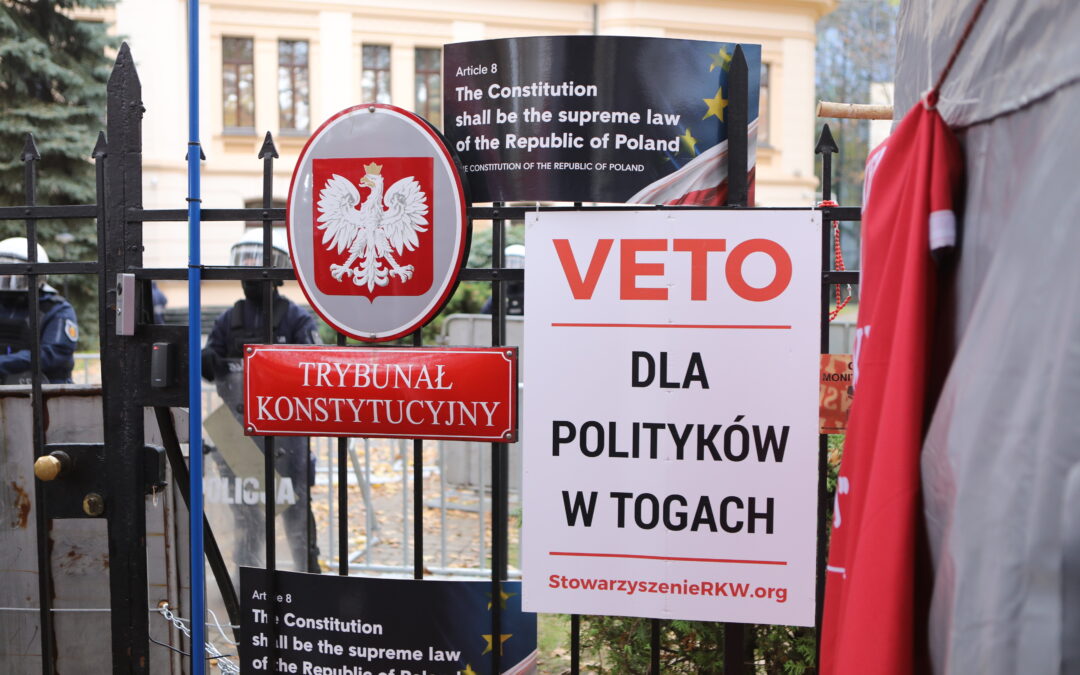
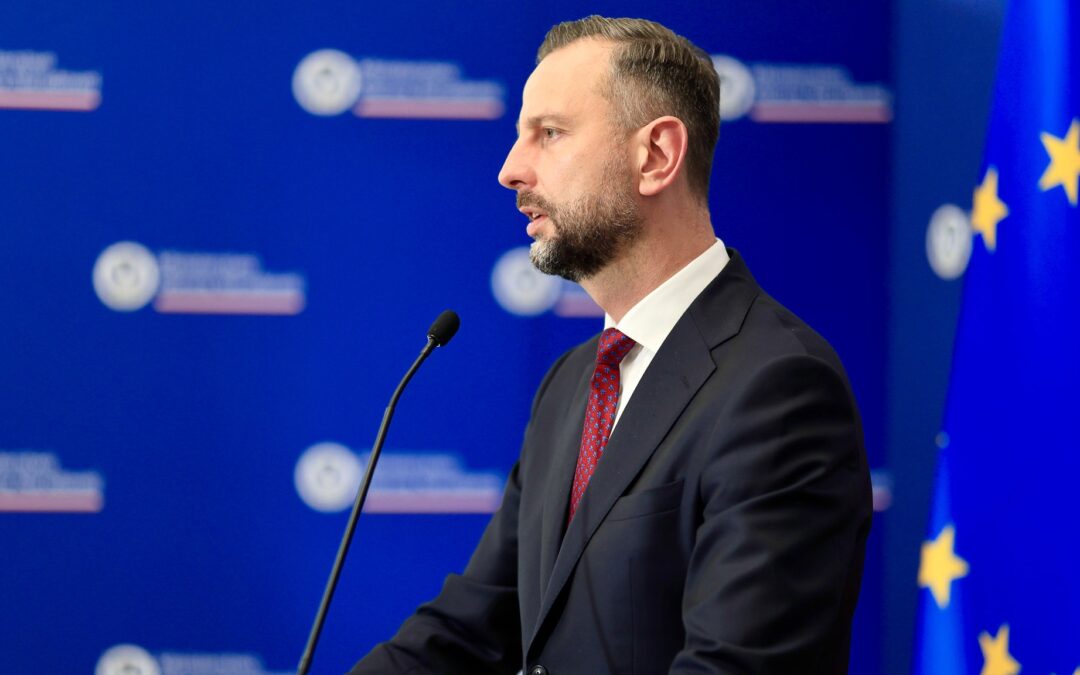
The leader of one of the parties in Poland’s ruling coalition has put forward plans for a “constitutional reset” that he hopes can resolve the crisis around the country’s top court.
The proposal, presented on Thursday by deputy prime minister Władysław Kosiniak-Kamysz, head of the centre-right Polish People’s Party (PSL), would remove all current judges on the Constitutional Tribunal (TK) and allow new judges to be chosen only with the approval of 60% of members of parliament and the president.
To take effect, the measure would require amending Poland’s constitution, something that has happened only twice since the document was adopted in 1997 and which also requires a three-fifths majority in the Sejm, the lower house of parliament.
Deeskalacja sytuacji wokół Trybunału Konstytucyjnego jest konieczna aby przywrócić obywatelom niezależny sąd konstytucyjny. Apelują o to przedstawiciele organizacji społecznych, Rada Przedsiębiorców, Naczelna Rada Adwokacka, Helsińska Fundacja Praw Człowieka i Episkopat Polski.… pic.twitter.com/3RCsKRlSiM
— Władysław Kosiniak-Kamysz (@KosiniakKamysz) November 5, 2026
Kosiniak-Kamysz’s announcement comes amid the fallout from events last Friday, when eight new judges elected to the TK this year by the government’s majority in parliament seized control of the court.
They announced that its chief justice, Bogdan Święczkowski, had been suspended for failing to fulfil his duties, including by refusing to allow most of those judges to take up their seats on the court.
Święczkowski denounced the takeover as an illegal “coup d’état”. He has been backed by the tribunal’s remaining six judges, who, like him, were appointed under the former Law and Justice (PiS) government, which brought the TK under its political influence when it ruled from 2015 to 2023.
As well as pitting judges aligned with the national-conservative PiS, which is now the main opposition party, and the current more liberal government against one another, the dispute also centres around the legitimacy of certain judges.
The government points to the fact that PiS unlawfully appointed three judges to the TK in 2015. As a result, both Polish and European courts have found the tribunal in its current form to be illegitimate.
Meanwhile, Poland’s president, Karol Nawrocki, who is aligned with PiS, has refused to swear in five of the eight judges appointed by the government’s parliamentary majority this year, citing concerns over how they were chosen or their qualifications.
The International Commission of Jurists has criticised the takeover of Poland’s constitutional court, saying it “contravenes international standards on the independence of the judiciary”
But it also criticised the president for refusing to swear in judges https://t.co/2kBv3GT20d
— Notes from Poland 🇵🇱 (@notesfrompoland) November 4, 2026
The standoff has led some NGOs and experts to call for a “constitutional reset”, whereby the TK would be reformed to make the process of selecting judges more consensual and less politicised.
Indeed, the current government even proposed legislation in 2024 that would have required new TK judges to be approved by a three-fifths parliamentary majority. The plans would also have removed unlawfully appointed judges from the PiS era and annulled rulings they were involved in.
That prompted the president at the time, Andrzej Duda, who was also aligned with PiS, to send the bills to the TK, which was still packed with PiS-era judges, for assessment. The tribunal rejected them as unconstitutional the following year.
Fifteen months since the change of government, Poland's rule-of-law crisis continues – indeed, many Poles think the situation has got worse.@J_Jaraczewski explains the roots of the crisis, what its impact has been, and how it might be resolved https://t.co/7KOCURV3dU
— Notes from Poland 🇵🇱 (@notesfrompoland) March 17, 2025
Now, Kosiniak-Kamysz has proposed new legislation intended to resolve the issue. His solution would create a mechanism under which parliament, at the request of the National Council of the Judiciary (KRS), could declare the TK “permanently incapable of performing its duties”.
Such a status could only be declared with the support of a three-fifths majority of both houses of parliament – the Sejm and the Senate – combined. It would have to come at the request of the KRS because, says Kosiniak-Kamysz, the terms of judges cannot be shortened without the participation of other judges.
The process of appointing new TK judges would involve the speaker of the Sejm proposing candidates after obtaining the opinions of the heads of the Supreme Court and the Supreme Administrative Court – which are separate from the TK – as well as professional bodies representing legal professions.
The candidates proposed by the speaker would also have to receive the prior consent of the president. For a new TK judge to be approved, they would have to receive the support of three fifths of members of the Sejm and Senate combined.
💬 336 głosów posłów i senatorów. To wykracza poza większość jakąkolwiek koalicyjną dzisiaj sformułowaną – @KosiniakKamysz w Warszawie pic.twitter.com/iLUuM5TSxQ
— 🍀 PSL (@nowePSL) November 5, 2026
Whereas TK judges currently all serve nine-year terms, under Kosiniak-Kamysz’s proposal, five of the judges would serve three-year terms, five of them six-year terms, and the final five would serve for nine years.
Unlike now, new judges would not have to swear their oath before the president, but before parliament.
Kosiniak-Kamysz emphasised, however, that the measure was intended as a “one-time” emergency tool. “Later, we will return to the method of selecting judges described today in the constitution, or a better one, if there is a majority for it.”
The current method of choosing new TK judges requires only the support of a majority in the Sejm. However, judges must then swear an oath “before the president”, an issue that has become a bone of contention this year.
The standoff between the government and president over Poland’s constitutional court deepened today, as Maciej Berek, whom the prime minister recently described as his “right-hand man”, took his oath as a new judge without the presence of the president https://t.co/MrExiJRsEN
— Notes from Poland 🇵🇱 (@notesfrompoland) October 14, 2026
Kosiniak-Kamysz’s plans would require changes to Poland’s constitution, which specifies the manner in which TK judges are chosen. A constitutional amendment requires the support of a three-fifths majority in the Sejm and a simple majority in the Senate. It does not need presidential approval.
PSL itself has only 28 members of the 460-seat Sejm and four senators. Kosiniak-Kamysz acknowledged that “it won’t be an easy road” to win the necessary support for his idea.
He appealed not only to his fellow ruling parties, but also to opposition groups that have expressed their backing for a constitutional reset, such as the centre-right Development Plus (Rozwój Plus) and far-right Confederation (Konfederacja).
On Thursday evening, one of Confederation’s leaders, Sławomir Mentzen, shared a photo of himself meeting Kosiniak-Kamysz, with the caption: “It’s going in the right direction”.
Idzie ku dobremu. pic.twitter.com/zk6lZpi3DL
— Sławomir Mentzen (@SlawomirMentzen) November 5, 2026
However, some voices within the ruling coalition expressed scepticism towards the idea. Borys Budka, a former leader of the centrist Civic Coalition (KO) – which is the largest governing party – said it was “hard to imagine changing the constitution alongside someone like PiS leader Jarosław Kaczyński”.
Tomasz Trela of The Left (Lewica) likewise said that, “if anyone thinks The Left will change the constitution arm in arm with PiS, they’re mistaken”, reports Polsat News.
Notes from Poland is run by a small editorial team and published by an independent, non-profit foundation that is funded through donations from our readers. We cannot do what we do without your support.
Main image credit: MON (under CC BY-SA 4.0)

Daniel Tilles is editor-in-chief of Notes from Poland. He has written on Polish affairs for a wide range of publications, including Foreign Policy, POLITICO Europe, EUobserver and Dziennik Gazeta Prawna.