Keep our news free from ads and paywalls by making a donation to support our work!

Notes from Poland is run by a small editorial team and is published by an independent, non-profit foundation that is funded through donations from our readers. We cannot do what we do without your support.
This article has been updated to include a statement from Poland’s defence ministry issued on Monday afternoon.
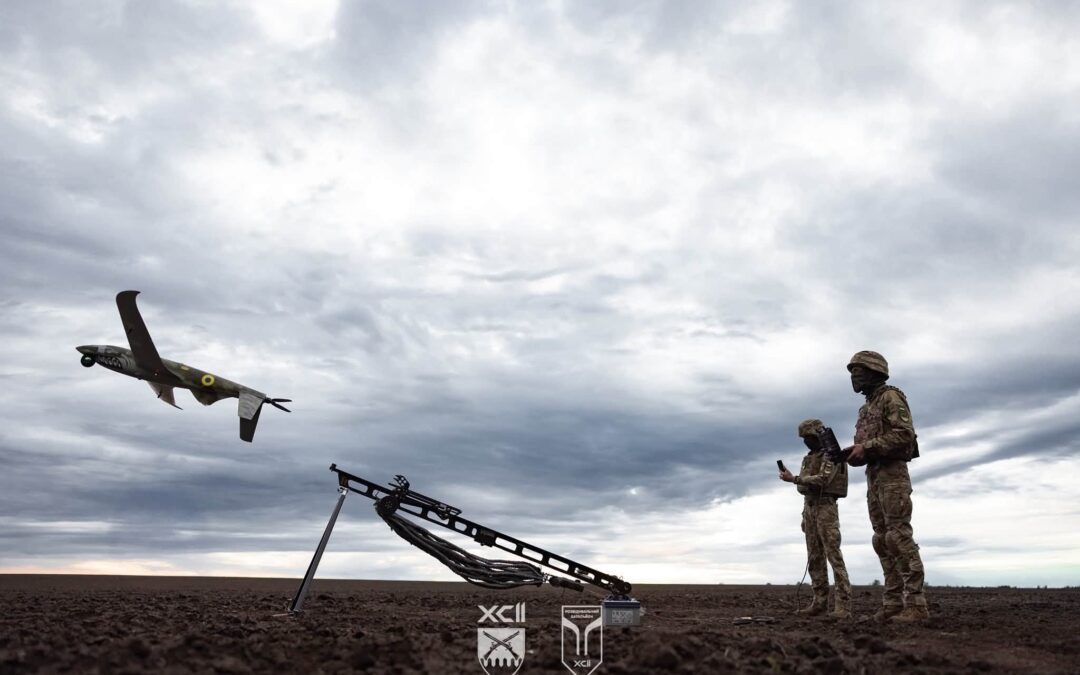
Lithuania says there is “no doubt” that a Ukrainian drone which exploded on its territory on Sunday, hitting a moving car, entered its airspace from Poland. However, Poland has so far said that there is no confirmation of an object crossing the border.
Meanwhile, Ukraine has apologised for the incident, saying that Russian electronic warfare had diverted the drone’s path during an operation against military targets in Russia.
Russia’s war of aggression against Ukraine is spilling over onto the Eastern flank of NATO and EU.
This morning, NATO fighter jets stationed at Šiauliai Air Base scrambled once again after an unidentified object entered Lithuanian airspace.
What appears to be a drone exploded…
— Gitanas Nausėda (@GitanasNauseda) October 18, 2026
On Sunday morning, Lithuania confirmed that a drone had entered its airspace and exploded, causing damage to a moving vehicle. NATO jets were scrambled in response to the incursion but were not able to visually identify the object.
President Gitanas Nausėda said that the incident was further evidence that “Russia’s war of aggression against Ukraine is spilling over onto the Eastern flank of NATO and [the] EU”.
Meanwhile, Lithuanian defence minister Robertas Kaunas revealed that preliminary information indicated the drone had entered from Polish airspace.
“I have already contacted the Polish defence minister and asked Poland to join the investigation so that we can look into this incident together,” said Kaunas, quoted by broadcaster LRT.
However, a spokesman for Poland’s defence ministry, Janusz Sejmej, told the Polish Press Agency (PAP) on Sunday that “there is no confirmation [from our radar systems] of [an object] crossing the border from Poland to Lithuania”.
Polsat, a leading Polish broadcaster, cited unnamed sources at Poland’s defence ministry saying that they believed the drone in fact took off from within Lithuanian territory, around 30 kilometres from the Polish border, and then flew deep into the country.
In response, Deividas Matulionis, an advisor to the Lithuanian president, told the Baltic News Service (BNS) on Monday that “I can say very unequivocally we have credible evidence that the drone crossed the Polish border”.
Later, the country’s prime minister, Mindaugas Sinkevičius, said that “there is no doubt that it entered…from the Polish side”. He also confirmed that the evidence indicates the drone “is of Ukrainian origin”.
We regret the incident that occurred this morning in Lithuanian airspace, which may have resulted from Russian electronic warfare diverting drones during an operation against legitimate military targets in Russia.
We apologise for any disruption, risks, and concern this may have…
— Heorhii Tykhyi (@SpoxUkraineMFA) October 18, 2026
Those remarks followed a statement on Sunday afternoon from Heorhii Tykhyi, the spokesman for Ukraine’s foreign ministry, who appeared to confirm that the drone was Ukrainian.
“We regret the incident that occurred this morning in Lithuanian airspace, which may have resulted from Russian electronic warfare diverting drones during an operation against legitimate military targets in Russia,” wrote Tykhyi. “We apologise for any disruption, risks, and concern this may have caused.”
The spokesman said that Ukraine would “share all relevant information with our Lithuanian partners to establish the full circumstances of the incident”. However, he gave no further information on what type of drone was involved, where it was launched from, and what its target was.
Lithuania borders Belarus, an ally of Russia, and the Russian exclave of Kaliningrad, as well as Poland and Latvia. In March and May this year, a number of Ukrainian drones aimed at targets in Russia entered the airspaces of NATO members Lithuania, Latvia, Estonia and Finland, likely due to Russian electronic jamming.
On Monday afternoon, Poland’s defence ministry issued a statement “strongly refuting” media reports suggesting that sources within the ministry had identified the drone as having taken off within Lithuania itself.
It added that the ministry, in cooperation with its Lithuanian partners, was still “conducting a detailed analysis” of what had taken place.
Notes from Poland is run by a small editorial team and published by an independent, non-profit foundation that is funded through donations from our readers. We cannot do what we do without your support.
Main image credit: General Staff of the Armed Forces of Ukraine/Wikimedia Commons (under CC BY 4.0)

Daniel Tilles is editor-in-chief of Notes from Poland. He has written on Polish affairs for a wide range of publications, including Foreign Policy, POLITICO Europe, EUobserver and Dziennik Gazeta Prawna.