Keep our news free from ads and paywalls by making a donation to support our work!

Notes from Poland is run by a small editorial team and is published by an independent, non-profit foundation that is funded through donations from our readers. We cannot do what we do without your support.
Poland will begin using reclaimed sewage water to cool power plants from the start of next year. The measures are intended to reduce the use of fresh water and make the power system more resilient to increasingly frequent droughts.
The change comes after some of Poland’s power plants were partially shut down this summer amid a series of heatwaves and lack of rain that led to record-low water levels in many rivers.
💧⚡ Otwieramy sektor energetyczny na wodę odzyskaną.
Od 1 stycznia 2027 r. polskie elektrownie i elektrociepłownie będą mogły wykorzystywać wodę odzyskaną ze ścieków komunalnych w systemach chłodzenia. Nowe rozwiązania przedstawiliśmy dziś wspólnie z ministrem energii… pic.twitter.com/qRDOgjcDwb
— Dariusz Klimczak (@DariuszKlimczak) September 3, 2026
“This may seem to many like a minor change, but it is of fundamental importance for many power-generating units in Poland,” said energy minister Miłosz Motyka. “Thanks to this, we will be even more resilient and even better prepared for crises of all kinds.”
The legislation was first proposed by a group of MPs from The Left (Lewica) and the centre-right Polish People’s Party (PSL), two members of the current ruling coalition, in May, and was then approved by parliament in July. Last week, President Karol Nawrocki signed it into law.
The law, which will come into force at the start of 2027, introduces a definition of water recovered from municipal sewage, which, in turn, will allow its use in the cooling circuits of power stations and combined heat and power plants.
Power stations require large amounts of water to help cool and condense steam, which drives the turbines, back into liquid form so that it can be reheated into steam once more.
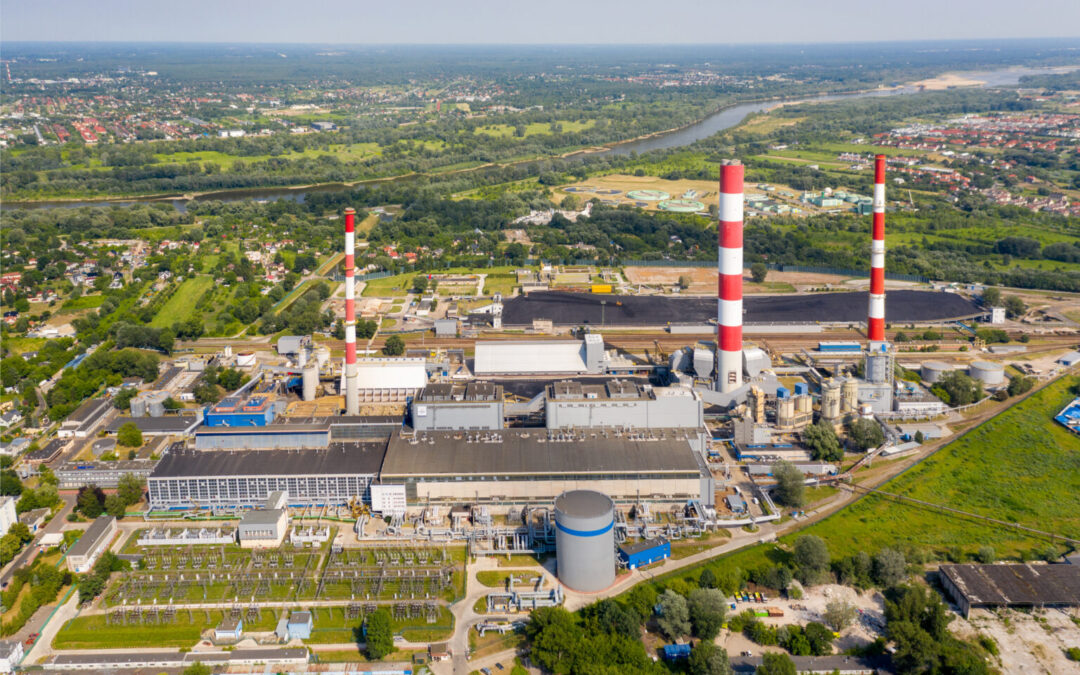
Orlen Termika, a subsidiary of state energy giant Orlen, has announced that it plans to invest more than 1 billion zloty (€230 million) over the next four years to maximise the benefits of the change by connecting sewage treatment plants with three of its power and heat plants around Warsaw.
According to Andrzej Gajewski, the CEO of Orlen Termika, one of the plants, Żeran, will be able to save up to 80% of previous water use. Another, Siekierki, will save up to 20%.
The company also plans to install heat pumps to extract heat from sewage, which can then be used to help supply heat to residents of Warsaw before the water is then used to cool down the plants. Sewage is relatively warm, typically between 10°C and 20°C, making it a good source of recoverable heat.
“From the point of view of security of supply for Warsaw’s residents and from the point of view of efficiency – that is, the price of heating – this is the best and most advantageous solution,” emphasised Gajewski.
Poland’s power grid operator has, for the second time in three days and third time this summer, invoked emergency measures to ensure supply amid a heatwave.
Before this summer, it had only done so twice in the eight years since such powers were introduced https://t.co/fIDR4SimgG
— Notes from Poland 🇵🇱 (@notesfrompoland) August 6, 2026
Poland has experienced increasingly hot temperatures in recent years. This summer, the country broke its all-time record, as temperatures reached more than 40°C. That, along with low amounts of rainfall, has seen rivers reach record lows.
As a result, Poland’s power grid operator has this summer been forced three times to invoke emergency measures to ensure supply. Previously, it had only done so twice in the eight years since such powers were introduced.
Last month, state power supplier Enea announced that it had reduced operations at two of its coal-fired plants due to the low level of water in the Vistula. Around 1.1 gigawatts (GW) of capacity, just over 1% of Poland’s total, was taken offline.
Temperatures in Poland have reached the highest level on record, with a figure of 40.3°C (104.5°F) recorded this afternoon, as the heatwave that has hit Europe this week moves eastwards https://t.co/eRhRxiuCGq
— Notes from Poland 🇵🇱 (@notesfrompoland) June 28, 2026
Notes from Poland is run by a small editorial team and published by an independent, non-profit foundation that is funded through donations from our readers. We cannot do what we do without your support.
Main image credit: Orlen Termika (press materials)

Alicja Ptak is deputy editor-in-chief of Notes from Poland and a multimedia journalist. She has written for Clean Energy Wire and The Times, and she hosts her own podcast, The Warsaw Wire, on Poland’s economy and energy sector. She previously worked for Reuters.