Keep our news free from ads and paywalls by making a donation to support our work!

Notes from Poland is run by a small editorial team and is published by an independent, non-profit foundation that is funded through donations from our readers. We cannot do what we do without your support.
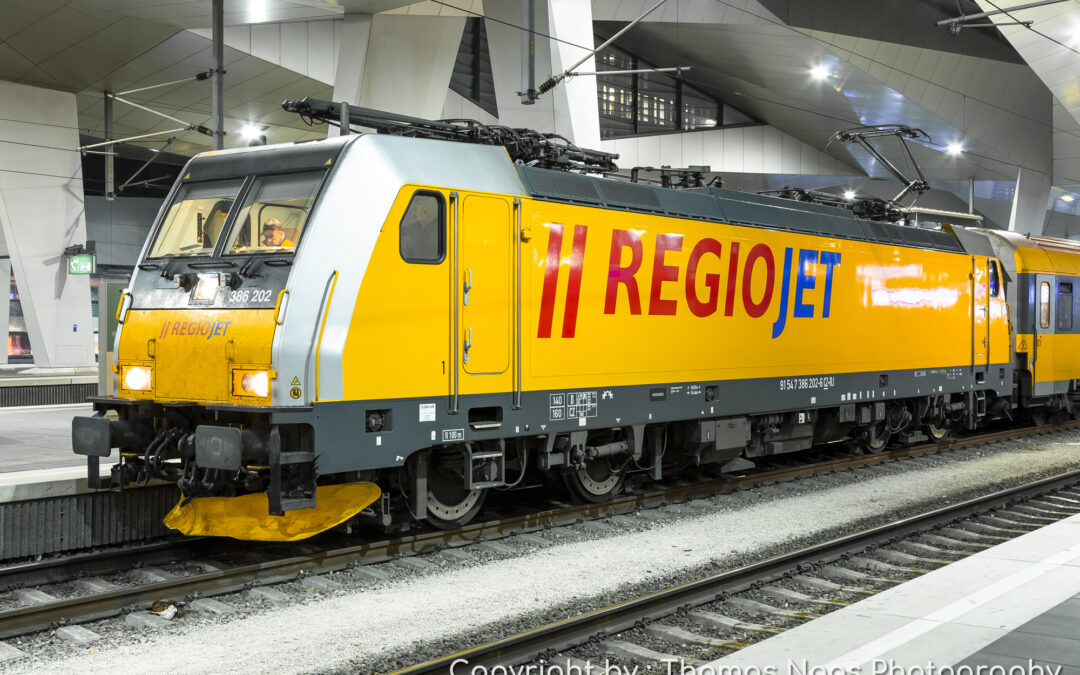
Private Czech rail operator RegioJet has announced its withdrawal from Poland just months after entering the market. Its brief time in the country was tumultuous, marked by numerous train cancellations and conflict with Poland’s state operator PKP.
RegioJet explained its decision by saying that PKP’s dominant position and state support give it an unfair advantage. It also accused its rival of “predatory” practices intended to hinder RegioJet’s entry to the market. PKP, however, immediately issued a statement denying those claims.
.@PKPIntercityPDP reaguje na decyzję @RegioJet o wycofaniu się z przewozów kolejowych po Polsce.
Państwowy przewoźnik zarzuca "jednostronny charakter narracji" czeskiej firmy i "z dezaprobatą odnosi się do nadawania sprawie charakteru politycznego".https://t.co/YfkqD7v4Mj
— PolsatNews.pl (@PolsatNewsPL) April 9, 2026
“Unfortunately, we must end our operations on the domestic market in Poland,” RegioJet’s owner, Radim Jančura, told employees in a message reported by financial news website Money.pl.
He said that services would stop operating on 3 May. Any customers with tickets booked after that date would be given a full refund and can also apply for 100 zloty (€23.50) in compensation “as an apology”, added Jančura.
However, RegioJet also confirmed that, while it was ending domestic connections within Poland, its international routes between Przemyśl and Prague via Kraków and between Prague and Warsaw would continue to operate.
In a statement to the Polish press, RegioJet said that it had “encountered a number of actions that, in our opinion, violate the principles of fair competition”.
That had led the firm to “lose hope and faith” about operating in Poland while a “dominant, and de facto monopolistic, entity” is “hindering the entry of new participants”. But “we are ready to return when the market is truly open and provides fair and transparent conditions”, it added.
As examples of PKP’s practices, RegioJet said that, despite the Czech firm winning a bid to use a PKP depot, it had been “prohibited from renting the tracks in the hall”, forcing it to “repair the wagons outside, in the snow, and perform more serious repairs in the Czech Republic”.
It also noted that PKP had significantly reduced ticket prices, in some cases by up to 70%, in response to RegioJet’s entry to the market. The Czech firm said that this constituted “illegal, predatory practices aimed at eliminating a new market entrant”.
To nie żart…
👉 https://t.co/NpvHZeVWqg pic.twitter.com/tzEaTlDJA8
— PKP Intercity (@PKPIntercityPDP) April 1, 2026
RegioJet added that around 90% of routes run by PKP Intercity, which operates connections between large cities, are subsidised from public funds, giving it a further advantage.
Shortly after RegioJet’s announcement, PKP Intercity issued a statement of its own, saying that it had been forced to do so “due to numerous inaccuracies and the one-sided nature of the narrative presented” by its Czech rival.
PKP Intercity said that it had operated entirely in accordance with the law and had taken no action to obstruct RegioJet’s operations or restrict competition. It also noted that decisions on access to rail infrastructure and allocation of routes lie with independent bodies, not PKP itself.
Stanowisko PKP INTERCITY S.A. w odniesieniu do oświadczenia spółki REGIOJET @PKPIntercityPDPhttps://t.co/vTo7tOoyiJ pic.twitter.com/YXfAfXwyqN
— Kurier Kolejowy (@kurier_kolejowy) April 9, 2026
Today’s announcement brings to an end a brief but tumultuous period of activity in Poland for RegioJet, which has established itself as a major operator in the Czech Republic since being founded in 2009, despite also accusing the Czech state rail firm České dráhy of unfair practices.
RegioJet ran its first domestic connection in Poland, between Kraków and Warsaw, in September 2025. Subsequently, in December, it was supposed to launch a full timetable of connections between those two cities, as well as the Poznań-Warsaw route and Gdynia to Kraków via Warsaw.
However, its launch was beset with difficulties. In November, RegioJet announced the postponement of the Poznań-Warsaw route. Then, in December, days before its full timetable was due to launch, the firm cancelled a large number of trains, despite customers having already bought tickets for them.
Following an investigation, Poland’s state Office of Rail Transport (UTK) earlier this week concluded that RegioJet’s actions in December had constituted “unlawful practices that violated the collective interests of rail passengers”. That finding was the first step towards potentially issuing a fine against the operator.
Prezes UTK potwierdził, że @RegioJet dopuścił się stosowania bezprawnych praktyk naruszających zbiorowe interesy pasażerów w transporcie kolejowym. Przewoźnik w grudniu ubiegłego roku nie uruchomił 23 połączeń ujętych w rozkładzie jazdy.
Więcej ➥ https://t.co/eUvp9RcnBR#kolej…— UTK (@UTKgovpl) April 7, 2026
Last year, RegioJet had already blamed PKP for many of its difficulties. In November, it accused the Polish state operator of preventing it from advertising at train stations and forcing it to take up slower connections than equivalent routes on PKP Intercity.
PKP Intercity denied those accusations at the time, saying that it “conducts its operations in a fully transparent manner and in accordance with the highest ethical standards and applicable legal provisions”.
However, despite its well-publicised problems, today’s announcement by RegioJet has still come as a surprise. As recently as February, the firm had announced that it was planning to increase the number of connections between Poznań and Warsaw, notes industry news service WNP.
Separately, PKP Intercity last month began running one of its Pendolino high-speed trains in the Czech Republic for the first time as part of a certification process for the planned launch of a Warsaw-Prague route.
A Polish Pendolino high-speed train has begun running in the Czech Republic for the first time.
The Prague-Bohumín service will run until June as part of a certification process that Polish operator PKP Intercity hopes will lead to a Warsaw-Prague route https://t.co/hmUNd7ft0E
— Notes from Poland 🇵🇱 (@notesfrompoland) March 10, 2026
Notes from Poland is run by a small editorial team and published by an independent, non-profit foundation that is funded through donations from our readers. We cannot do what we do without your support.
Main image credit: Thomas Naas/Flickr (under CC BY-ND 2.0)

Daniel Tilles is editor-in-chief of Notes from Poland. He has written on Polish affairs for a wide range of publications, including Foreign Policy, POLITICO Europe, EUobserver and Dziennik Gazeta Prawna.