Keep our news free from ads and paywalls by making a donation to support our work!

Notes from Poland is run by a small editorial team and is published by an independent, non-profit foundation that is funded through donations from our readers. We cannot do what we do without your support.
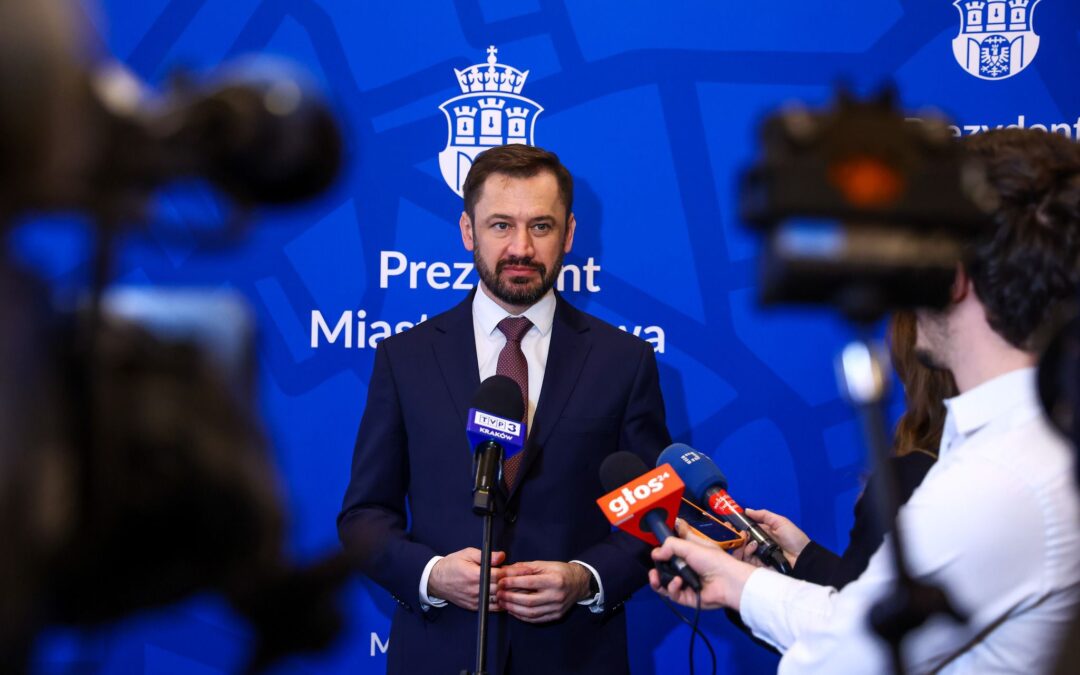
The mayor of Kraków, Poland’s second-largest city, will face a recall referendum next month after the electoral commission confirmed that a petition calling for his potential removal had received enough signatures from residents to be valid.
Aleksander Miszalski, who has served less than two years of his five-year term as mayor, hails from the centrist Civic Coalition (KO) party of Prime Minister Donald Tusk. The referendum will therefore be a major midterm test for the ruling coalition in a rare year when no national elections are taking place.
The campaign in favour of the referendum has received strong support from the two main national opposition parties, the national-conservative Law and Justice (PiS) and far-right Confederation (Konfederacja).
Referendum w sprawie odwołania Miszalskiego z urzędu prezydenta Krakowa. Podano datę#PAPinformacje https://t.co/YR6Gb9zXEE
— Polska Agencja Prasowa/Polish Press Agency (PAP) (@PAPinformacje) April 7, 2026
The group behind the referendum, which says that it is non-partisan, accuses Miszalski of overseeing rising municipal debt, cronyism in appointments, and policies that favour property developers who supported his campaign.
They have also criticised the introduction at the start of this year of a new “clean transport zone” that bans older, more polluting cars from the city, as well as rising costs of public transport, waste collection and parking.
In January, they filed a notification with the National Electoral Office (KBW) of their intention to seek a referendum. They then began collecting signatures of residents in support of the idea.
To trigger a referendum, they needed to get the backing of at least 10% of registered voters in Kraków, meaning 58,355 signatures. However, because during the verification process some signatures are always invalidated, the organisers aimed to collect at least 120,000.
📌 PUNKTY ZBIÓRKI PODPISÓW pod referendum o odwołanie prezydenta Krakowa!
Jeśli uważasz, że Kraków zasługuje na lepsze zarządzanie — przyjdź i podpisz! ✍️
Każdy podpis ma znaczenie. To realne działanie, nie narzekanie!✅ Harmonogram zbiórek (Kraków):
📍 30.01 (piątek),… pic.twitter.com/zURjN3YqEJ— Krzysztof Mulawa (@krzysztofmulawa) January 30, 2026
They eventually managed to gather almost 134,000, which were submitted to the electoral commission for verification in March. Last week, the organisers announced that, with just under 80,000 signatures checked, they had already reached the required total of valid ones.
Today, the KBW’s representative in Kraków, Dagmara Daniec-Cisło, confirmed that a referendum on whether to retain the mayor – as well as one to remove the entire city council, which the petitioners also demanded – would be held on 24 May.
For the referendums to be valid, at least three fifths of the number of people who voted to elect the mayor and council need to take part. In the mayoral referendum, that means turnout of 158,555 voters is needed, and in the council referendum, around 179,792, notes the Polish Press Agency (PAP).
If the turnout requirement is met, then the election is decided by a simple majority in favour of either keeping or dismissing the mayor and council. If they are dismissed, new elections will be held.
Today’s news was welcomed by Miszalski’s main rival, Łukasz Gibała, who narrowly lost the mayoral run-off election in 2024 with 49% to Miszalski’s 51%.
“On 24 May, a great battle for Kraków [will take place],” he wrote, calling on “residents to reclaim their city” from “party structures controlled from Warsaw”.
That was a reference to the fact that Miszalski is seen as closely aligned with Tusk and the national government. Before being elected mayor, he served as a member of the national parliament representing Kraków.
This year is the first since 2022 that no national elections are being held, making the Kraków referendums a key midterm test of support for Tusk’s party, which generally performs strongly in Poland’s large, more liberal cities, and a chance for the opposition to strike a blow against KO.
24 maja wielka bitwa o Kraków. Czy Mieszkańcy odzyskają swoje miasto? Z jednej strony sterowane z Warszawy partyjne struktury, a z drugiej zwykli Mieszkańcy, którzy masowo podpisywali się pod referendum. Z jednej strony partyjni kolesie, którzy mają po 4-5 posad publicznych, a z… pic.twitter.com/ZFHdLWgTi7
— Łukasz Gibała (@LukaszGibala) April 7, 2026
Miszalski himself today called on Cracovians to boycott the referendum and instead judge him at the end of his term in 2029.
“I want to be held accountable for the results of my work for the people of Kraków,” he declared, but added that his administration’s investments in transport, schools, and public spaces “require time and consistency” to bear fruit.
“So if you believe I should complete my term, stay home on the day of the referendum,” he advised. “Low turnout in the referendum and high turnout on election day [in 2029] will be our victory.”
Od pierwszego dnia kadencji mówiłem jasno – chcę być rozliczany z efektów mojej pracy dla Krakowian.
Dziś prowadzimy w Krakowie wiele ważnych zmian: inwestycje w transport, szkoły, bezpieczeństwo, przestrzeń publiczną.
To proces, który wymaga czasu i konsekwencji.
Wierzę, że… pic.twitter.com/g2LX0pIlOk
— Aleksander Miszalski (@Miszalski_) April 7, 2026
In response to the referendum campaign, Miszalski has already sought to change some unpopular policies. He has promised to reintroduce free parking on Sundays, reduce price increases for public transport, and loosen the rules of the clean transport zone.
The mayor has also been carrying out a “Bench of Dialogue” campaign, in which he sits and talks with local residents in various parts of the city.
“So many myths, lies and manipulations have accumulated in the public sphere that it is not always possible to respond to them with a poster, social media post, or bulletin,” Miszalski told Gazeta Wyborcza. “Sometimes you have to explain certain issues to residents in person.”
He has also stepped up production of the municipal newsletter, Krakow.pl, and begun having it delivered directly to people’s homes. However, critics have accused him of using millions of zloty in city funds to produce “propaganda” aimed at propping up his own position.
Notes from Poland is run by a small editorial team and published by an independent, non-profit foundation that is funded through donations from our readers. We cannot do what we do without your support.
Main image credit: Aleksander Miszalski/Facebook

Daniel Tilles is editor-in-chief of Notes from Poland. He has written on Polish affairs for a wide range of publications, including Foreign Policy, POLITICO Europe, EUobserver and Dziennik Gazeta Prawna.