Keep our news free from ads and paywalls by making a donation to support our work!

Notes from Poland is run by a small editorial team and is published by an independent, non-profit foundation that is funded through donations from our readers. We cannot do what we do without your support.
Poland’s defence ministry and the city of Chełm have signed an agreement to establish a new museum that will be the first dedicated to the massacres of ethnic Poles by Ukrainian nationalists during World War Two.
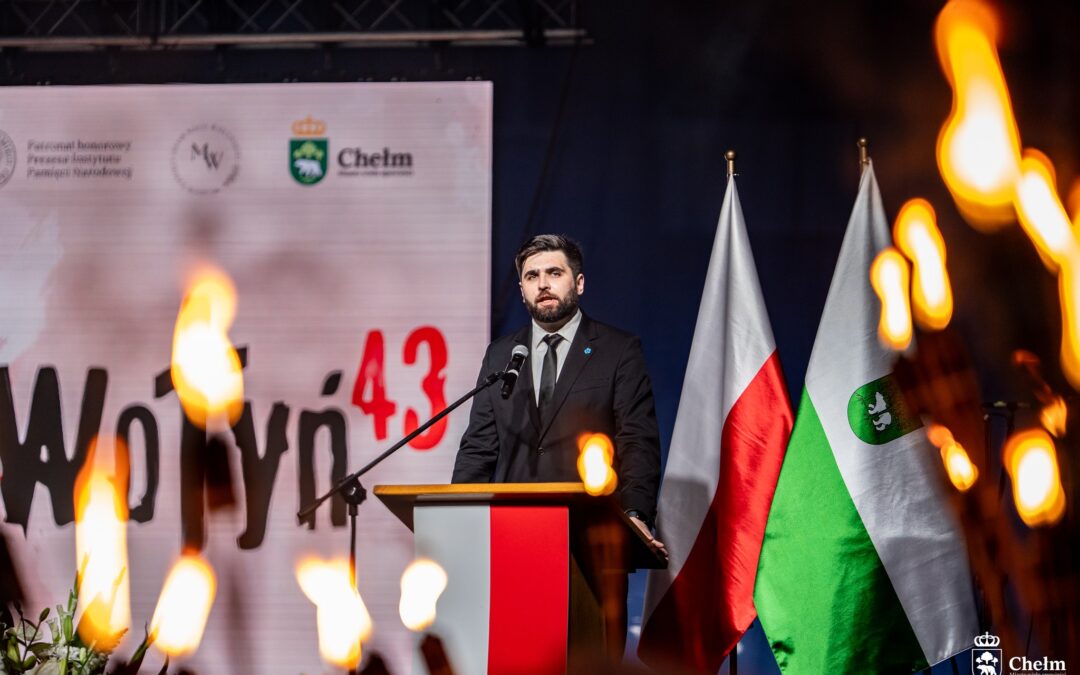
The Volhynia massacres, in which around 100,000 Poles were killed, have long been a source of tension between Poland and Ukraine. However, Chelm’s mayor, Jakub Banaszek, says the museum will be a place of reconciliation, as well as commemoration.
Zbrodnia Wołyńska to nie zamknięty rozdział historii. Przywrócenie tej pamięci to nasz obowiązek i każdego kolejnego pokolenia.
Dlatego powstanie Muzeum Pamięci Ofiar Rzezi Wołyńskiej w Chełmie. Właśnie podpisaliśmy list intencyjny z prezydentem miasta w tej sprawie. To będzie… pic.twitter.com/EvqOwz241x
— Władysław Kosiniak-Kamysz (@KosiniakKamysz) March 26, 2026
Last week, Banaszek and defence minister Władysław Kosiniak-Kamysz signed a letter of intent to establish the Volhynia Massacre Victims Memorial Museum. It will be a branch of the Warsaw-based Polish Army Museum, which is under the oversight of the defence ministry.
“This is an incredibly important moment for all those for whom remembrance and identity are fundamental, even sacred,” said Kosiniak-Kamysz. “For the first time, [we have] an opportunity for a dignified commemoration of our compatriots who were brutally murdered….at the hands of Ukrainian nationalists.”
The news was also welcomed by President Karol Nawrocki, who is normally an opponent of the government but praised Kosiniak-Kamysz for supporting the project. Nawrocki had been a supporter of establishing the museum in his previous role as head of the state Institute of National Remembrance (IPN).
The massacres were part of an ethnic cleansing operation by the Ukrainian Insurgent Army (UPA) between 1943 and 1945 in the territories of Volhynia and Eastern Galicia, which had been part of Poland before the war but were then under Nazi-German occupation.
The UPA’s aim was to create an ethnically homogeneous Ukrainian territory. Today, the areas in which the massacres took place are located mainly in Ukraine, following postwar border shifts.
Around 100,000 ethnic Poles, mostly women and children, were killed, many with exceptional brutality. However, precise figures are impossible to ascertain because of a lack of documentation and because most victims were buried in mass, unmarked graves.
Ukraine for a long time banned the exhumation of those remains on its territory. However, in a diplomatic breakthrough last year, it allowed the search for victims to resume.
Polish victims of massacres committed by Ukrainian nationalists in WWII have been reburied in Ukraine at a ceremony attended by officials from both countries.
Their remains were exhumed this year following a diplomatic breakthrough between Kyiv and Warsaw https://t.co/FQwhjXOZDb
— Notes from Poland 🇵🇱 (@notesfrompoland) September 6, 2025
Nevertheless, the massacres remain a source of tension. Poland regards them as a genocide and has officially recognised them as such. But Ukraine rejects the use of that term and seeks to contextualise the massacres by pointing to Polish persecution of Ukrainians.
Meanwhile, Ukraine continues to venerate some historical nationalist leaders associated with the massacres, prompting diplomatic protests by Warsaw. Kyiv last year criticised Poland for establishing a new national day of remembrance for “victims of the genocide”.
Such disputes are not just symbolic. In 2024, Kosiniak-Kamysz declared that Poland would not let “Ukraine join the European Union if the Volhynia issue is not resolved”. Last year, Nawrocki issued a similar warning while campaigning for the presidency.
Poland's state historical institute has criticised remarks by the head of its Ukrainian counterpart about massacres of Poles by Ukrainians in WWII.
He said they are regarded in Ukraine as a "local episode" and suggested they do not constitute a genocide https://t.co/MAi6RhpRDL
— Notes from Poland 🇵🇱 (@notesfrompoland) February 11, 2026
In May 2023, Chełm city council unanimously approved a resolution on establishing a Volhynia massacre museum on land the authorities had acquired for the purpose a year earlier. It aimed to complete work by 2027.
“Establishing such an institution in Chełm is natural due to its geographic location, history, and multicultural identity,” said a spokesman for city hall, quoted by Radio Lublin. “Chełm is a gateway to the east. A witness to history…Witnesses to the massacre also live here.”
The city, which has a population of around 60,000, is located in the very east of Poland, around 20 kilometres (12.4 miles) from the border with Ukraine.
Unveiling an artist’s impression of the museum later that year, Banaszek noted that, as well as honouring those who were killed, the complex would also include a “centre for truth and reconciliation” and a square “commemorating the righteous Ukrainians” who risked their lives to help Poles during the massacres.
In October 2023, Chełm signed a letter of intent with the culture ministry to jointly develop the museum. However, days later, parliamentary elections were held that resulted in the then-ruling national-conservative Law and Justice (PiS) party, with which Banaszek is aligned, losing power.
Nevertheless, on PiS’s last day in office, culture minister Piotr Gliński signed a funding agreement for the museum, pledging that the government would contribute 162 million zloty (€38 million), with Chełm providing 20 million zloty.
However, after a new, more liberal government led by Prime Minister Donald Tusk came to power the following month, the culture ministry terminated the agreement with Chelm, arguing that it had been signed “prematurely” and “without adequate funding” in place.
It also said that the organisers of the project had “failed to indicate the participation of researchers, experts, academic and research entities, and those working in the field of memory policy on both sides”, meaning it “would not fulfil the idea of reconciliation”, reported the Rzeczpospolita daily.
https://twitter.com.com/notesfrompoland/status/1930627539673710853
That prompted Chełm to launch legal action against the government. That case is going through the courts, but the dispute now appears to have been resolved, with the defence ministry taking responsibility for the museum.
Speaking at last week’s signing ceremony with Kosiniak-Kamysz, Banaszek said that he was pleased that they had reached an agreement “across political lines and with a sense of responsibility for the victims”.
Media reports suggest that the city still aims for the museum to open in 2027. Any revisions to funding for the project now that it has moved from the culture ministry to the defence ministry have not yet been announced.
Notes from Poland is run by a small editorial team and published by an independent, non-profit foundation that is funded through donations from our readers. We cannot do what we do without your support.
Main image credit: Miasto Chełm (under CC BY-SA 4.0)

Daniel Tilles is editor-in-chief of Notes from Poland. He has written on Polish affairs for a wide range of publications, including Foreign Policy, POLITICO Europe, EUobserver and Dziennik Gazeta Prawna.