Keep our news free from ads and paywalls by making a donation to support our work!

Notes from Poland is run by a small editorial team and is published by an independent, non-profit foundation that is funded through donations from our readers. We cannot do what we do without your support.
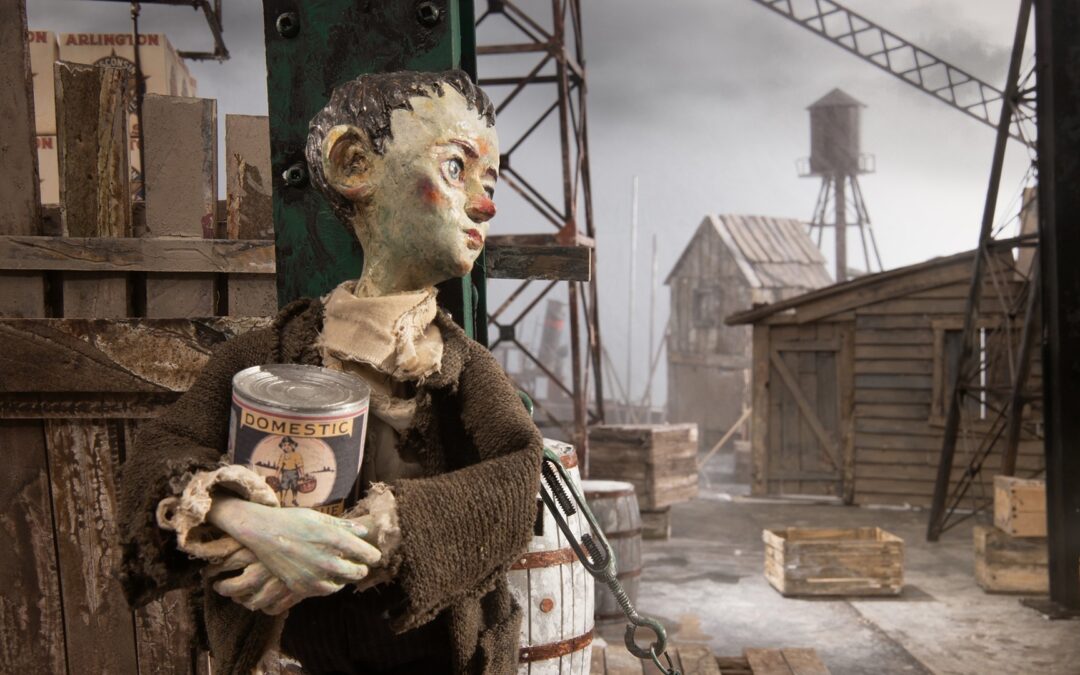
Polish-Canadian director and visual artist Maciek Szczerbowski has won the Academy Award for best animated short film alongside filmmaking partner Chris Lavis for The Girl Who Cried Pearls.
It was second time lucky for the pair, who were also nominated for their film Madame Tutli-Putli in 2007. Their latest work is a stop-motion short that tells the story of a young boy in early 20th-century Montreal who meets and falls in love with a girl who secretly weeps pearls at night.
The Oscar for Best Animated Short Film goes to… THE GIRL WHO CRIED PEARLS! #Oscars pic.twitter.com/X9BmtmahLv
— The Academy (@TheAcademy) March 15, 2026
Born in the western Polish city of Poznań in 1971, Szczerbowski emigrated to Canada via Austria with his family at the age of ten, a few months before the imposition of martial law by Poland’s communist authorities.
The artist stresses that he feels a strong connection to Poland. “I definitely feel Canadian…but I still belong to you. I love Poland,” he said, quoted by news service Onet.
The Girl Who Cried Pearls was inspired by a prop necklace scattering pearls across the set during filming of the climactic scene in Madame Tutli-Putli. Premiering at the 2025 Annecy International Animation Film Festival, the 17-minute short has been released in English and French versions.
“Packing emotional force but also a fable about be-careful-what you-wish-for greed”, the film is “both an ode to the craftsmanship of stop-motion puppetry and a groundbreaking blend of tactile puppetry with digital innovation, reaffirming Lavis and Szczerbowski’s status as pioneers in contemporary animation”, wrote Variety.
Asked by broadcaster TVN for a few words in Polish following the ceremony, Szczerbowski thanked Poland and the city of his birth as well as its residents. “Thanks for inviting me from time to time. It’s an honour for both of us,” he said.
Before the ceremony, Szczerbowski told the same journalist that he was relaxed about his chances, having previously been nominated. “Of course you don’t do work to get an Oscar. You do work to do something exactly as you wanted, to materialise an idea on the outside.”
He added that the medium of puppet-based stop-frame animation has “the power to convince people that fantastical and largely impossible things are fully believable”, something which would not have worked in other forms of animation.
Polish-American costume designer Malgosia Turzanska, also nominated for an Oscar for her work on Hamnet, was beaten by Kate Hawley’s designs for Frankenstein.
The most successful Pole in the history of the Academy Awards is cinematographer Janusz Kamiński, who won Oscars in 1993 for Schindler’s List and 1997 for Saving Private Ryan. Roman Polański was named best director for The Pianist in 2002.
In 2014, Paweł Pawlikowski’s film Ida was named the best international feature film. Polish director Andrzej Wajda also won an honorary award in 1999.
On Sunday Corpus Christi could become only the second Polish film to win Best International Feature at the #Oscars
We look back at all 12 Polish films nominated over the decades, including classics by Polański, Wajda & Pawlikowski plus some forgotten gems https://t.co/bi166f9mij
— Notes from Poland 🇵🇱 (@notesfrompoland) February 7, 2020
Notes from Poland is run by a small editorial team and published by an independent, non-profit foundation that is funded through donations from our readers. We cannot do what we do without your support.
Main image credit: press materials

Ben Koschalka is a translator, lecturer, and senior editor at Notes from Poland. Originally from Britain, he has lived in Kraków since 2005.