Keep our news free from ads and paywalls by making a donation to support our work!

Notes from Poland is run by a small editorial team and is published by an independent, non-profit foundation that is funded through donations from our readers. We cannot do what we do without your support.
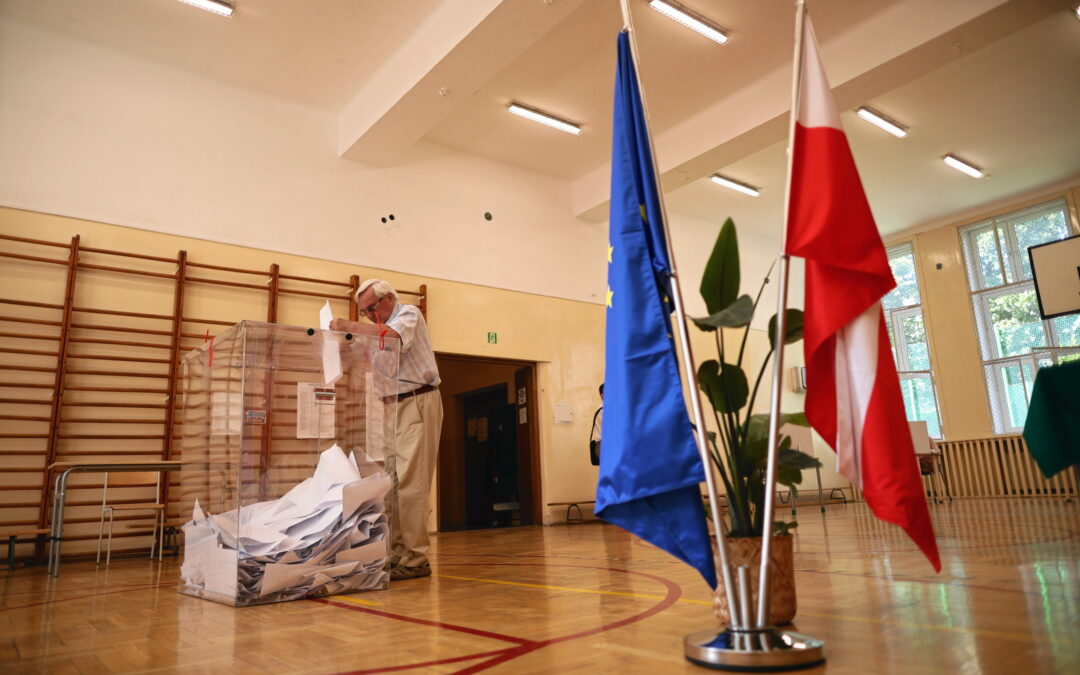
Poland’s Supreme Court has authorised a re-inspection of ballots, which in practice means a partial recount of votes, in 13 polling stations following allegations of irregularities in the run-off of the recent presidential election.
Karol Nawrocki, backed by the main opposition Law and Justice (PiS) party, won the election with 50.89% of the vote, securing a victory over his rival, Rafał Trzaskowski, by nearly 370,000 votes.
However, reports of alleged voting irregularities began circulating online shortly after the official results were announced, and Trzaskowski’s campaign encouraged voters to report any such suspected cases through a dedicated website launched just before the second round.
In its decision on Thursday, the court ruled that ballot papers from 13 polling stations will be examined to verify the number of valid votes cast for each candidate. Local district courts will carry out the recounts.
However, the recounts are unlikely to affect the overall result, as fewer than 7,000 ballots were cast across all the affected stations combined.
Sąd Najwyższy dopuścił ponowne przeliczenie części głosów oddanych w wyborach prezydenckich. Chodzi o 13 komisji, w których niektórzy dopatrzyli się nieprawidłowości podczas liczenia kart do głosowania po II turze wyborów.https://t.co/PTXVM0Ly8a
— Patryk Michalski (@patrykmichalski) June 12, 2025
The polling stations subject to inspection are: district electoral commission no. 95 in Kraków, no. 3 in Olesno, no. 13 in Mińsk Mazowiecki, no. 9 in Strzelce Opolskie, no. 25 in Grudziądz, no. 17 in Gdańsk, no. 30 and 61 in Bielsko-Biała, no. 10 in Tarnów, no. 53 in Katowice, no. 35 in Tychy, no. 6 in Kamienna Góra, and no. 4 in Brześć Kujawski.
One of the most serious allegations concerns district electoral commission no. 95 in Kraków, where votes cast for Karol Nawrocki were reportedly assigned to Rafał Trzaskowski, and vice versa.
According to the local electoral commissioner, representatives of the polling station notified both the city office and the regional electoral commission, which subsequently addressed the matter. Further alleged miscounts were reported in Mińsk Mazowiecki, including similar vote reversals in the run-off.
The Supreme Court’s decision follows 108 electoral complaints submitted so far, with the deadline for reporting irregularities set to expire on 16 June.
Meanwhile, prosecutor general Adam Bodnar has also requested that the Supreme Court or relevant district courts inspect ballot papers from nine polling stations as part of judicial assistance.
The request covers several polling stations already named by the court, such as those in Kraków, Olesno, Strzelce Opolskie, Tychy and Grudziądz, as well as four others in Bychawa, Magnuszew, Staszów and Lidzbark.
Electoral complaints are handled by the Supreme Court’s chamber of extraordinary review and public affairs, a body whose legitimacy is not recognised by the current government and European courts due to reforms implemented under the previous PiS administration.
Judges in the chamber were appointed through a process that gave politicians significant influence over judicial nominations, prompting both the Court of Justice of the European Union and the European Court of Human Rights to rule that the chamber does not constitute an independent and impartial tribunal established by law.
The campaign chief of losing presidential candidate @trzaskowski_ has encouraged people to report suspected election irregularities.
But @donaldtusk has tried to calm concerns, saying that "assuming the election was rigged does not serve the Polish state" https://t.co/72iwKFQGlp
— Notes from Poland 🇵🇱 (@notesfrompoland) June 6, 2025
Notes from Poland is run by a small editorial team and published by an independent, non-profit foundation that is funded through donations from our readers. We cannot do what we do without your support.
Main image credit: Jakub Wlodek / Agencja Wyborcza.pl

Alicja Ptak is deputy editor-in-chief of Notes from Poland and a multimedia journalist. She has written for Clean Energy Wire and The Times, and she hosts her own podcast, The Warsaw Wire, on Poland’s economy and energy sector. She previously worked for Reuters.